
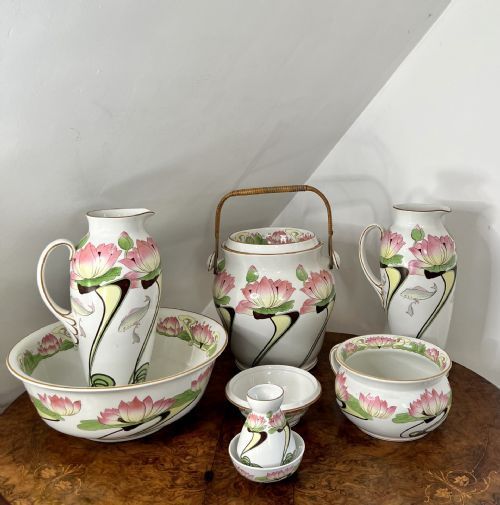


White Ceramic Wash Basin
A white ceramic wash basin is a practical and decorative antique fixture for the home, offering classic sanitary utility from past centuries.
White Ceramic Wash Basin
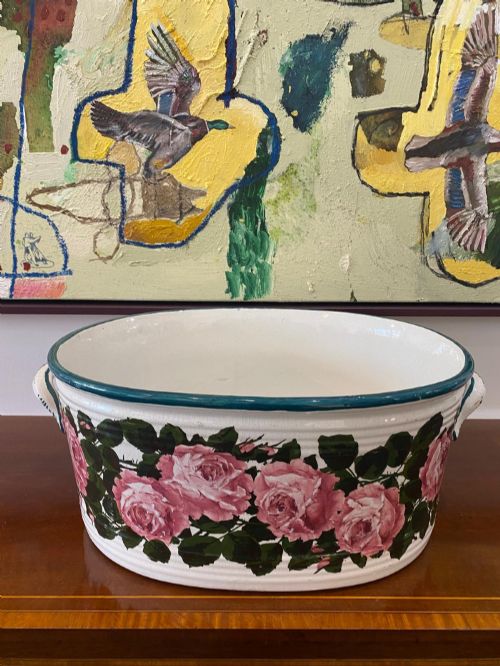
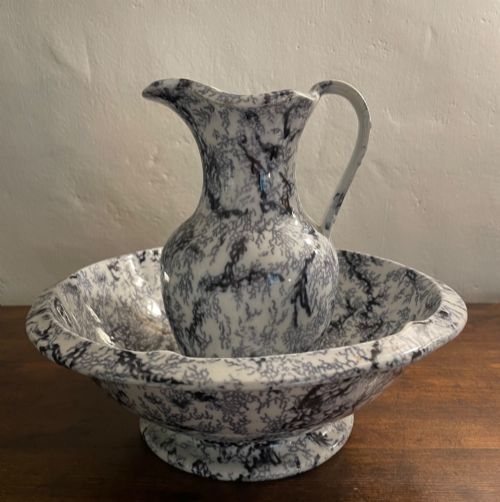
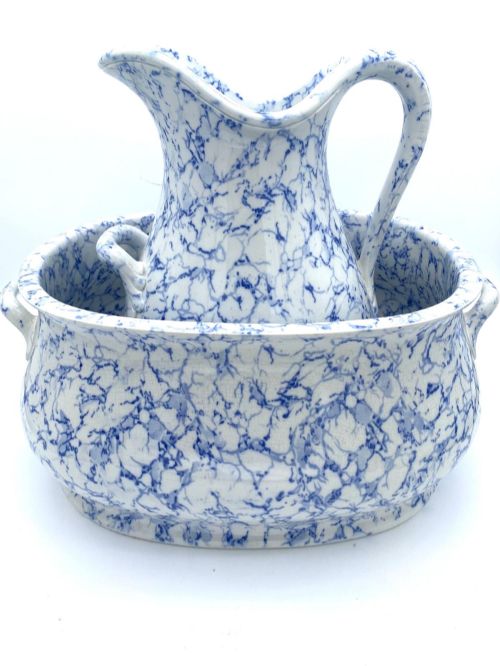
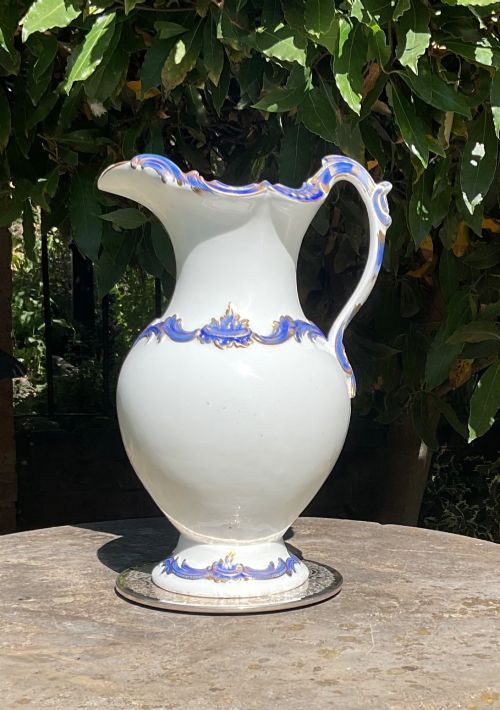
A white ceramic wash basin on this page typically appears as part of a larger jug and bowl set, a footbath, or a bathroom set. These pieces date from the 18th century through to the Edwardian period and Victorian eras, reflecting the domestic hygiene habits of those times.
Buyers will encounter various forms ranging from standard washstand sets to large footbaths and knee baths. The designs span simple utilitarian vessels to ornate transfer-printed patterns in styles such as Victorian, Edwardian, and Regency Chinoiserie.
Origins trace back to English potteries and manufacturers working in earthenware, ironstone, and porcelain. These items were originally housed in bedrooms and dressing rooms before plumbed indoor bathrooms became standard.
Distinguishing quality in antique basins
The refinement of the ceramic body and the crispness of the glaze set finer examples apart from standard utility ware. Porcelain and high-grade ironstone exhibit a thinner, more resonant wall and a smoother white surface than heavier earthenware.
Decoration adds another layer of distinction, with hand-painted highlights, rich gilding, or intricate transfer printing indicating superior factory production. Pieces bearing the marks of prominent makers demonstrate higher standards of design and execution.
The listings on this page span the 19th century, Regency, Victorian, and Edwardian periods, featuring materials such as earthenware, ironstone, and porcelain.
Wemyss·Minton·Masons·Heathcote·Doulton Burslem·Shelley·Copeland
The White Ceramic Wash Basin Glossary
- Creamware
- A refined earthenware with a pale yellowish or cream-coloured glaze, developed in the 18th century. It became widely used for domestic sanitary wares due to its light weight and smooth surface.
- Ironstone
- A durable type of earthenware patented in the 19th century to imitate porcelain. It resists chipping and cracking significantly better than standard pottery.
- Transfer printing
- A decoration technique where an engraved metal plate transfers a design onto tissue paper, which is then pressed onto the ceramic surface. This method allowed intricate patterns to be applied rapidly before glazing.
- Footbath
- A large, deep basin shaped specifically for soaking the feet, often featuring carrying handles. In the 19th century, these were brought to bedrooms alongside matching wash jugs.
- Gaudy Welsh
- A style of colourful, hand-painted earthenware decoration featuring cobalt blue, copper lustre, and iron-red accents. It was produced extensively in the 19th century for domestic markets.
White Ceramic Wash Basin: Frequently Asked Questions
What is a white ceramic wash basin used for today?
These basins serve primarily as decorative plant planters, umbrella stands, or striking centrepieces in modern bathrooms and hallways.
Their generous proportions and classic white glazes allow them to integrate easily into contemporary interior schemes while retaining their historic character.
How do I date a Victorian wash basin?
Dating relies on examining the factory backstamps underneath the base, the style of the ceramic body, and the printing technique. Victorian pieces often feature registration marks or specific maker stamps unique to the 19th century.
Stylistic cues such as the complexity of the transfer print and the thickness of the ironstone or earthenware also point to specific decades within the era.
Were these basins part of matching sets?
Many basins were originally sold alongside matching water jugs, soap dishes, and toothbrush holders as part of a complete toilet set for the bedroom washstand.
Finding a complete, matching set is less common today, as individual components frequently became separated or broken over generations of domestic use.
How should I clean an antique ceramic basin?
Cleaning requires warm water and a mild dish soap applied with a soft cloth to protect the historic glaze and any transfer-printed details.
Harsh chemical abrasives and metal scouring pads must be avoided entirely, as they can permanently dull or scratch the 19th-century ceramic surface.