
White Ceramic Vase Pair
When you search for a white ceramic vase pair, you find matching vessels of earthenware, porcelain, and stoneware shaped for display or botanical arrangement.
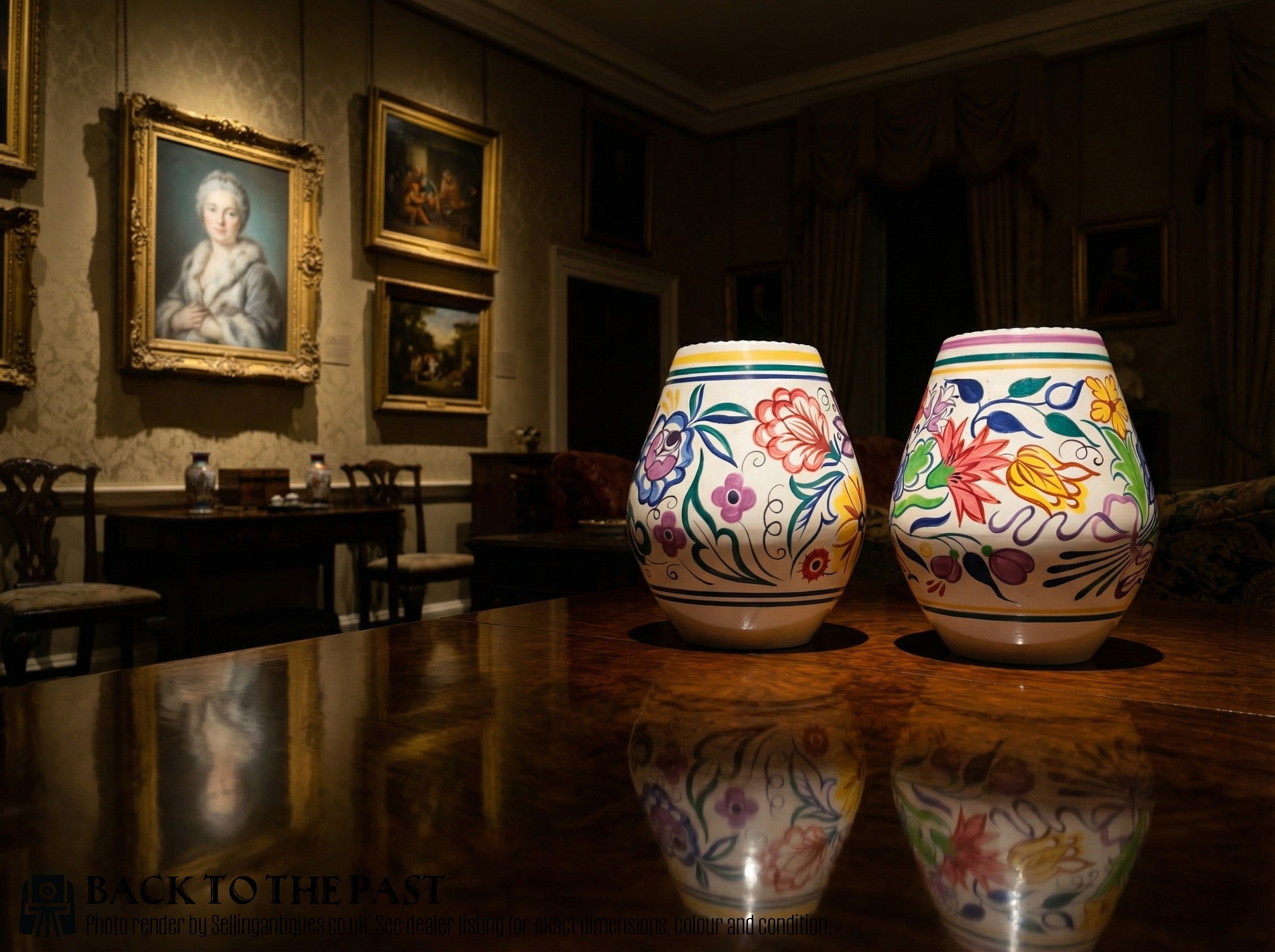
White Ceramic Vase Pair
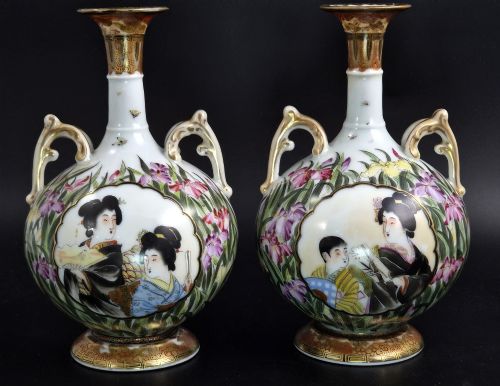
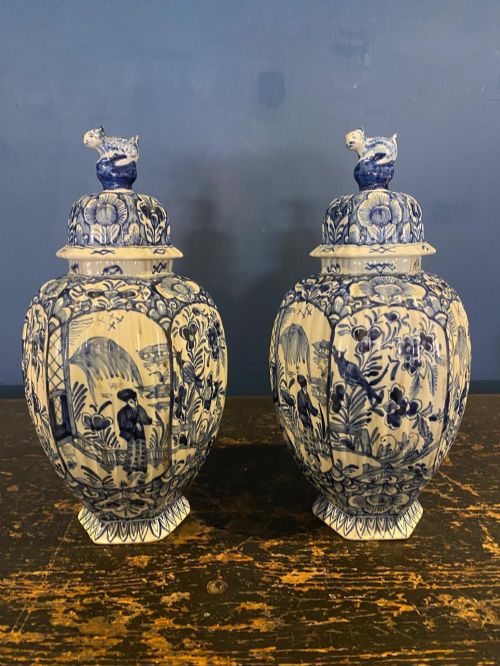
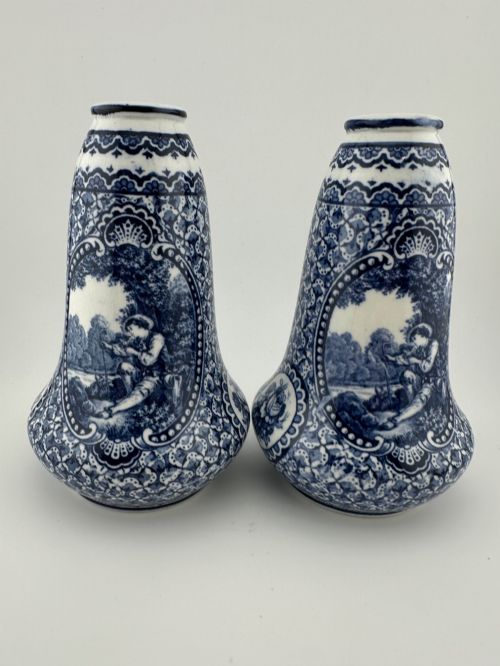
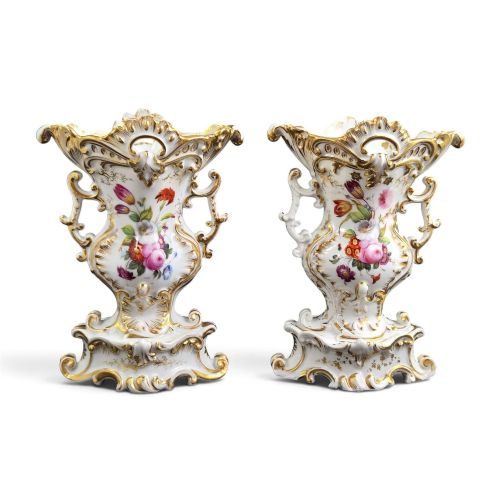
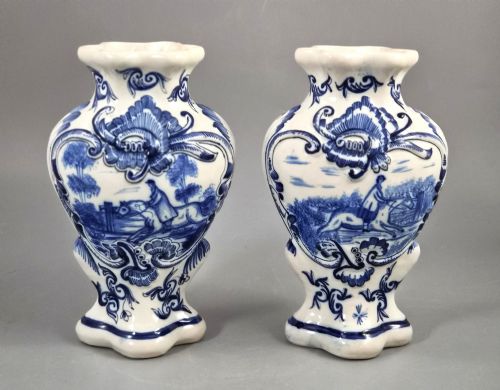
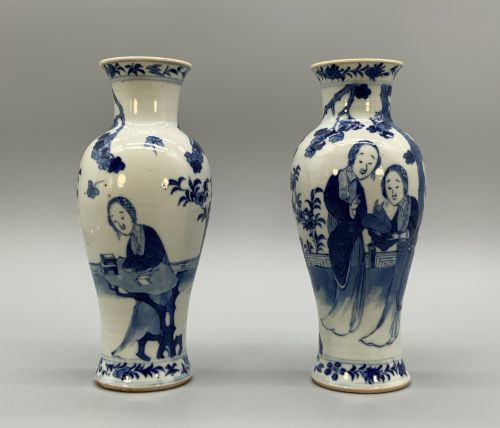
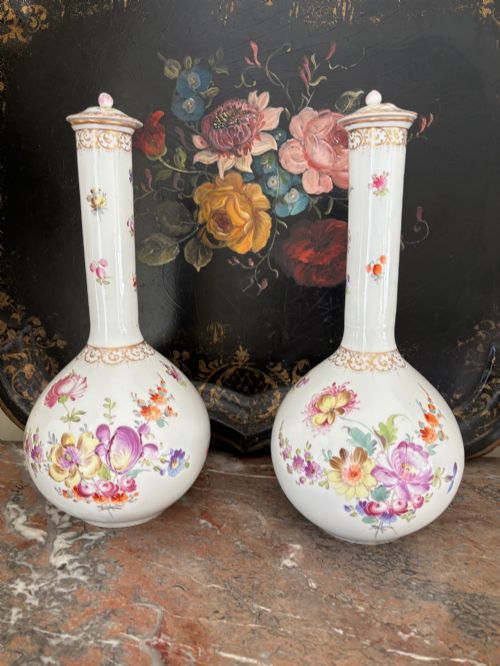
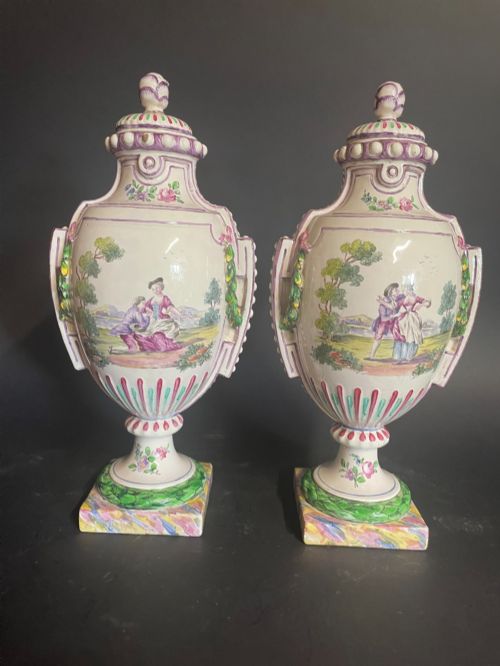
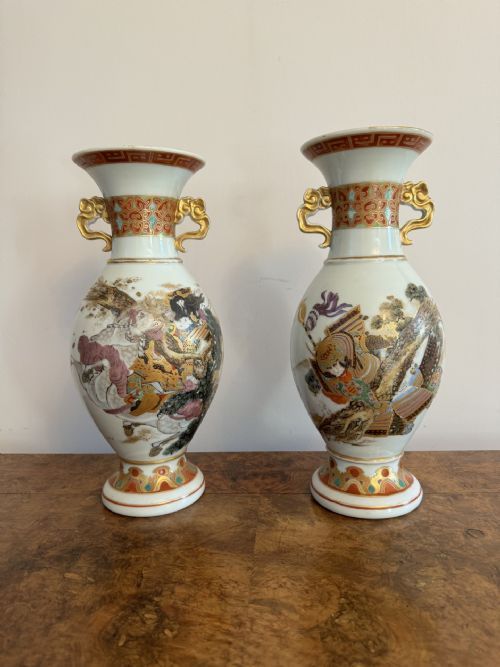
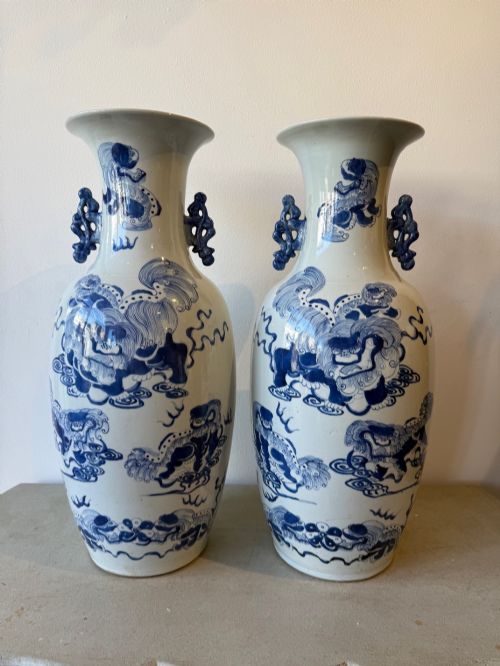
A white ceramic vase pair brings symmetry to mantelpieces, sideboards, and architectural consoles through balanced proportions and matching decorative motifs. These twin vessels emerge from diverse European and Asian traditions, spanning 19th-century French faience, English ironstone, and Chinese porcelain decorated in blue and white or raised enamel.
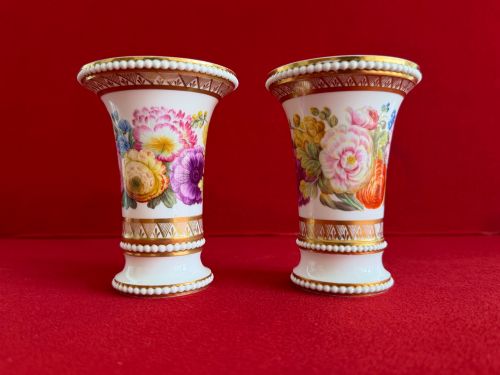
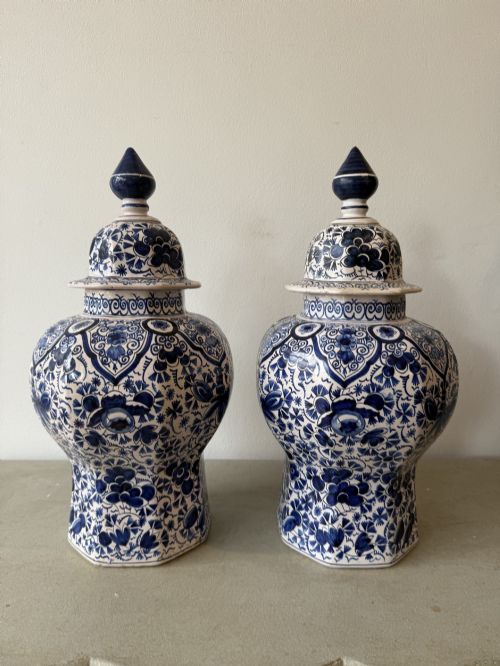
Collectors encounter bulbous floor jars, campana urns, lidded ginger jars, and slender spill vases among the offerings on this page. Many pieces reflect historical revivals such as Rococo, Chinoiserie, and Neoclassical styles, employing white glazes, jaspers, and tin-enamels as canvases for hand-painted botanicals, figures, and gilt highlights.
Materials and Techniques
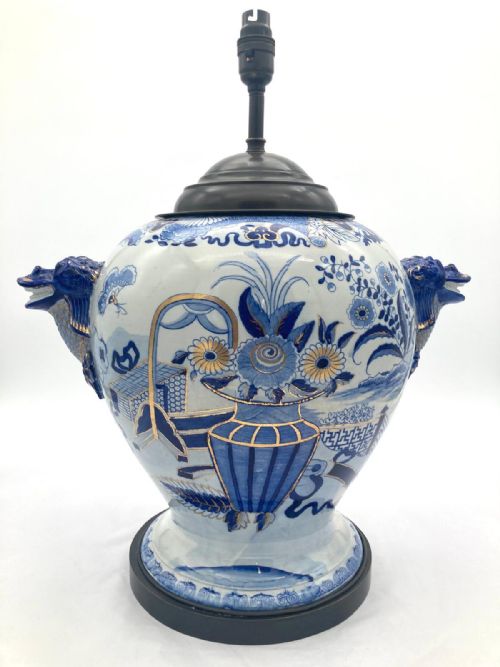
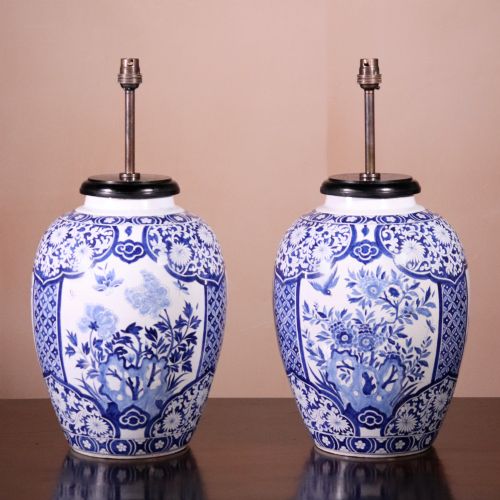
Potters shaped these vessels using soft-paste and hard-paste porcelain, earthenware, and dense ironstone bodies before applying tin-enamels, translucent glazes, or matte jasper surfaces. Many examples incorporate hand-painted cobalt blue pigments, raised white enamel, and delicate gilt bronze or brass mounts secured during later conversions into table lamps.
Moulding and throwing formed the structural bases, while specialised techniques such as pâte-sur-pâte built up layered white porcelain reliefs against contrasting coloured grounds. Kiln firing vitrified the ceramic bodies, fixing intricate floral and figural compositions beneath protective glass coatings.
The inventory spans diverse forms including ginger jars, campana urns, spill vases, and converted table lamps.
Craftsmanship and Execution
Quality rests in the crispness of the modelling, the precision of hand-painted brushwork, and the uniformity of the glaze across both matching vessels. Superior examples display finely rendered details in facial expressions, botanical foliage, and relief work without blurring or pooling in the ceramic surface.
The harmony of the pair dictates its standing, where true matching proportions, matching kiln age, and identical maker marks separate unified studio outputs from assembled companions. Original mounts, intact lids, and uncompromised surface decoration elevate the historical integrity of the pairing.
Jacob Petit·Fourmaintraux-Courquin·Sitzendorf·Hicks and Meigh·Mason·Flight Barr and Barr·Samson·Wedgwood·Berlin
The White Ceramic Vase Pair Glossary
- Faience
- Tin-glazed earthenware produced across France, the Netherlands, and England, known for opaque white surfaces that accept painted cobalt decoration.
- Ironstone
- A durable, heavy-bodied ceramic perfected in 19th-century England, bridging the gap between fine porcelain and sturdy earthenware.
- Jasperware
- A fine-grained, unglazed stoneware developed by Wedgwood, typically featuring white ceramic relief ornaments applied to coloured backgrounds.
- Spill Vases
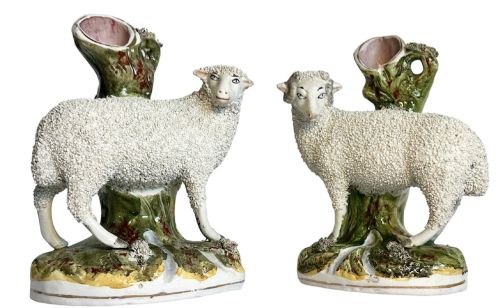
- Small, cylindrical vessels traditionally placed near hearths to hold thin wood spills used for lighting candles and fires.
- Pâte-sur-pâte
- A labour-intensive porcelain technique where liquid white clay is painted layer upon layer to create translucent sculptural reliefs.
White Ceramic Vase Pair: Frequently Asked Questions
How do I display a ceramic vase pair?
Symmetrical placement works best on mantelpieces, entrance hall tables, or flanking a central mirror on a sideboard. Maintaining equal distance from the edges of the furniture enhances the balanced aesthetic.
Ensure the pair sits away from high-traffic walkways where accidental knocks might occur. Using matching pedestals can also elevate larger floor-standing urns within a room.
Were these vases made as lamps originally?
Most antique pairs were manufactured strictly as decorative vessels, urns, or jars before receiving electrical conversions in the 20th century. Wiring often passes through drilled bases or utilises fitted brass caps without harming the ceramic body.
Collectors value both unconverted vessels and period conversions depending on their intended interior use. Professional rewiring ensures safety while preserving the structural integrity of the antique base.
How do I tell Japanese Imari from Chinese porcelain?
Japanese Imari pieces typically combine underglaze blue with rusty iron-red and gilt highlights, often featuring dense, brocade-like floral patterns. The porcelain body itself tends to feel slightly heavier and displays a characteristic milky glaze.
Chinese export porcelain of the period frequently employs crisp cobalt blue underglaze painting on brilliant white grounds. Figures, scholar retreats, and botanical sprays dominate the Chinese aesthetic compared to the geometric panel layouts of Arita wares.
Can these vases hold water safely?
While many historical ceramics are water-tight, porous earthenware and older faience can sometimes seep moisture through hairline crazing in the glaze. Inserting a discreet modern glass liner protects the interior from mineral deposits.
Delicate painted enamels and gilt highlights also warrant gentle handling during cleaning. Using dry dusting or a damp cloth without harsh detergents preserves the fragile surface decorations.