
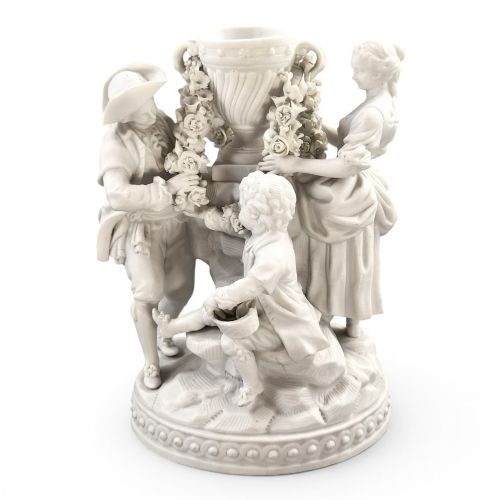

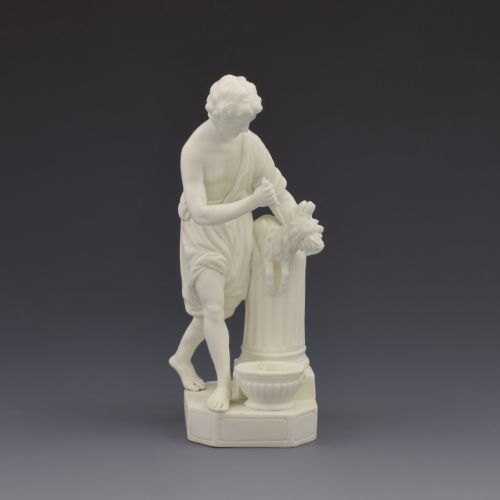


White Bisque Figurine
White bisque figurine works in unglazed porcelain to render classical figures, historical portraits and pastoral subjects with crisp detail.
White Bisque Figurine
A white bisque figurine presents unglazed porcelain sculpture, capturing the matte texture favoured for neoclassical subjects and Victorian decorative pieces.
The selections span from eighteenth century soft-paste models by Derby to late nineteenth century parian figures and French biscuit porcelain groups.
Common forms include classical women, literary figures, historical busts such as Marie Antoinette, and occasional animal subjects like poodles.
Materials and Techniques
Potters utilised biscuit porcelain, bisque porcelain and parian ware, fired without glaze to achieve a tactile, marble-like surface.
Selected examples incorporate touches of gold leaf or enamel to highlight specific details on the unglazed bodies.
The selection includes eighteenth-century Georgian pieces alongside Victorian parian ware and French biscuit porcelain from the nineteenth century.
Assessing Quality
Quality depends upon the crispness of the modelling and the finesse with which facial expressions and drapery folds are rendered.
Works produced by established factories like Derby, Sevres, Minton or Copeland typically display superior definition in the porcelain body.
Johann Heinrich Dannecker·Luca Madrassi·Minton·Copeland·Triebner Ens And Co·Vion Et Baury
The White Bisque Figurine Glossary
- Bisque porcelain
- Unglazed ceramic fired once to vitrify the body while retaining a matte, porous texture.
- Parian ware
- A type of fine white parian porcelain developed in the nineteenth century to imitate carved marble.
- Neoclassical
- A style drawing inspiration from the classical art and culture of ancient Greece and Rome.
- Soft-paste porcelain
- An artificial porcelain paste fired at lower temperatures, common in eighteenth century English figures.
White Bisque Figurine: Frequently Asked Questions
What is white bisque?
White bisque refers to porcelain that has been fired without a glossy glaze, leaving a matte, chalk-white surface that resembles marble.
This unglazed finish allows modellers to capture intricate details in hair, drapery, and facial expressions without glaze pooling in the recesses.
How do I clean parian ware?
Parian ware and bisque figures require gentle dusting with a soft, dry brush to prevent dirt from settling into the porous unglazed body.
Avoid using water or liquid cleaners, as moisture can stain the unglazed porcelain surface permanently.
How do I distinguish eighteenth century figures?
Early pieces from makers like Derby often utilise soft-paste porcelain and feature softer modelling with subtle polychrome or gilt accents.
Nineteenth-century parian pieces tend to have a denser, harder body and emulate carved marble with starker white finishes.
Where were these figures displayed?
Victorian households placed these decorative sculptures on mantelpieces, occasional tables, and inside glazed cabinets to demonstrate cultural literacy.
Classical subjects and literary figures served as conversation pieces in drawing rooms throughout the nineteenth century.