
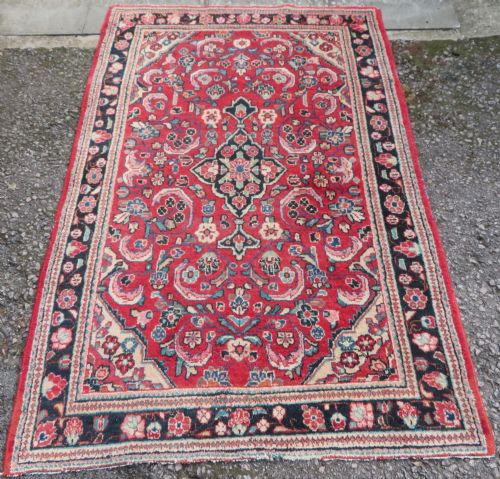
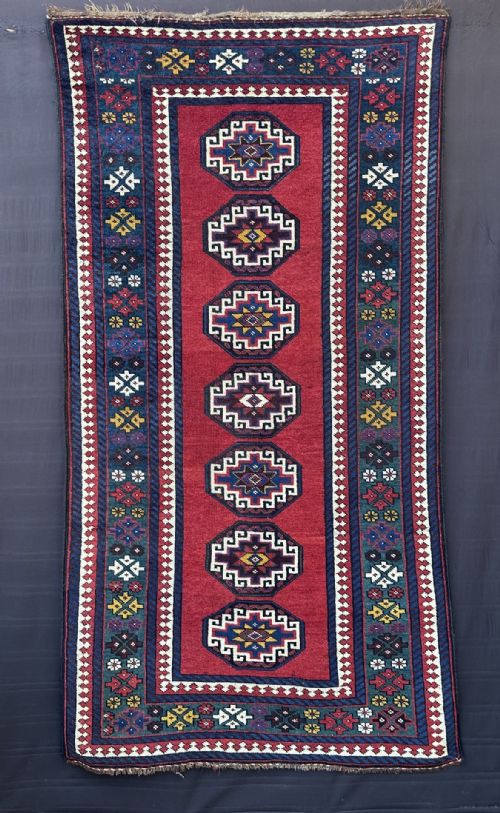
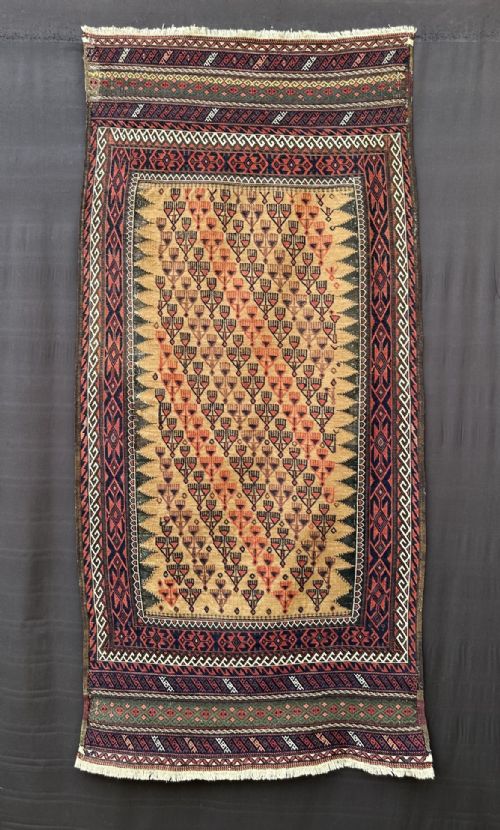
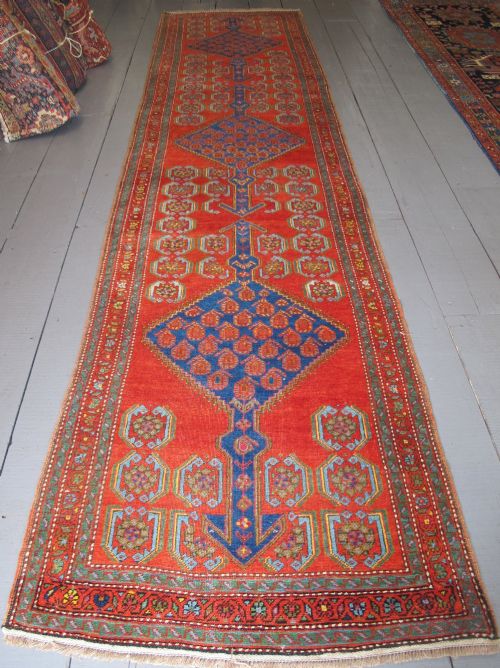


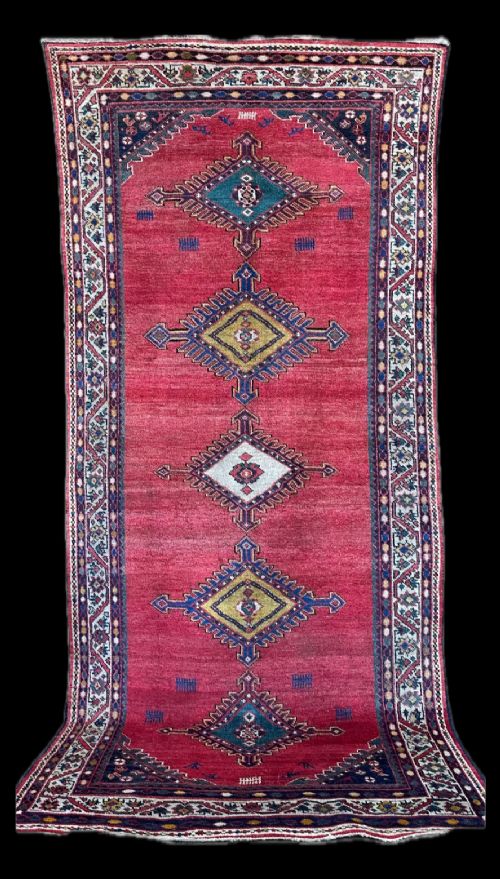


West Persia Rug Runner
When searching for a west persia rug runner, you enter a tradition of woven floor coverings made across nineteenth and early twentieth century Persian lands.
West Persia Rug Runner
A west persia rug runner encompasses elongated floor coverings created by various village and tribal groups throughout the western regions of Persia. These textiles served practical purposes in hallways, tents, and domestic interiors, often woven on upright wooden looms by local women.
The selections available here span from the late nineteenth century into the 1930s, displaying distinct regional identities from centres such as Heriz, Sarab, Senneh, and Kurdish territories. Buyers encounter narrow formats suited for corridors alongside broader village formats, each carrying the geometric or stylised floral vocabulary of its origin.
How they were made
Weavers constructed these pieces predominantly using hand-spun wool foundations and pile, occasionally incorporating cotton for warp and weft threads or utilising camel hair for natural brown tones. The reliance on natural dyes yielded deep madder reds, rich indigos, and soft yellows that mellow gracefully over decades of light and wear.
The knotting technique varied according to local tradition, employing symmetrical or asymmetrical knots tied tightly onto the warp threads. Artisans drew upon generational memory rather than written patterns, resulting in spontaneous tribal motifs, Herati patterns, and characteristic crab designs.
Listings feature wool, cotton, natural dyes, and camel hair across pieces dated from the nineteenth century to the 1930s.
What varies in quality
Quality in these runners is measured by the density of the weave, the clarity of the drawing, and the integrity of the wool. Finer knots permit more intricate geometric articulation and sharper contours within medallions and borders.
The vibrancy and depth of the palette also distinguish individual examples, particularly where diverse natural dyestuffs retain their luminosity. Furthermore, the completeness of original outer guard borders and secure selvedges reflects the care taken during initial production and subsequent preservation.
Waring and Gillow
The West Persia Rug Runner Glossary
- Runner
- A long, narrow carpet format traditionally utilised in hallways, corridors, or alongside larger furniture pieces.
- Warp
- The stationary vertical threads stretched upon the loom that form the structural foundation of the textile.
- Weft
- The horizontal threads passed alternately over and under the warp threads to bind the knots in place.
- Selvedge
- The reinforced outer edge of a rug, finished to prevent the side cords and pile from unravelling.
- Sofreh
- A flatwoven or piled cloth traditionally used for dining, food preparation, or domestic gatherings.
- Kelleh
- A specific format of Persian carpet that is longer than a standard room-size rug but wider than a narrow corridor runner.
West Persia Rug Runner: Frequently Asked Questions
How are these runners cleaned?
Maintenance requires gentle surface cleaning and occasional specialist textile washing to protect natural wool fibres and dye integrity.
Avoiding harsh chemical detergents ensures the lanolin remains within the wool, preserving its natural resilience against everyday foot traffic.
Can I place them in high-traffic areas?
Traditional village and tribal runners were built for heavy domestic use, making them durable additions to busy hallways and corridors.
Utilising a quality underlay helps absorb impact and prevents the textile from shifting on hard flooring surfaces.
How do I identify the tribal origin?
Attribution relies on examining specific palette choices, structural materials like camel hair or cotton, and characteristic border motifs.
Regional weavers repeated distinct geometric vocabularies, animal figures, and medallion structures that link individual pieces to specific tribal homelands.
Why do some runners show faded areas?
Uneven fading often results from decades of exposure to natural sunlight in domestic settings or gradual wear on natural dye compounds.
Many collectors view these tonal shifts as evidence of genuine age and historical character rather than a structural defect.