






West African Wooden Sculpture
These west african wooden sculpture pieces are carved figures, masks and functional objects carrying deep cultural weight and rich traditional patination.
West African Wooden Sculpture
When you search for west african wooden sculpture, you encounter a diverse array of traditional artefacts including figures, masks, combs and pipes originating from various regions and peoples across West Africa. These objects serve multiple cultural functions, from spiritual fertility figures to ceremonial masks utilised in community rituals and dances.
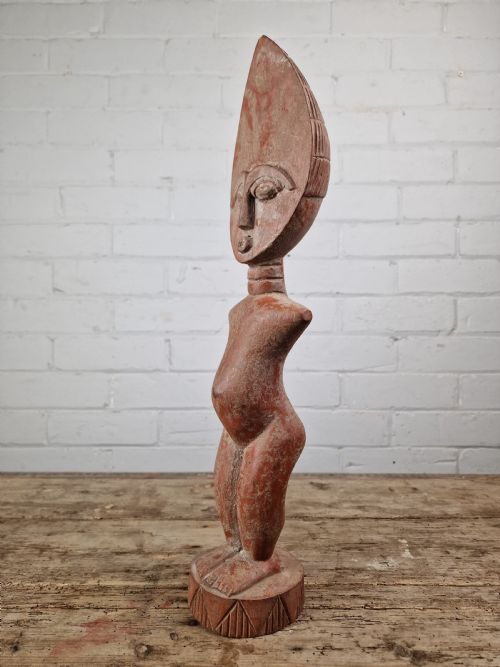
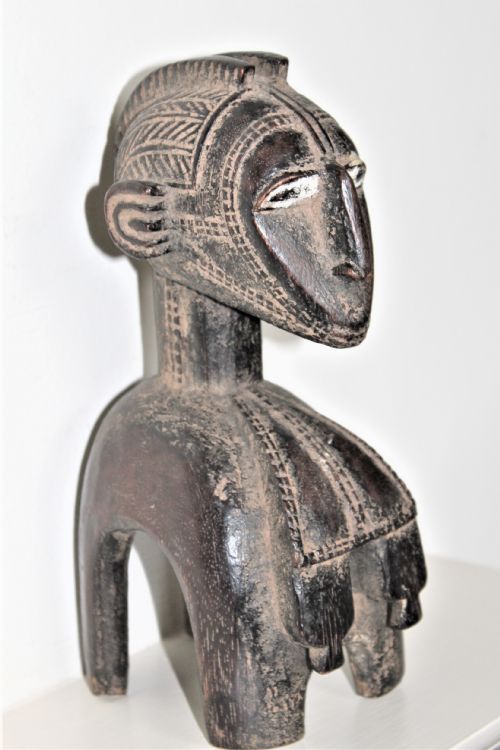
The pieces appearing on this page span several decades and centuries, incorporating items from the nineteenth century through to the mid-twentieth century. Prominent groups represented include the Yoruba, Dogon, Baule, Gouro, Baga and Ashanti, each bringing distinct regional aesthetics and traditional carving styles to their material output.
Forms range from wall sculptures and standalone statues to smaller decorative items like intricately carved slingshots and smoking pipes. Collectors often meet both anthropomorphic figures and zoomorphic representations reflecting the rich cosmology and daily life of the originating communities.
Materials and construction
The primary material across these listings is wood, frequently utilising dense hardwoods selected for durability and suitability for detailed carving. Artisans shaped these materials using traditional hand tools, resulting in surfaces that show the direct mark of the maker's chisel.
Many items incorporate supplementary materials such as applied pigments, which impart colour and symbolic meaning to the surface of masks and figures. Additional embellishments like bone and brass wire occasionally appear, adding textural contrast and structural detail to functional objects.
Natural ageing and handling generate a rich patina on the wood surfaces over decades of use. This accumulation of wear and organic oils distinguishes authentic traditional artefacts from modern reproductions.
Listings feature works from the nineteenth and twentieth centuries, utilising hardwoods, pigments, bone and brass wire across figures, masks and functional objects.
Quality and execution
The integrity of the surface condition and the depth of the natural patina significantly influence the standing of an object. Examples that retain original pigment traces and show clear evidence of ceremonial use possess greater historical and aesthetic weight.
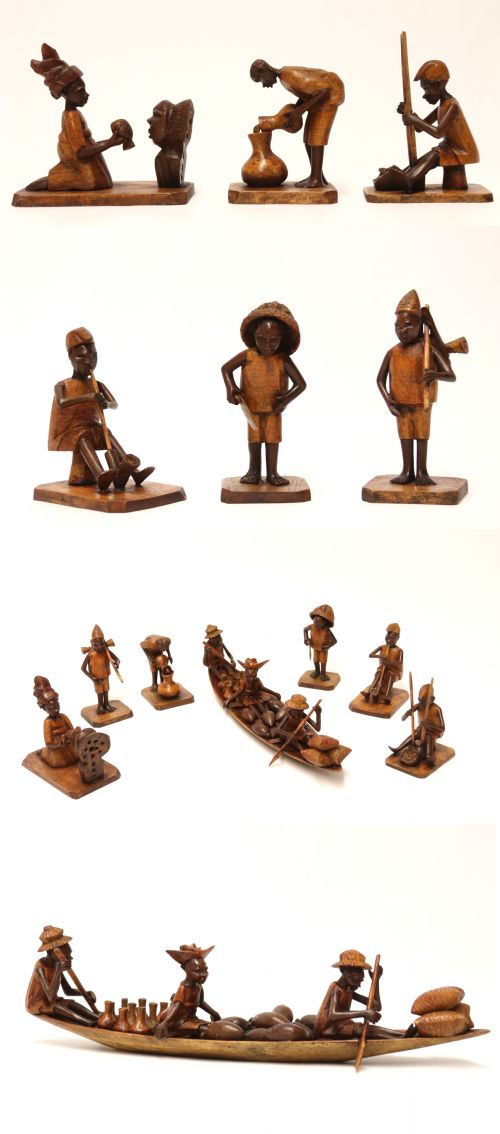
Master carver Abegunde of Ede
The West African Wooden Sculpture Glossary
- Patina
- The surface sheen and colour developed through years of handling, exposure to smoke and ritual application of oils. It serves as a key indicator of age and genuine traditional use.
- Ibeji
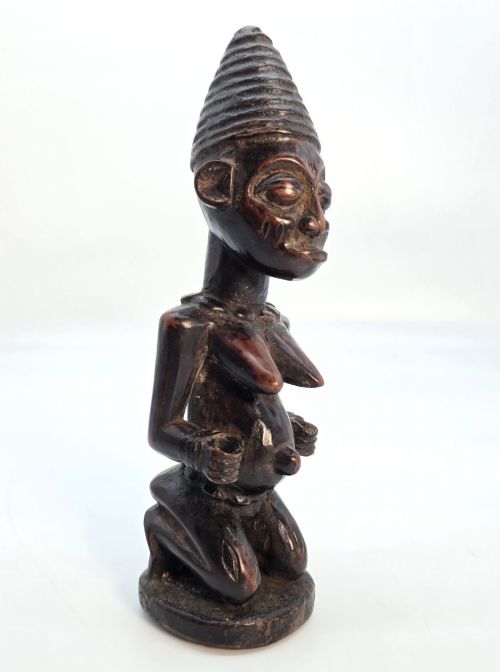
- A wooden figure carved by the Yoruba people to represent a deceased twin, revered as a vessel for the spirit and maintained with ritual care. These figures often display distinct coiffures and body markings.
- Zamble
- A mythological mask type utilised by the Gouro people of the Ivory Coast during traditional dances and community events. It typically depicts a hybrid creature combining antelope, leopard and human attributes.
West African Wooden Sculpture: Frequently Asked Questions
What are west african wooden sculpture pieces?
These pieces are traditional carved artefacts created by various cultural groups across West Africa for ceremonial, spiritual and utilitarian purposes. They encompass figures, masks, combs and domestic objects.
Items range from nineteenth-century fertility statues to mid-twentieth-century masks, reflecting the diverse artistic traditions of regions including Nigeria, Ghana, Mali and the Ivory Coast.
How were these tribal sculptures used?
Many objects fulfilled specific ritual functions within their communities, such as agricultural ceremonies, ancestral veneration and rites of passage. Masks were worn during dances, while figures acted as spiritual vessels or representations of deities.
Other items served everyday or prestige functions within society, including carved combs, slingshots and pipes that demonstrated the social standing of the owner.
How do I care for wooden tribal art?
Display these sculptures in stable environments away from direct sunlight, excessive heat sources and sudden humidity fluctuations to prevent the wood from drying out or cracking. Avoid applying modern polishes or cleaning agents to the surface.
Dust the pieces gently with a soft, dry brush to preserve the delicate patinas and any original pigment remains accumulated over the decades.
How do I identify different tribal styles?
Regional styles manifest through distinct facial proportions, carving techniques and symbolic motifs unique to specific peoples like the Yoruba, Dogon or Baule. Examining the specific treatment of eyes, hairstyles and geometric patterns aids attribution.
Consulting reference literature on African tribal art helps connect visual characteristics with the geographic region and cultural group of origin.