


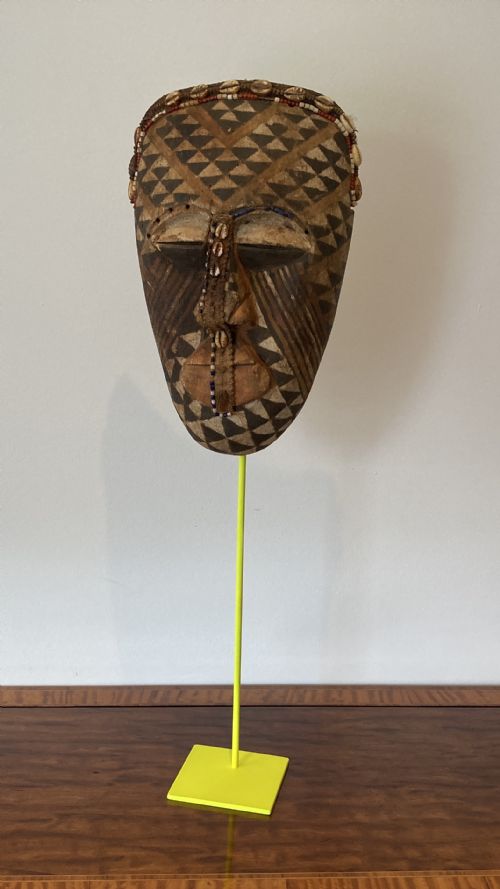


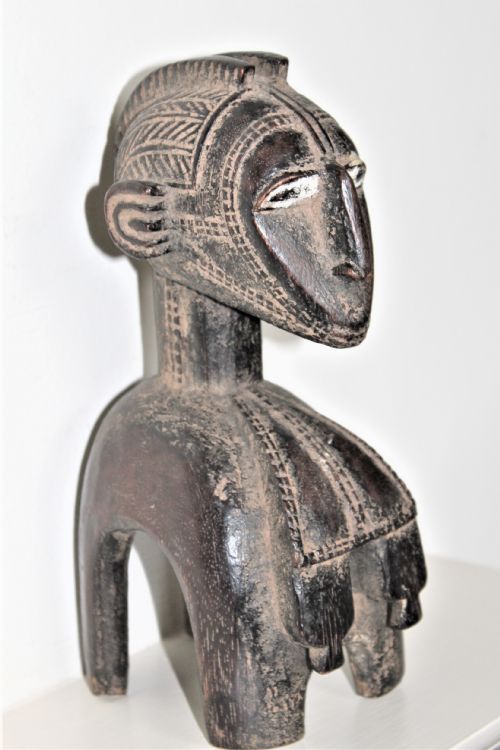

Carved Wooden Tribal Mask
A carved wooden tribal mask brings striking sculptural presence into a room, spanning expressive rituals from African and Himalayan traditions.
Carved Wooden Tribal Mask
A carved wooden tribal mask serves ritual, ceremonial or decorative roles across diverse cultures, capturing distinctive regional aesthetics from West Africa, Central Africa and South Asia. When searching for a carved wooden tribal mask, collectors encounter forms ranging from horned beast representations to elaborate shoulder headdresses.
The selections on this page span the nineteenth century through the early twentieth century, encompassing styles such as African tribal art, Himalayan folk art and South Indian folk art. Pieces originate from regions including the Ivory Coast, Congo, Gabon, Nepal, Tibet and Kerala, reflecting specific cultural heritages.
Common forms appearing here include wall sculptures, dance masks, helmet masks and the expansive Baga Nimba shoulder mask. Each object demonstrates the distinct carving traditions and visual vocabulary of its specific people and geographic origin.
Materials and construction methods
Makers shaped each carved wooden tribal mask from local timbers using traditional hand-carving tools, defining the primary form with chisel and adze marks. Artisans frequently applied surface treatments including natural pigments, kaolin pigment and metal additions to enhance ritual significance and visual contrast.
Organic elements such as natural fibre often complement the wooden structures, particularly on headdresses and dance masks designed for movement. Surfaces frequently show the accumulation of handling, use and pigments over decades of traditional employment.
Current listings feature materials including wood, kaolin pigment, metal and natural fibre across nineteenth-century and Edwardian periods.
Assessing quality in carved wooden tribal masks
The presence of undisturbed surface patination and authentic pigment remains significantly influences the appeal of an example. Integration of materials like metal or natural fibre, when applied with structural integrity, adds depth to the overall execution.
The Carved Wooden Tribal Mask Glossary
- Patina
- The surface sheen and colour developed through handling, exposure to smoke and age over decades. This quality provides key visual evidence of an object's history and traditional use.
- Headdress
- A large sculptural mask structure designed to be worn on top of the head or shoulders rather than over the face. These pieces often incorporate fibre and textile elements.
- Relief
- Sculptural carving that projects from a flat or curved wooden background. The depth of the carving defines the primary contours of the mask.
Carved Wooden Tribal Mask: Frequently Asked Questions
What is a carved wooden tribal mask?
A carved wooden tribal mask is a ritual or ceremonial object created by indigenous artisans using traditional woodworking techniques. These pieces embody cultural narratives, ancestral spirits and local beliefs.
They function within specific community ceremonies, often accompanied by dance, costume and music. Today, they are appreciated as significant works of ethnographic art.
How do I care for a wooden mask?
Display your mask away from direct sunlight, heating vents and damp environments to protect the organic wood and applied pigments. Sudden temperature shifts can cause the timber to expand or contract.
Dust the surface gently with a soft, dry brush without applying oils, polishes or cleaning agents. Preserving the original dry surface maintains the integrity of the historic patina.
How are different regional styles told apart?
Regional styles are distinguished by specific facial proportions, eye shapes, scarification marks and surface pigment treatments unique to particular groups. For instance, Punu masks from Gabon feature distinct coiffures and white kaolin finishes.
Compare the carving geometry, use of metal or fibre attachments and sculptural silhouette against known geographic traditions. Each culture developed a recognizable visual language over generations.
Were these masks used in actual dances?
Many examples on this page served active roles in ceremonies, masquerades and agricultural rituals performed by specific communities. Dance masks were constructed with attachment points for fibres or textiles to conceal the wearer.
Usage wear, interior marks and handling patinas often indicate how the object interacted with its traditional environment. These functional origins shape the character of each surviving sculpture.