

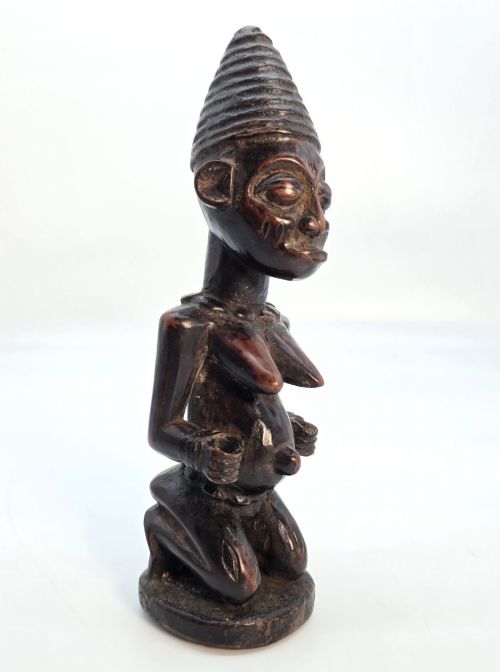
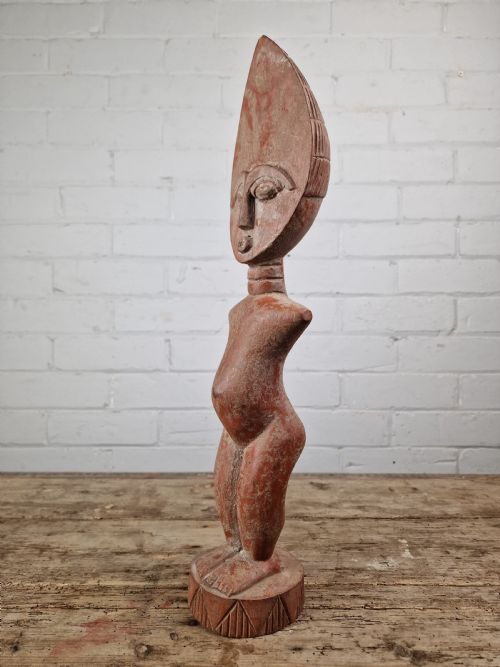


Carved Wooden Tribal Sculpture
These pieces of carved wooden tribal sculpture bring ritual forms and historical craftsmanship directly into modern interiors.
Carved Wooden Tribal Sculpture
When a buyer searches for carved wooden tribal sculpture, they encounter figures, masks, panels and utilitarian objects originating from African, Asian and Oceanic traditions. These items span periods from the nineteenth century through the mid twentieth century, reflecting diverse regional styles such as Yoruba, Fang, Baule and Himalayan folk art.
The selection on this page focuses heavily on figural sculptures, ceremonial masks and carved panels made from dense tropical woods. Examples range from small fertility figures and headrests to large warrior depictions and elaborate dancer headdresses.
How they were made
Selected pieces integrate secondary materials like bone, brass and iron into the wooden framework, providing functional contrast or decorative embellishment. The resulting surfaces often display a deep patina acquired through handling and ceremonial use over decades.
A nineteenth-century camel saddle sits comfortably alongside dance masks and a friction oracle.
What varies in quality
The integrity of the surface skin and the presence of authentic tribal wear or original pigment layers also determine the standing of an object. Pieces demonstrating fluid execution and clear cultural iconography hold greater visual and historical weight.
Abegunde of Ede
The Carved Wooden Tribal Sculpture Glossary
- Patina
- The glossy or matte surface sheen developed on wood through handling, age and exposure to oils or smoke over many years.
- Reliquary
- A container or guardian figure created to hold ancestral remains or sacred objects within a community.
- Ibeji
- A wooden figure carved by the Yoruba people to represent a deceased twin, embodying the spirit of the child.
- Nimba
- A large shoulder mask traditionally used by the Baga people during agricultural fertility rituals.
- Byeri
- A ancestral guardian figure associated with the Fang people of Gabon, traditionally placed atop cylindrical bark boxes containing bones.
Carved Wooden Tribal Sculpture: Frequently Asked Questions
How were tribal sculptures used?
These carved objects served spiritual, ceremonial and utilitarian functions within their communities of origin. They participated in rituals, ancestral worship, dances and daily domestic tasks.
Many figures acted as spiritual intermediaries, while masks appeared during seasonal celebrations, initiations or harvest festivals to connect the living with ancestral forces.
How do I care for wooden tribal art?
Keep wooden sculptures away from direct sunlight and sudden temperature shifts to prevent the wood from drying out or cracking. Maintain a stable indoor humidity level.
Dust the surface gently with a dry, soft brush rather than using wet cloths, polishes or modern cleaning chemicals that might harm the historic patina.
How can I tell the age of these carvings?
Age is assessed by examining tool marks, wood shrinkage, insect activity and the depth of the surface patina. Natural wear patterns provide clues to extended handling.
Comparing stylistic traits with known regional corpuses helps narrow down the period of production, supported by nineteenth and twentieth century timelines.
What woods were commonly used?
Carvers utilised dense regional hardwoods available in their local environments, which resisted tropical insects and supported intricate detailing. These timbers varied in weight and grain depending on geographic origin.
Secondary materials such as bone and iron were occasionally added to enhance specific structural points or decorative elements.