


Welsh Oil Painting
A welsh oil painting brings the topography, coastlines and rural life of Wales onto canvas through traditional brushwork and mid-century abstraction alike.
Welsh Oil Painting
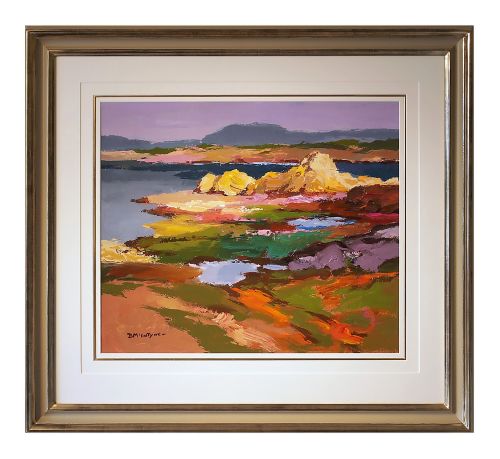
A welsh oil painting captures the scenery and heritage of Wales, ranging from 19th-century depictions of Snowdonia and river valleys to mid-century modernist interpretations of coastal towns.
The works appearing most frequently on this page span the Victorian period through to the mid-20th century, encompassing detailed pastoral landscapes, genre scenes in cottages, and impressionist coastal views.
Makers and subjects frequently focus on specific locations such as Betws-y-coed, the Menai Strait, and Cardiganshire, recorded by artists working in both academic and modernist modes.
How they were made
Artists painted primarily with oil paint on stretched canvas, wood panel, or board, building up textures with opaque pigments and thin glazes.
Surviving works are frequently housed in their original surrounds of moulded giltwood and gesso frames that complement the depth of the painted surface.
Listings feature oil paintings executed on canvas, wood panels, and card, spanning the late 18th century to the mid-20th century.
What varies in quality
Quality rests on the confidence of the brushwork and the artist's command of Welsh light and atmosphere, distinguishing evocative topographical studies from formulaic studio output.
Donald McIntyre·Sidney Richard Percy·Thomas Spinks·Herbert Royle·Walter J Watson·William Mellor
The Welsh Oil Painting Glossary
- Gesso
- A plaster-like preparation applied to wood or canvas as a base for painting or moulding into decorative frames. It provides a smooth, absorbent surface for subsequent gilding or paint layers.
- Oil on Canvas
- Pigment suspended in a drying oil medium applied to a woven fabric support. This combination allows for rich blending and varied surface textures.
- Wood Panel
- A rigid support made from timber used instead of canvas. It offers a completely stable surface that prevents the cracking associated with flexible supports.
- Giltwood
- Timber carved and coated with a thin layer of gold leaf or metallic powder. It frames many 19th-century works to enhance their visual weight.
- Impressionist
- A style focusing on the accurate depiction of light and its shifting qualities. It prioritises open brushwork and everyday subject matter over academic finish.
Welsh Oil Painting: Frequently Asked Questions
What subjects appear in these paintings?
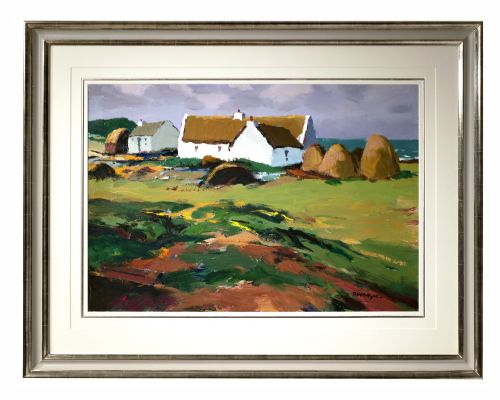
The compositions record Welsh mountains, rivers, waterfalls, rural farmsteads, and coastal scenes. Many focus on named locations across North and South Wales.
Artists also depicted everyday rural life, including figures working in fields, near mills, or inside traditional Welsh cottages.
How do I date an antique oil painting?
Dating relies on stylistic evidence, artist signatures, framing materials, and the preparation of the canvas or panel. Costume and architectural details within the scene also provide chronological clues.
Examing the reverse of the canvas or wooden support often reveals artist inscriptions, titles, and old gallery labels.
How should I care for an oil painting?
Keep the artwork away from direct sunlight, damp environments, and rapid temperature fluctuations that can cause the canvas or wood panel to warp and crack. Dust the surface gently with a soft, dry brush without applying pressure.
Avoid using water or chemical cleaning agents on either the painted surface or the giltwood frame.
Are these works signed by the artists?
Many of the paintings feature artist signatures, monograms, or inscriptions either on the front face or written on the reverse of the canvas and frame. Unsigned works are often attributed through stylistic comparison and historical records.
Archival titles written on stretcher bars frequently identify the exact Welsh landscape depicted.