


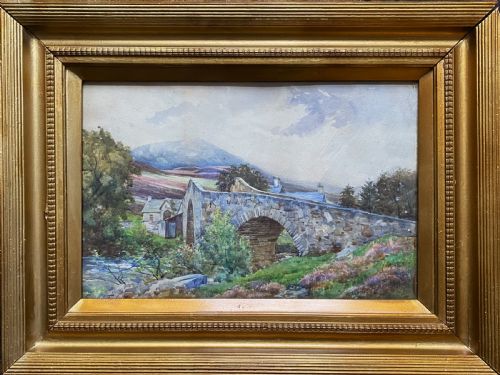

Antique Stone Bridge Painting
An antique stone bridge painting captures enduring masonry spanning moving water, prized for romantic topography and historical atmosphere.
Antique Stone Bridge Painting
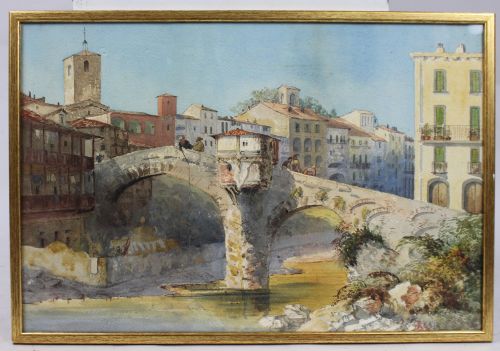
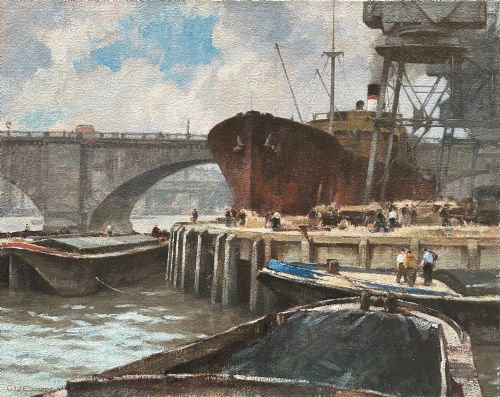
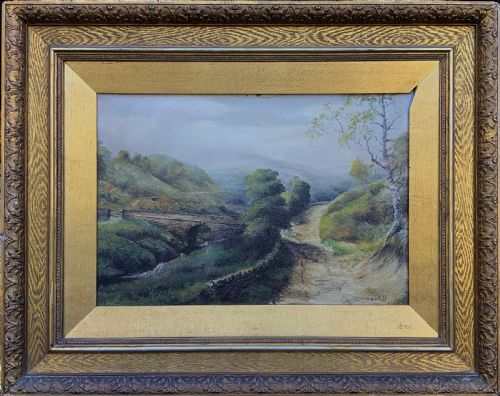
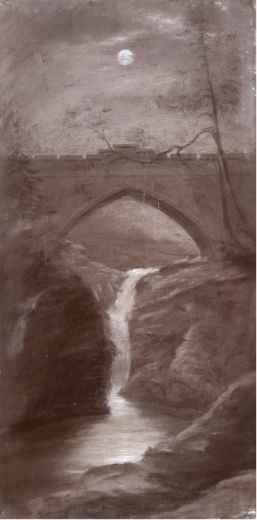
An antique stone bridge painting depicts architectural crossings within British and European landscapes, predominantly originating from the nineteenth and early twentieth centuries. These artworks capture rural, highland, and urban waterways framed by masonry arches, reflecting picturesque and romantic traditions.
The selections available range from intimate watercolours on paper to substantial oil paintings on canvas and wood panel. Examples span Victorian depictions, Edwardian views, and early twentieth-century regional studies.
Scottish highlands, Welsh rivers, Yorkshire settings, and Italian scenes appear frequently across the inventory. Buyers encounter both signed cabinet pieces and expansive framed compositions documenting historical routes.
Materials and Methods
Artists employed oil paint and watercolour paint applied to prepared canvas, wood panel, terracotta plates, and heavy paper. Watercolour pigment was built in translucent washes, whilst oil mediums allowed richer impasto and blending.
Substrates varied according to the scale and medium chosen, utilising stretched canvas for large oils and sturdy wood panels or paper sheets for watercolours. Gilt framing completed the presentation of finished works.
The inventory records regional landscapes from Scotland, Wales, Yorkshire, and Venice.
Evaluating Artistic Merit
The distinction between standard works and exceptional examples rests upon compositional balance and atmospheric depth. Superior pieces demonstrate confident brushwork that renders the texture of weathered stone and moving water with precision.
Provenance and signature clarity elevate specific works, alongside the artist's ability to integrate human figures naturally into the surrounding topography without disrupting the scene's architectural focus.
Florence Adelina Hess·Thomas Lound·Percy Lancaster·Franz Reder-Broili·Charles Edmund Rene His
The Antique Stone Bridge Painting Glossary
- Oil on Canvas
- Pigment mixed with drying oil applied to a woven fabric stretched across a wooden frame. This method provides durability and rich colour depth.
- Watercolour Paint
- Finely ground pigment suspended in a water-soluble binder applied to paper. It yields translucent washes and luminous effects.
- Wood Panel
- A rigid flat wooden support used as a painting surface instead of canvas. It offers a firm texture favoured by nineteenth-century landscape painters.
- Gilt
- A thin layer of gold leaf applied to the surface of picture frames. This decorative finish enhances the presentation of antique artworks.
Antique Stone Bridge Painting: Frequently Asked Questions
What periods do these paintings date from?
The available works span the nineteenth century through the early decades of the twentieth century, including Victorian and Edwardian examples.
Artists from these periods documented both British landscapes and continental European scenes with traditional media.
How should I hang an oil painting?
Oil paintings on canvas or panel require secure wall fixings suited to the weight of the gilded or wood frame.
Position pieces away from direct sunlight and steady heat sources to protect the painted surface over time.
Are watercolours fragile?
Watercolour paintings on paper are sensitive to prolonged exposure to bright light and high humidity.
Mounting them behind protective glass with archival backing safeguards the delicate pigments from environmental damage.
How do I identify the artist?
Examine the corners of the composition for signatures, monograms, or dated inscriptions left by the painter.
Examine the reverse of the canvas or panel for historical labels, exhibition stamps, or handwritten titles.