





Welsh Oak Low Dresser
A welsh oak low dresser offers sturdy utility and rich regional character, holding centre stage in a traditional kitchen or dining room.
Welsh Oak Low Dresser
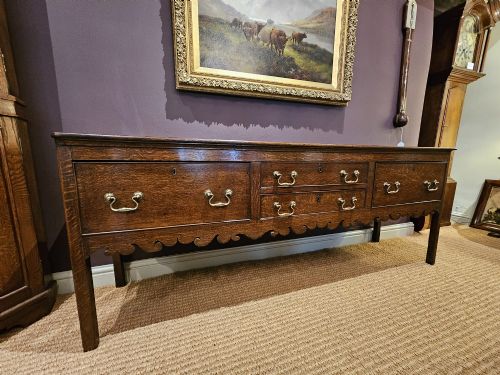
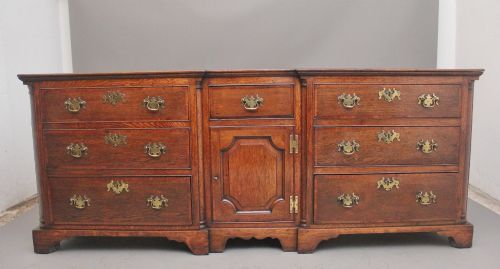
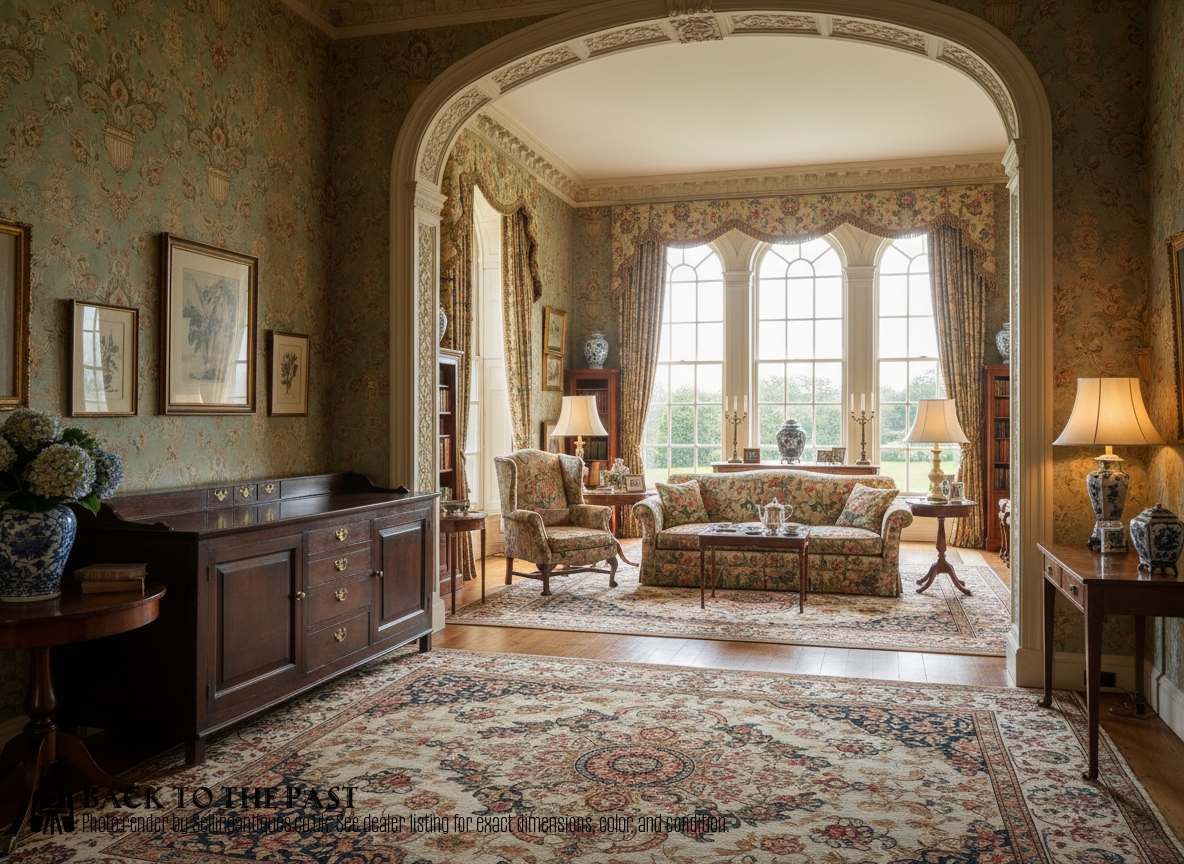
A welsh oak low dresser provides a low-slung surface and deep storage drawers, originating primarily from eighteenth century and nineteenth century workshops. The pieces span periods from George II and George III through to the Regency era, reflecting regional English and Welsh cabinet-making traditions.
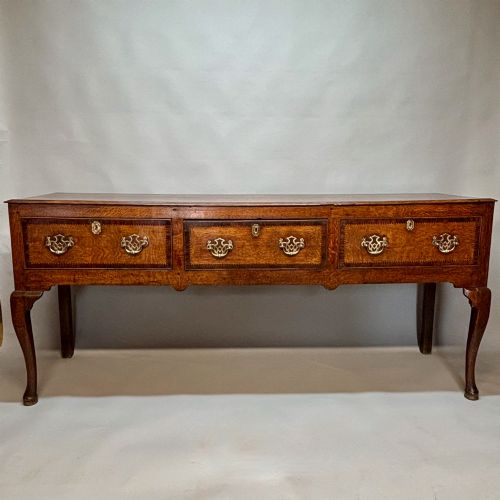
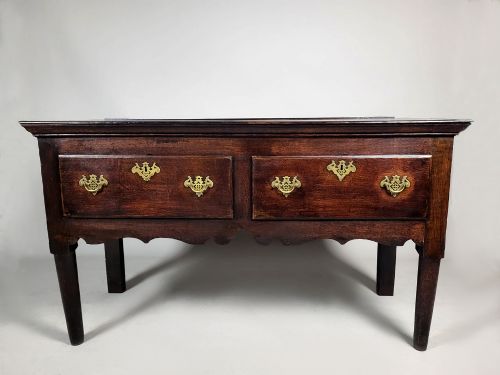
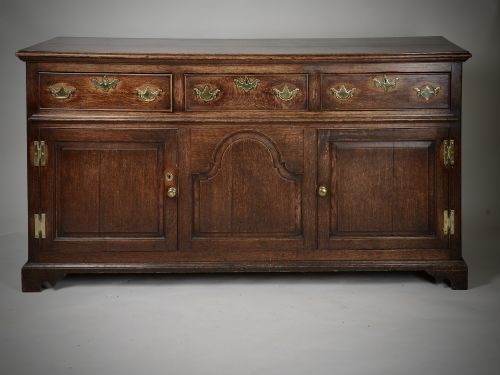
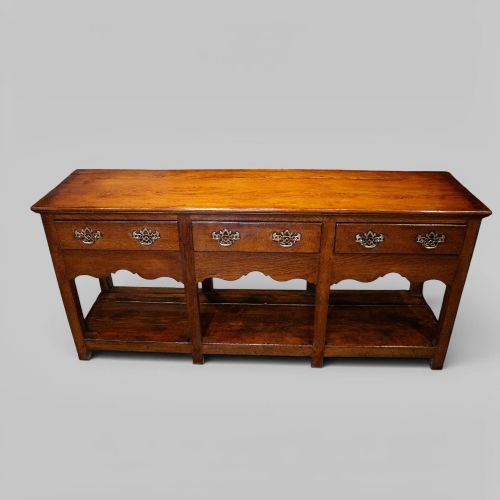
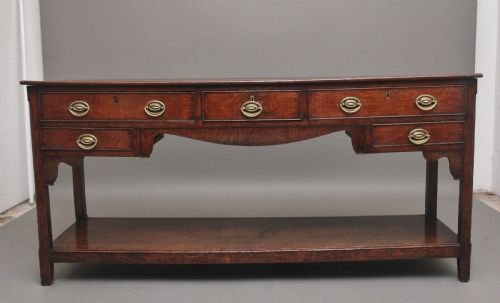
Most examples take the form of a dresser base or serving table, occasionally incorporating an open potboard beneath for storing heavy domestic wares. Formats range from simple four drawer configurations to larger sideboard styles with fruitwood inlay or fretted aprons.
Materials and construction
Makers constructed these sturdy items chiefly from solid oak, supplementing secondary woods like elm, pine, and fruitwood inlay for decorative details. Iron and brass hardware, including original swing handles and escutcheons, secure the heavy drawers and panelled doors.
Joinery methods rely on pegged mortise and tenon frames, ensuring the structural stability required for daily food preparation and service. Surfaces develop a deep natural patina over centuries of polishing and wear.
Welsh Oak Low Dresser Retail Price Guide 2026
Typical asking prices for welsh oak low dresser among the pieces listed under this phrase on Sellingantiques today, from the lower quarter to the upper quarter. They describe what is for sale here now, not the wider market.
Many an eighteenth century oak potboard still bears the ghost mark where a heavy pewter charger rested for fifty years.
Distinctions in craftsmanship
Quality rests upon the retention of original brasses, patination, and the crispness of carved mouldings or fretted aprons. Superior examples maintain intact potboards and well-proportioned cabriole or turned legs rather than altered bases.
The sophistication of secondary wood use and the subtlety of fruitwood inlay separate standard utility pieces from finer country house commissions.
The Welsh Oak Low Dresser Glossary
- Potboard
- An open lower shelf built into the base of a dresser, historically designed for displaying pewter or storing heavy pots. This platform is raised on legs or stile feet.
- Low dresser
- A sideboard or serving table standing at a reduced height, typically featuring multiple drawers above an open space or cupboard doors. It served as a functional work surface in country kitchens.
- Fretted apron
- A decorative wooden skirt cut into geometric or scroll patterns, positioned beneath the drawer tier. This stylistic flourish appears on select eighteenth century regional tables.
- Fruitwood inlay
- Contrasting timber insertions, such as apple or pear, used to create geometric banding or floral motifs across the drawer fronts. It highlights the decorative ambitions of the maker.
Welsh Oak Low Dresser: Frequently Asked Questions
What is a welsh oak low dresser used for?
These low servers function well as sideboards in modern dining rooms or as console tables in spacious hallways, providing a surface for display and storage within deep drawers.
Historically, kitchens relied on them for food preparation and storing heavy domestic utensils beneath the main counter space.
How do I date an eighteenth century dresser?
Examine the timber boards inside the drawers and the construction of the frame to determine age, looking for hand-cut joints and pegged tenons.
Hardware styles, foot configurations like cabriole legs, and the presence of original brasses also point towards specific decades within the Georgian period.
Are potboard dressers hard to maintain?
Standard upkeep involves feeding the timber with natural beeswax to preserve the historic patina and protect the dry oak from excessive moisture.
Avoid placing these heavy items near direct heat sources to prevent the wide oak planks from splitting or warping over time.
What distinguishes regional english and welsh styles?
Border counties and Welsh workshops often integrated distinct local preferences, such as open potboards, shaped aprons, or specific combinations of oak and secondary fruitwoods.
Subtle variations in drawer proportions and leg turning help identify the geographic origin of country pieces.