
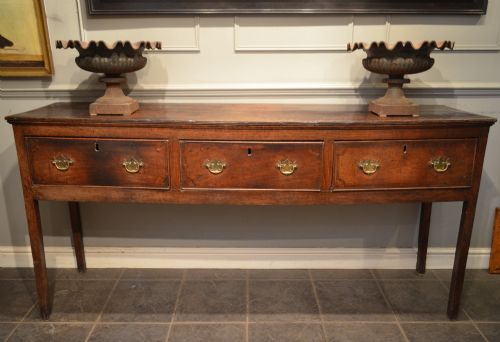
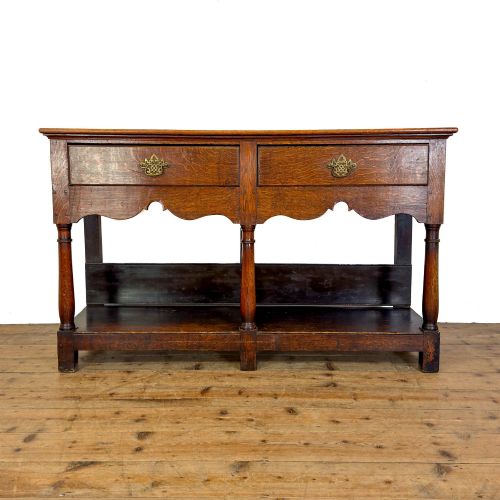


Welsh Oak Console Table
These pieces of welsh oak console table are sturdy country furniture carrying centuries of honest utility.
Welsh Oak Console Table
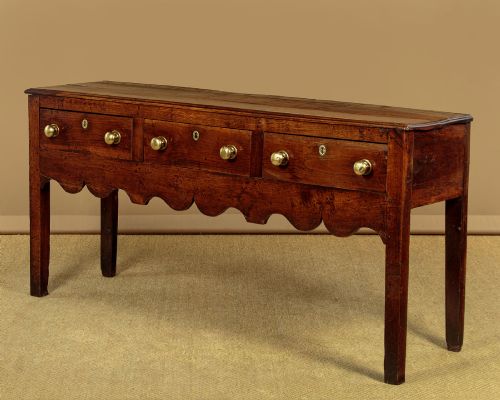
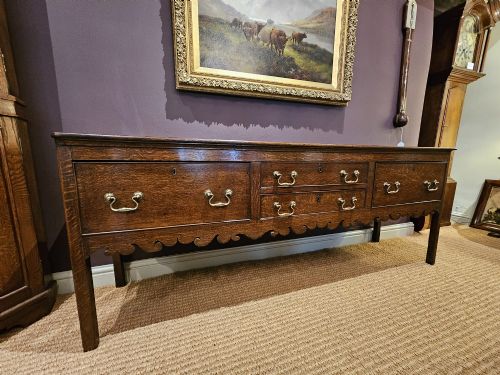
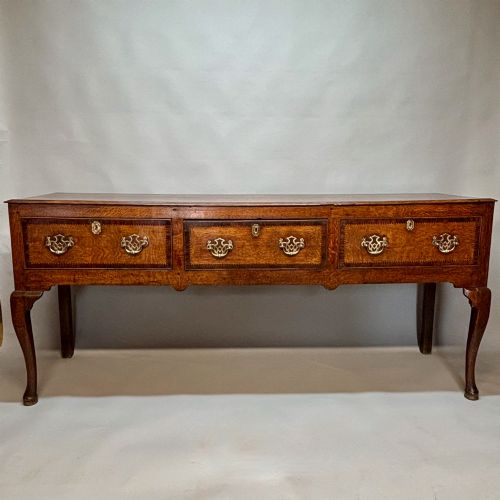
A welsh oak console table represents the robust domestic furniture produced in regional workshops during the eighteenth and nineteenth centuries. Buyers searching this phrase typically encounter low dressers, dresser bases, side tables, and lowboys rather than formal urban console tables.
The selection ranges from early examples dating to the seventeen-hundreds through to Victorian interpretations and later revivals. These forms reflect the practical domestic needs of Welsh country houses and chapels over generations of daily use.
Materials and construction
Makers relied principally on native oak, frequently supplemented with elm, pine, and occasional timber inlay for secondary elements. Brass hardware appears on later drawers, whilst structural joints depend on traditional pegged construction.
Surfaces developed through hand-working methods leaving tool marks and natural grain patterns visible across the timber. Regional variations in construction distinguish pieces originating from different valleys and counties across Wales.
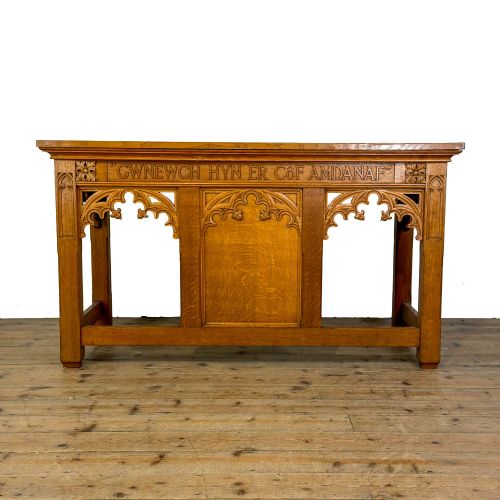
Listings span the eighteenth and nineteenth centuries, featuring side tables, dresser bases, and altar tables constructed from oak, elm, and pine.
Assessing quality and character
Quality rests in the proportion of the frame, the depth of the timber patination, and the retention of original structural elements. Untouched surfaces with deep colour separate superior country pieces from heavily restored examples.
The sophistication of regional detailing, such as fretted aprons or carved drawer fronts, marks the distinction between everyday utility furniture and finer cabinet-maker output.
The Welsh Oak Console Table Glossary
- Potboard
- A lower open shelf built into a dresser base for storing pots and pans. This practical addition provides structural stability to the legs.
- Lowboy
- A small low table with drawers, typically used as a side table or dressing table. These pieces often feature cabriole or straight legs.
- Vernacular
- Architecture and furniture built by local craftsmen using traditional regional styles and native materials. Such pieces serve practical domestic purposes without high court influence.
- Fretted apron
- A decorative wooden board beneath the table top pierced with geometric or scroll patterns. This detail ornaments simpler country tables.
- Patina
- The surface sheen and colour developed on timber over decades through handling, polishing, and ageing. A good patina shows depth rather than a flat modern finish.
Welsh Oak Console Table: Frequently Asked Questions
How do I date a welsh oak console table?
Dating relies on examining construction techniques, hardware, and timber characteristics. Tool marks, joint types, and timber shrinkage offer reliable clues to the decade of manufacture.
Stylistic shifts between early eighteenth-century pieces and later nineteenth-century examples provide further reference points for the collector.
Where were these tables originally used?
These pieces served practical roles in farmhouse kitchens, cottages, and chapels across Wales. They provided workspace for food preparation and storage for household utensils.
Today, they adapt readily to hallways, living rooms, and dining spaces as serving surfaces or display stands.
Are these tables purely Welsh in origin?
While the majority reflect Welsh vernacular traditions, some pieces share characteristics with English country furniture. Regional variations in leg design and apron carving help identify specific localities.
Workshop traditions often crossed county borders while retaining distinct local preferences for timber selection and proportion.
How should I care for antique oak?
Maintain the timber by applying a traditional beeswax polish sparingly and buffing gently. Keep the table away from direct heat sources and strong sunlight to prevent wood splitting.
Allow the surface to breathe and naturally accumulate character through regular, gentle handling.