
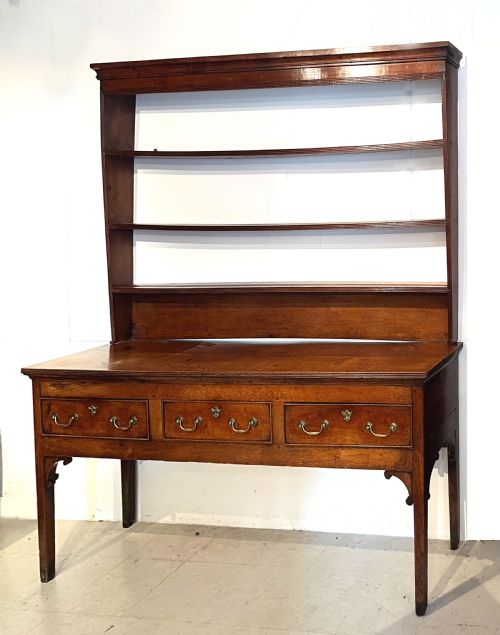
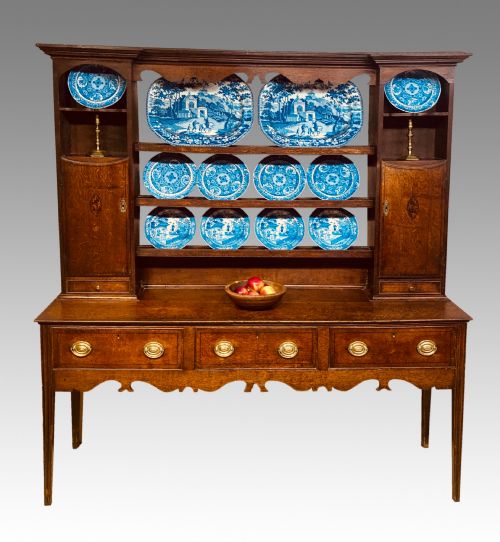


Welsh Dresser with Shelves
When you search for a welsh dresser with shelves, you are looking at substantial timber storage pieces designed to display pottery and hold household goods in domestic kitchens and dining rooms.
Welsh Dresser with Shelves
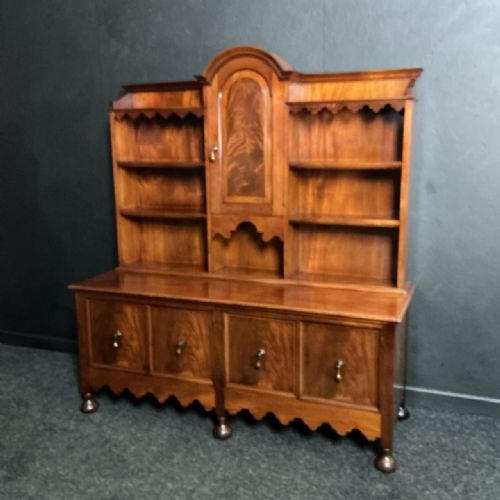
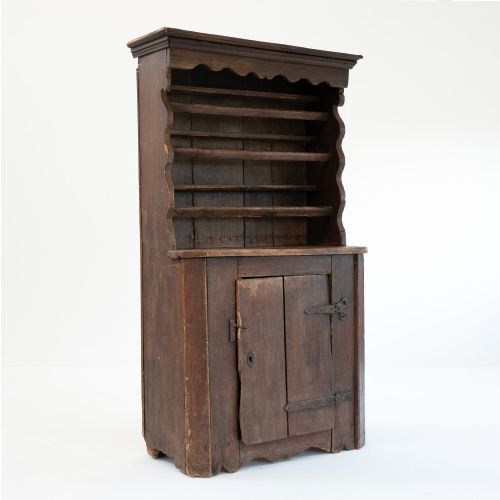
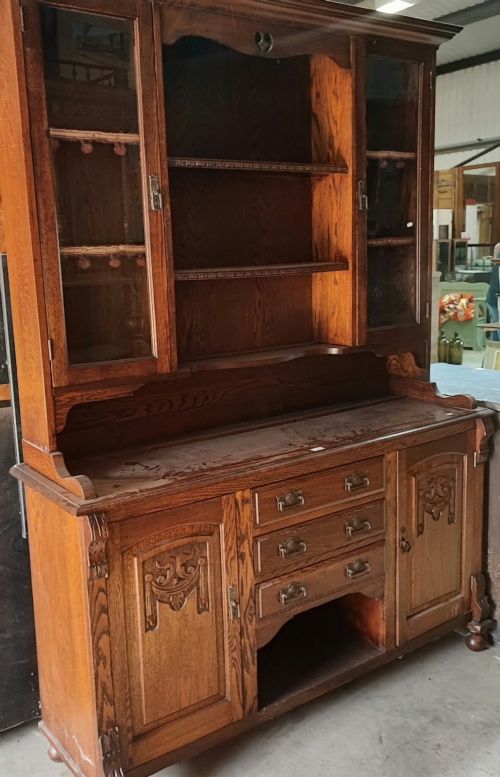
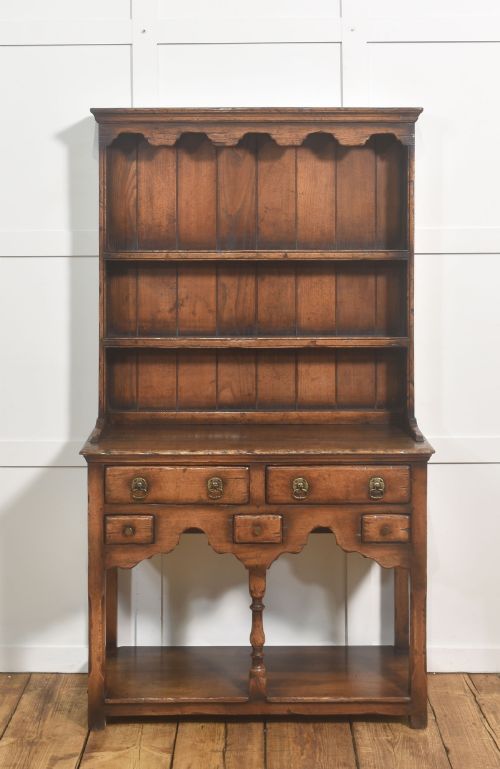
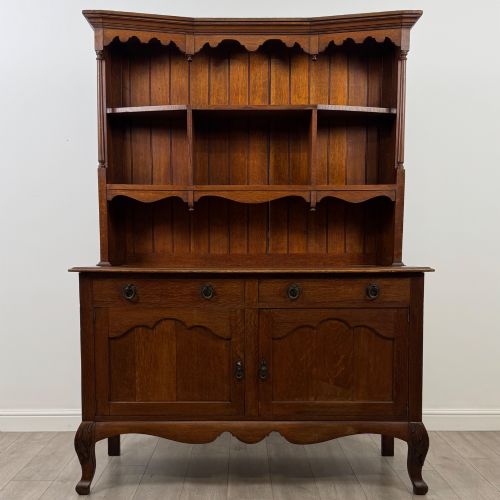
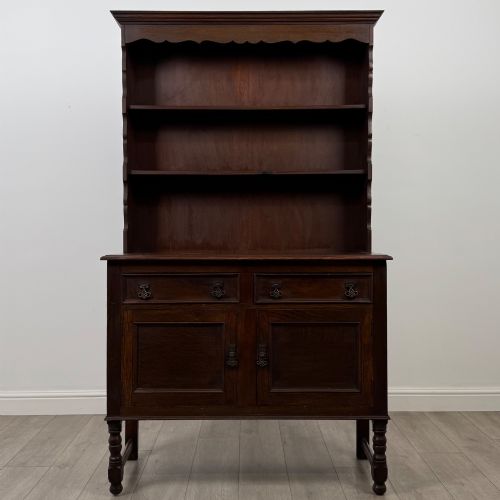
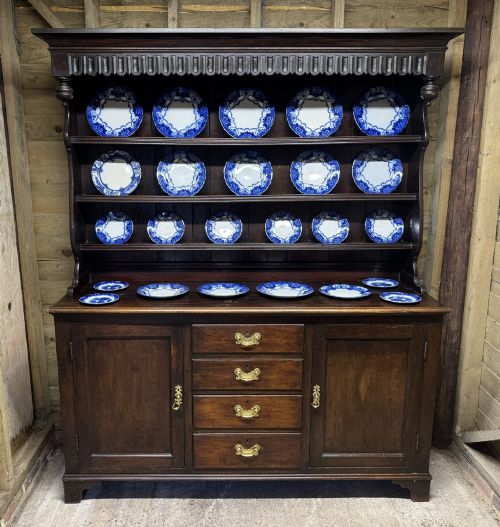
A welsh dresser with shelves combines a lower base of drawers or cupboards with an upper plate rack for displaying crockery. These items appear across several distinct eras, spanning 18th century examples through to Edwardian and 1910 reproductions.
The dominant material across these listings is oak, accompanied by mahogany, pine, and burr walnut. You will find forms described as cottage dressers, two-part dressers, and potboard dressers.
The upper shelves hold plates and platters, while the lower section provides enclosed storage or counter space. Regional variations include Georgian Shropshire pieces and the specific Welsh Talwrn dresser form.
How they were made
Cabinet makers constructed these pieces primarily using solid oak, pine, and mahogany, often featuring distinct grain patterns such as flame mahogany or burr walnut. Iron and brass fittings provide the hardware for handles, hinges, and occasional decorative elements.
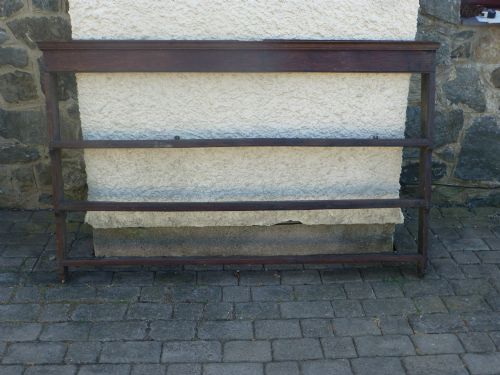
Construction methods range from traditional pegged joints in earlier 18th century examples to later multi-wood and glazed cabinet formats. Upper plate racks are either integrated into a two-part construction or built as separate hanging shelves.
Listings feature oak, mahogany, pine, and burr walnut across periods from the 18th century to Edwardian revivals.
What varies in quality
The distinction between standard utility items and finer examples rests on timber selection and decorative carving. Pieces utilising burr walnut, flame mahogany, or dense tiger oak sit at a different level from basic pine or standard oak vernacular furniture.
Design complexity also separates pieces, with sophisticated George II proportions or detailed regional carving contrasting against plain rustic country formats. The integrity of the two-part structure and the survival of original brass hardware further influence the character of each piece.
The Welsh Dresser with Shelves Glossary
- Potboard dresser
- A dresser base featuring an open lower shelf close to the floor, traditionally used for storing pots and pans.
- Plate rack
- The upper shelving unit attached to or hung above the dresser base, designed with vertical slats or grooves to display plates upright.
- Two-part dresser
- A large piece constructed in separate upper and lower sections to facilitate transport and placement within a room.
- Talwrn dresser
- A specific regional Welsh form of dresser associated with particular cabinet-making traditions.
- Tiger oak
- Oak timber exhibiting strong, undulating medullary ray patterns that resemble tiger stripes.
Welsh Dresser with Shelves: Frequently Asked Questions
How do I use a welsh dresser today?
These pieces function well in modern kitchens and dining rooms for storing tableware while displaying ceramic collections on the upper shelves.
The lower cupboards and drawers provide practical enclosed storage for linens, cutlery, or kitchen equipment.
What is the difference between oak and mahogany dressers?
Oak dressers tend to date from the 18th and early 19th centuries, offering a rustic or vernacular country aesthetic with visible grain.
Mahogany and flame mahogany examples often appear in later Edwardian or formal styles, presenting a smoother and more polished surface.
How do I care for antique timber furniture?
Keep wooden furniture away from direct heat sources and sudden temperature fluctuations to prevent the timber from splitting or warping.
Regular application of suitable natural wax helps nourish the wood and maintain the protective surface finish over time.
What defines a regional welsh dresser?
Regional pieces often display specific local construction traits, such as distinct proportions in the potboard base or unusual cupboard arrangements.
Examples like the Welsh Talwrn dresser carry unique structural characteristics tied to their specific geographic origins.