
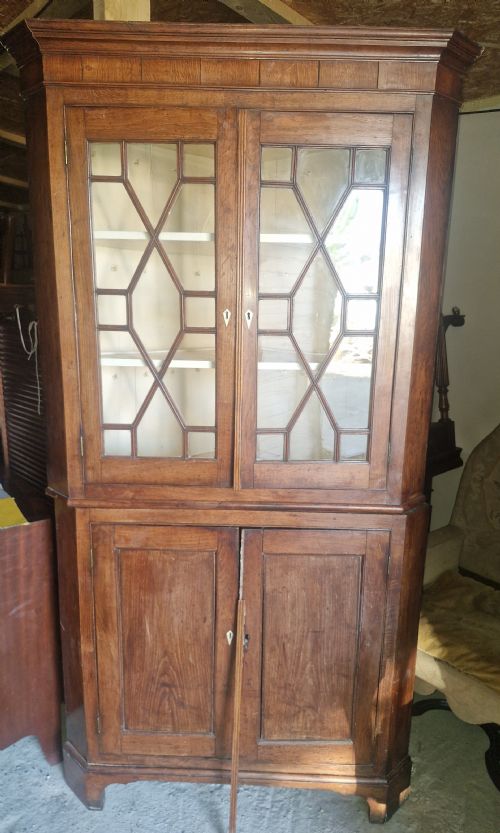


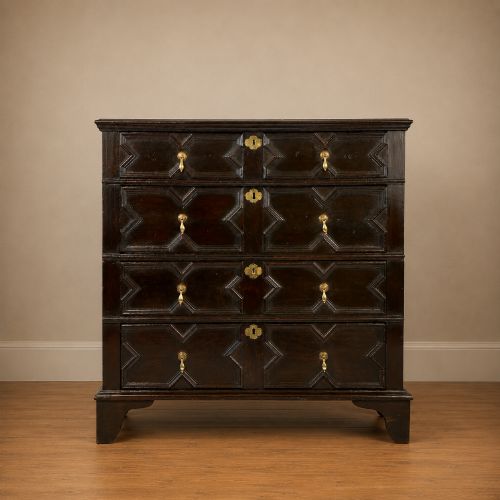
Two Part Oak Dresser
These two part oak dresser pieces bring substantial storage and distinct regional character to a room.
Two Part Oak Dresser
When you search for a two part oak dresser, you encounter pieces built in separate upper and lower sections designed to house tableware and provisions. The evidence shows these constructions appearing across several periods, most notably the seventeenth, eighteenth, and nineteenth centuries.
The regional styles recorded in the listings range from English country examples to Welsh vernacular and Welsh dressers, including specific forms like the Cwpwrdd Gwydr and Deuddarn two-part cupboard. Alongside traditional dressers, the selections include related two-part forms such as chests of drawers, corner cupboards, and military or campaign chests.
Makers utilised solid timbers, primarily oak, supplemented by secondary woods and decorative elements in brass, glass, iron, walnut, and bone. These items reflect the domestic needs of historic kitchens and parlours through distinct stylistic traditions from Charles II to Regency and George III eras.
How they were made
Construction relies heavily on solid oak timbers, often worked by regional joiners using traditional frame and panel techniques. Master carpenters joined the upper and lower halves of a two part oak dresser to ensure stability despite the considerable weight of the timber.
Detailing on these pieces incorporates geometric mouldings, inlay work, and turned elements characteristic of seventeenth-century Carolean and Charles II periods, alongside later Georgian refinements. Hardware such as brass drop handles, escutcheons, and iron hinges were integrated to secure doors and drawers.
Recorded styles include Charles II, Georgian, George III, and Welsh vernacular traditions.
What varies in quality
Quality in a two part oak dresser rests on the crispness of the timber's figuring, the depth of colour in the patina, and the integrity of the original construction joints. Pieces retaining their original brass hardware and untouched surface finishes command greater appreciation among collectors.
The refinement of decorative flourishes, such as geometric mouldings on seventeenth-century chests or fine inlay work, distinguishes utilitarian regional items from more ambitious workshops. Proportion and the balanced integration of the upper and lower sections also define the aesthetic success of each piece.
The Two Part Oak Dresser Glossary
- Deuddarn
- A traditional Welsh two-part cupboard featuring enclosed upper and lower sections, often with panelled doors. This form provides substantial storage while displaying regional joinery techniques.
- Cwpwrdd Gwydr
- A Welsh term for a glazed cupboard, typically forming the upper stage of a two-part Welsh dresser. It allows for the display of ceramics and glassware.
- Geometric mouldings
- Raised wooden mouldings applied in geometric patterns to drawer fronts and door panels, particularly popular during the seventeenth century on Charles II pieces. They add texture and visual depth to plain timber surfaces.
- Welsh vernacular
- Furniture styles developed within Welsh rural communities using local materials and traditional construction methods. These pieces often exhibit unique regional quirks and practical adaptations.
- Campaign chest
- A portable chest of drawers built in two separate stacking sections for military transport, frequently fitted with recessed brass drop handles and corner brackets.
Two Part Oak Dresser: Frequently Asked Questions
What is a two part oak dresser?
A two part oak dresser is a heavy storage item constructed in two distinct stacking sections, typically featuring a base cabinet or drawers beneath an upper plate rack or display cupboard. These pieces were staples of historic kitchens and dining spaces.
Surviving examples span several centuries, incorporating regional variations from English country workshops to Welsh vernacular traditions using solid oak and traditional joinery.
How do I date a two part oak dresser?
Dating relies on observing construction methods, timber choice, and stylistic details such as geometric mouldings, bracket feet, or hardware. Seventeenth-century pieces often display heavier mouldings and pegged frames, while Georgian and Regency examples show refined proportions.
Examining the secondary timbers and the method used to join the upper and lower sections provides further clues to the period of manufacture.
Where were these dressers made?
The pieces originate from various English and Welsh regions, reflecting local cabinet-making traditions and the availability of materials. West Country workshops and Welsh rural communities produced distinct regional vernacular forms.
Makers adapted the basic two-part form to suit local domestic requirements, resulting in regional variants like the Deuddarn and the Cwpwrdd Gwydr.
How do I care for antique oak furniture?
Antique oak benefits from stable environmental conditions with minimal fluctuations in temperature and humidity to prevent timber movement. Regular dusting with a soft, dry cloth helps maintain the surface finish.
Applying traditional beeswax occasionally nourishes the wood and preserves the patina built up over centuries of use.