
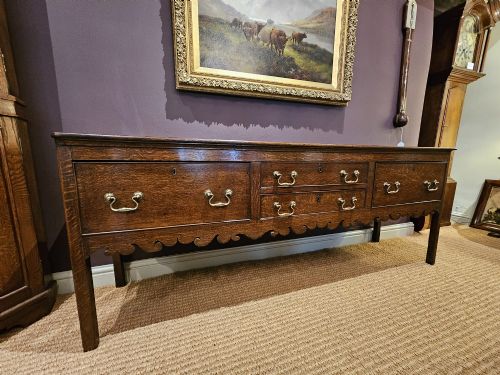
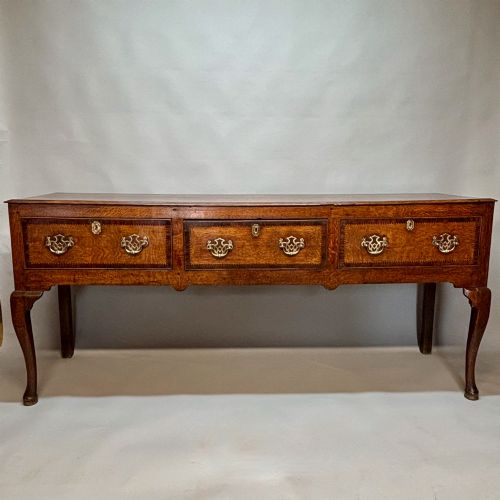
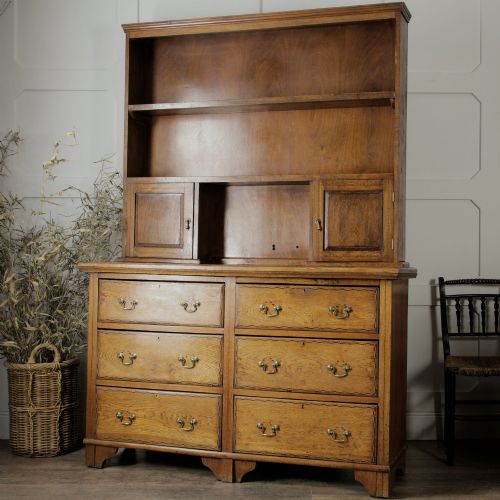
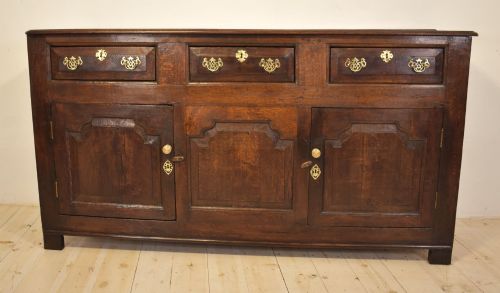
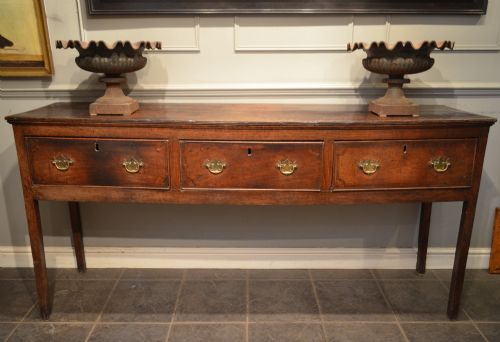
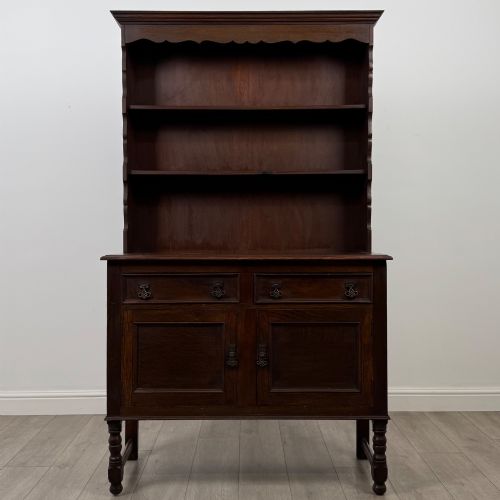
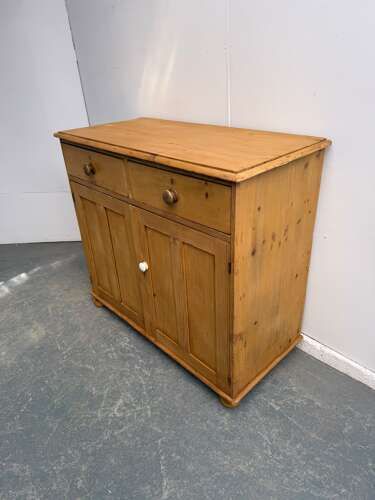
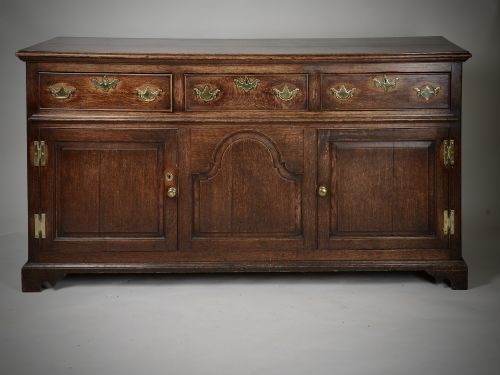
Welsh Dresser with Drawers
A welsh dresser with drawers anchors a kitchen or dining room with deep timbers and useful storage built over centuries of country life.
Welsh Dresser with Drawers
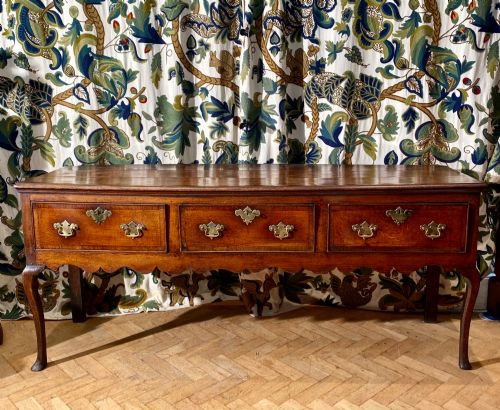
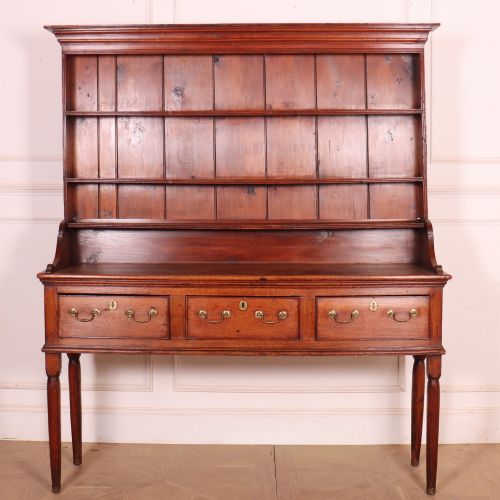
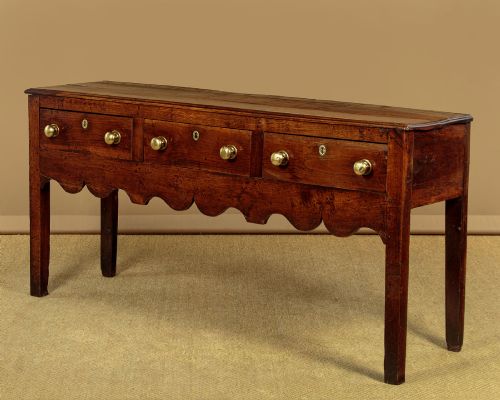
A welsh dresser with drawers combines a lower base fitted with working storage drawers and open surface space with upper plate racks or shelving in various configurations. The pieces appearing here span from the eighteenth century through the nineteenth century and into later periods, reflecting enduring country workshop traditions.
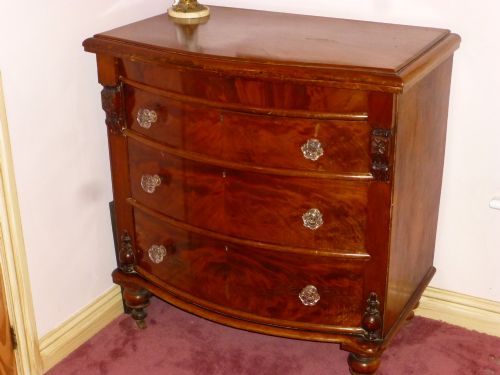
Oak dominates the forms, alongside pine, mahogany, flame mahogany veneer, maple, and multi-wood combinations. Styles range from Georgian country and Welsh vernacular to Victorian and English country interpretations, offering both dresser bases and complete dresser-and-rack assemblies.
How they were made
Cabinet makers utilised solid regional timbers such as oak and pine for structural carcases, applying mahogany veneers for more formal expressions. Drawers were constructed using traditional jointing methods to withstand daily domestic use.
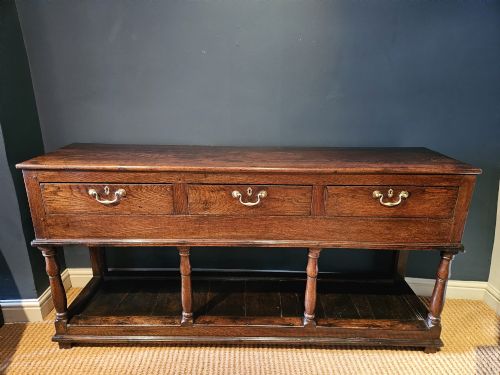
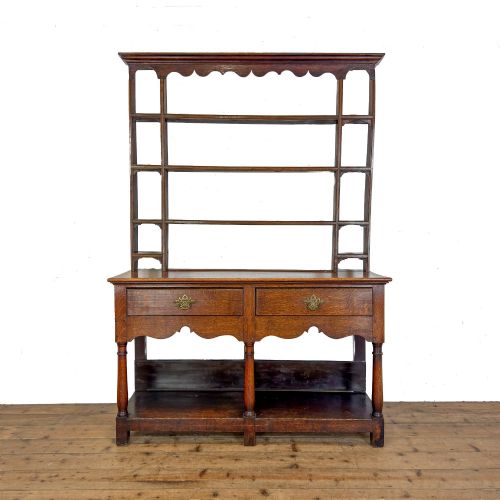
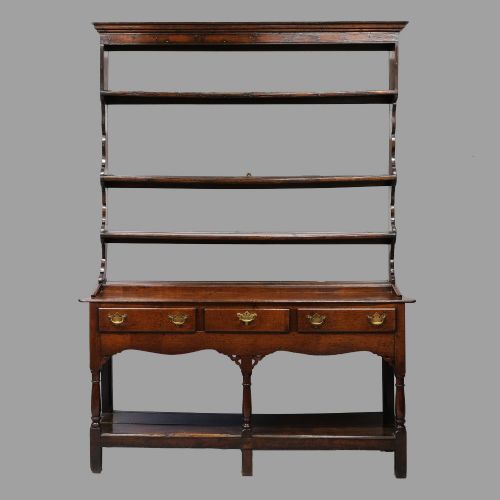
Hardware such as brass handles and iron fittings were integrated into the design, whilst plate racks and potboards provided open storage for ceramics and kitchen wares.
Listings feature oak, pine, mahogany, and maple across Georgian, Victorian, and early twentieth-century periods.
What varies in quality
The choice of timber heavily influences the character of each piece, ranging from robust local oak to figured mahogany veneers and maple. Finer examples display thoughtful proportions, such as breakfront drawer arrangements, potboards, or integrated spice drawers.
The integrity of original brass and iron hardware, combined with the survival of upper racks or potboard bases, distinguishes standard utilitarian furniture from more substantial regional works.
The Welsh Dresser with Drawers Glossary
- Potboard
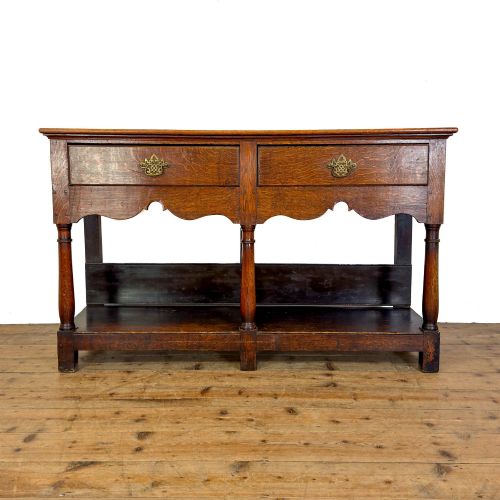
- A lower open shelf positioned near the floor of a dresser base, traditionally used for storing pots and pans. This platform sits below the main bank of drawers.
- Spice drawers
- Small, subsidiary drawers built into the upper section or main base of a dresser, used historically for storing dry goods and spices. They are frequently found in eighteenth-century Welsh examples.
- Dresser base
- The lower cabinet portion of a dresser, featuring a flat top surface and multiple working drawers, often without the accompanying plate rack. These pieces function independently as sideboards.
- Flame mahogany veneer
- A thin slice of mahogany timber cut to reveal a flickering, torch-like grain pattern, applied to carcase fronts during the Georgian and later periods for decorative effect.
- Vernacular style
- Furniture designed and built by local country craftsmen using regional traditions and readily available materials, rather than following strict metropolitan pattern books.
Welsh Dresser with Drawers: Frequently Asked Questions
What is a welsh dresser with drawers?
A welsh dresser with drawers is a traditional storage item consisting of a lower cabinet fitted with drawers and an optional upper plate rack. These pieces were designed for practical domestic use in country kitchens and dining spaces.
They serve today as functional display furniture for tableware, linens, and decorative items, bringing historical character to modern interiors.
How do I date an antique oak dresser?
Dating relies on observing construction methods, timber selection, and hardware styles across the piece. Eighteenth-century examples often feature pegged joinery and hand-shaped boards.
Later Victorian and early twentieth-century pieces display machine-sawn elements and different brass or iron fittings. Comparing the drawer linings and backboards helps confirm the period.
Are dresser bases different from full dressers?
A dresser base is simply the lower half of a dresser without the upper plate rack or shelving unit. Many historical pieces were built solely as bases, while others lost their racks over time.
Full dressers include the upper display structure, which changes the visual weight and requires more wall space.
What woods were used for these dressers?
Oak is the primary timber found in Welsh and English country dressers due to its local availability and durability. Pine appears frequently in later Victorian and regional pieces.
Finer urban examples utilise mahogany, flame mahogany veneer, and maple, sometimes combined with secondary woods in multi-wood constructions.
How do I care for an antique wood dresser?
Protect antique timber by keeping it away from direct heat sources and sudden humidity changes that cause wood to split. Regular dusting with a soft, dry cloth preserves the finish.
Avoid modern silicone polishes, opting instead for traditional beeswax applied sparingly to nourish the dry grain.