


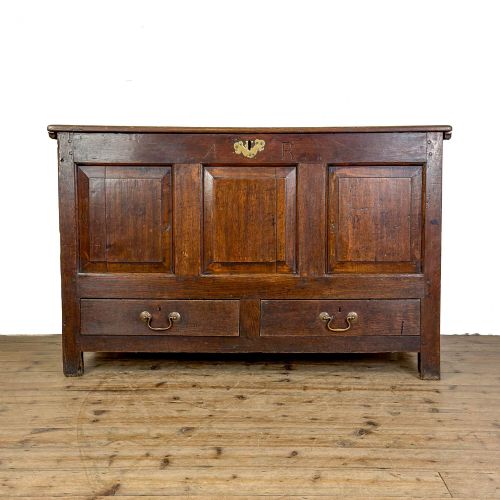
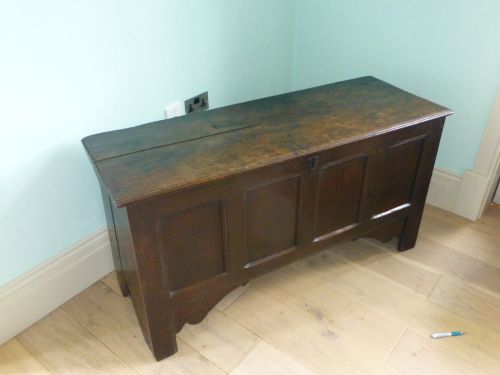


Welsh Country Oak Chest
A Welsh country oak chest holds centuries of utility and vernacular craft, offering sturdy storage rooted in rural tradition.
Welsh Country Oak Chest
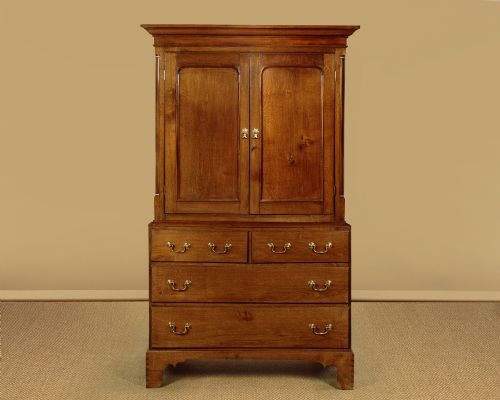
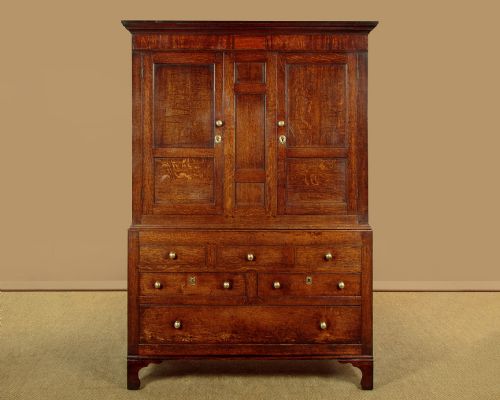
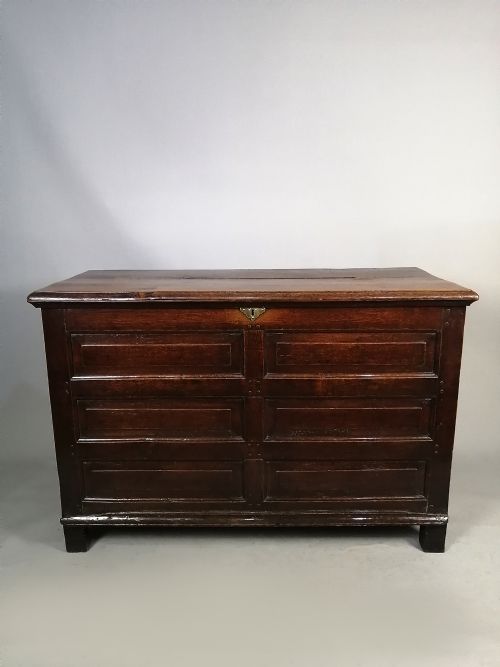
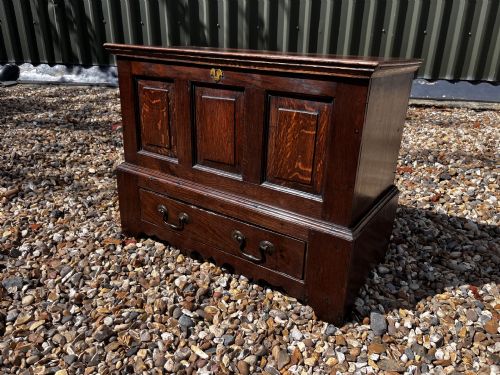
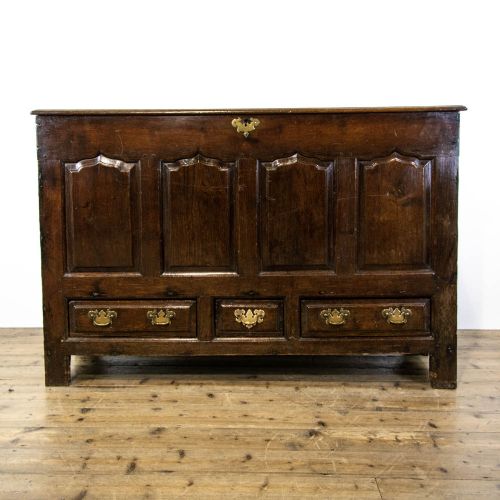
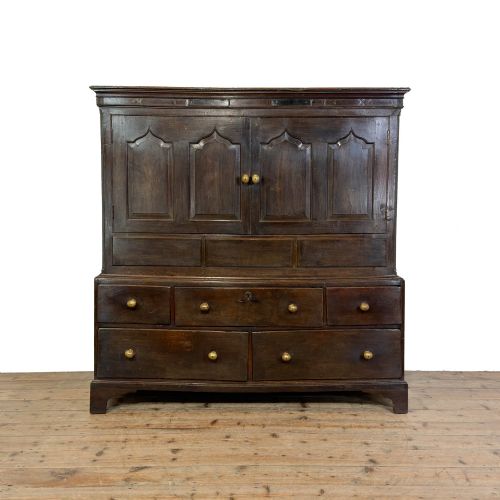
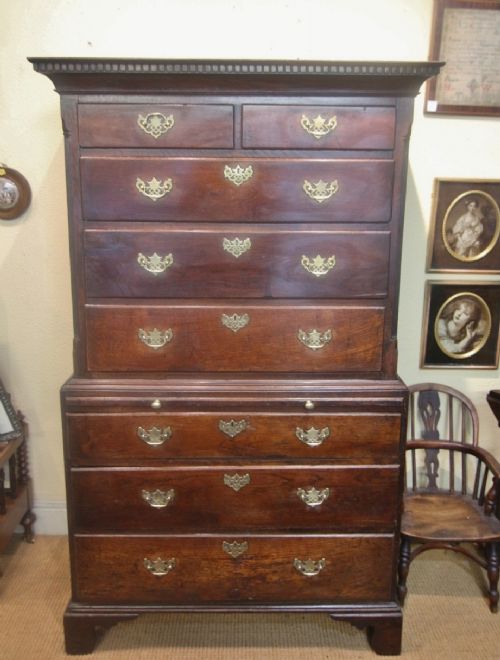
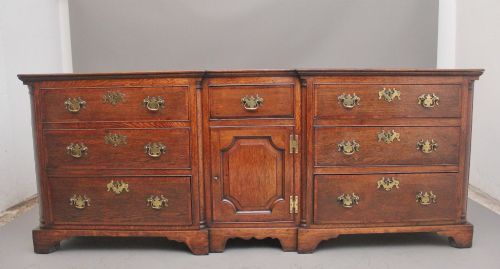
Every welsh country oak chest on this page originates from distinct periods ranging from the seventeenth century through to the nineteenth century, capturing the evolution of domestic storage. Buyers encounter various vernacular forms, including larger coffers, mule chests, press cupboards, and smaller miniature chests or coffer bach examples.
The regional character shows in robust constructions designed for practical rural use rather than urban display. Makers built these pieces primarily in oak, often incorporating fruitwood or iron hardware, reflecting local material availability across Welsh districts.
Materials and Construction
Construction relies heavily on solid oak timbers, frequently joined by hand and supplemented with iron hinges, brass fittings, or occasional marquetry and bone inlay. Cabinet makers shaped these dense woods using traditional methods, producing sturdy panels and frames designed to endure heavy daily use.
Surface finishes vary from unadorned timber showing natural grain and rich patina to painted wood surfaces. Certain examples feature chip carving or inlaid details that distinguish regional workshop traditions.
Welsh Country Oak Chest Retail Price Guide 2026
Typical asking prices for welsh country oak chest among the pieces listed under this phrase on Sellingantiques today, from the lower quarter to the upper quarter. They describe what is for sale here now, not the wider market.
Listings span seventeenth-century Stuart origins through Georgian vernacular periods up to early twentieth-century oak furniture.
Assessing Quality
Quality rests in the integrity of the original timber and the restraint of the joinery rather than excessive ornamentation. Pieces displaying honest patination and untouched construction details stand above examples with heavy modern restorations or replaced boards.
Proportion and scale also dictate distinction, particularly in smaller specialised forms like the coffer bach or miniature tallboy chests where delicate balance is harder to achieve. The presence of original hardware, feet, and interior arrangements elevates the standing of an individual piece.
The Welsh Country Oak Chest Glossary
- Coffer bach
- A small Welsh chest traditionally made as a gift or dowry piece. These miniature coffers often sit on feet and include small internal drawers.
- Mule chest
- A storage chest featuring one or more drawers built into the base beneath the main compartment. This form bridges the traditional coffer and the modern chest of drawers.
- Press cupboard
- A large storage furniture piece combining upper cupboard doors with lower drawers or shelving for linen and garments. They frequently feature a two-stage construction.
- Vernacular
- Regional architecture and furniture built by local craftsmen using native materials and traditional methods rather than following metropolitan fashion. It prioritises local utility and availability.
- Patina
- The surface sheen and colour developed by wood over decades of handling, light exposure, and waxing. A deep patina indicates age and continuous use.
Welsh Country Oak Chest: Frequently Asked Questions
How do I date a Welsh oak chest?
Dating relies on examining construction techniques, joinery methods, hardware, and timber characteristics. Pieces from the seventeenth century often show simpler boarded construction and chip carving.
Later eighteenth and nineteenth-century examples incorporate sophisticated drawer framing, dovetailing, and occasional marquetry or inlay as regional styles evolved.
Where were these chests made?
Makers constructed these pieces in local rural workshops across Wales, utilising native timber harvested from nearby woodlands. Different regions developed subtle stylistic preferences in carving and proportions.
Proximity to local ironworks also influenced the style of hinges, escutcheons, and structural braces fitted to the oak carcasses.
How do I care for antique oak furniture?
Maintain antique oak by placing it away from direct heat sources and strong sunlight, which can dry out the timber and cause splitting. Regular application of a traditional beeswax polish nourishes the wood.
Avoid synthetic sprays or silicones that build up on the surface and dull the natural patina accumulated over centuries of use.
What is the difference between a coffer and a mule chest?
A standard coffer consists of a deep wooden box with a hinged lid primarily used for general storage. A mule chest adds one or more functional drawers beneath the main box compartment.
This development provided easier access to stored items without needing to lift items directly out from the top lid.