
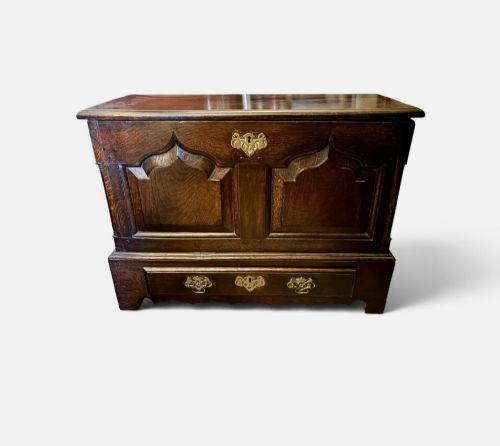
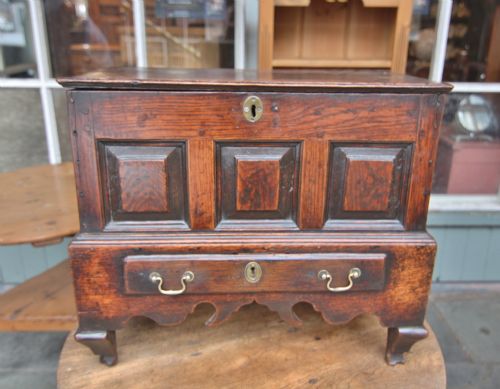
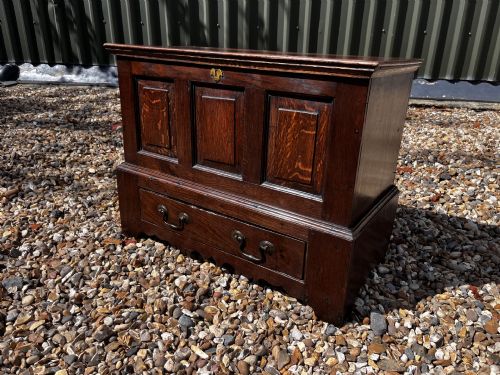
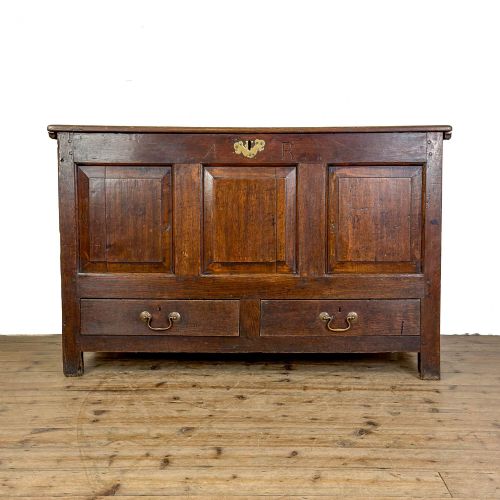
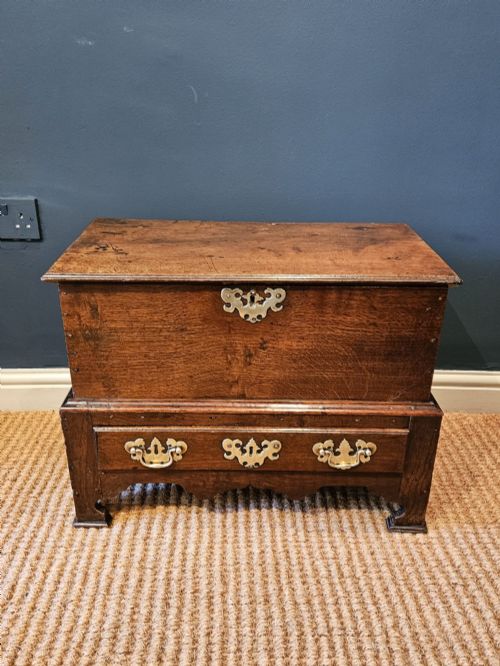


Welsh Coffer with Drawer
These welsh coffer with drawer pieces are solid oak storage chests built by regional makers, offering practical longevity and traditional country character for the home.
Welsh Coffer with Drawer
A welsh coffer with drawer is a traditional storage piece designed for domestic utility, typically incorporating a single base drawer beneath a lidded compartment. The selection here spans compact tabletop coffer bach examples alongside larger blanket chests and mule chests.
Most pieces seen on this page date from the eighteenth century, with occasional seventeenth-century items and later nineteenth-century interpretations. Styles range from plain vernacular country work to regional Georgian cabinetmaking.
Makers utilised familiar domestic forms such as storage chests, trunks, and miniature coffers. These items served households for linen and valuables storage before finding favour among collectors of regional furniture.
How They Were Made
Construction relies heavily on sturdy oak planks joined using traditional framing methods suited to regional workshops. The natural timber provides both structural strength and a resilient surface that ages with use.
Metalwork details such as brass handles and iron hinges are integrated into the construction to secure lids and drawers. These hardware elements reflect the functional requirements of daily domestic service.
Some miniature coffer bach examples are small enough to sit comfortably on a table while still offering a functional secret drawer.
What Varies in Quality
The standard of execution depends on the precision of the timber jointing and the proportion of the lower drawer relative to the main body. Finer examples display careful board selection and balanced proportions across the facade.
Carved decoration and surface patination distinguish standard utility pieces from more ambitious regional commissions. The depth and execution of period detail determine the visual weight of each piece.
The Welsh Coffer with Drawer Glossary
- Coffer bach
- A small Welsh box or miniature coffer featuring a drawer beneath the main compartment. These portable pieces were often used for precious textiles or documents.
- Mule chest
- A storage chest equipped with one or more drawers at the base, representing an intermediate stage in the evolution towards the chest of drawers. The design bridges the traditional coffer and modern drawer units.
- Vernacular
- Furniture built by local tradesmen following regional traditions rather than metropolitan academic designs. This approach prioritises local materials and practical utility.
- Oak
- A durable hardwood native to Britain, extensively utilised for structural furniture before the widespread adoption of mahogany. Its dense grain supports robust joinery.
Welsh Coffer with Drawer: Frequently Asked Questions
What is a coffer bach?
A coffer bach is a small Welsh box featuring a single drawer beneath the main lidded compartment. These miniature chests were traditionally produced in local workshops.
They served households as portable storage for valuables, linens, or personal documents before becoming sought-after collector pieces.
How were these coffers used?
These chests provided secure storage for household textiles, blankets, and domestic documents in traditional homes. The inclusion of a base drawer allowed smaller items to be accessed without lifting the main lid.
Over generations, their function shifted from utilitarian storage to decorative display pieces within period interiors.
How do I date an oak coffer?
Dating relies on observing construction methods, timber preparation marks, and stylistic indicators such as regional carving patterns. Eighteenth-century examples often display distinct vernacular characteristics compared to earlier seventeenth-century work.
Hardware fixtures like iron hinges and brass pulls also offer clues regarding the period of manufacture or subsequent restoration.
Where were these pieces made?
These items originated in Welsh regional workshops where local craftsmen utilised native oak timber. The distinct styles reflect regional vernacular traditions rather than centralised London production.
Maker details are rarely recorded, allowing the furniture to be identified primarily through regional construction traits.