
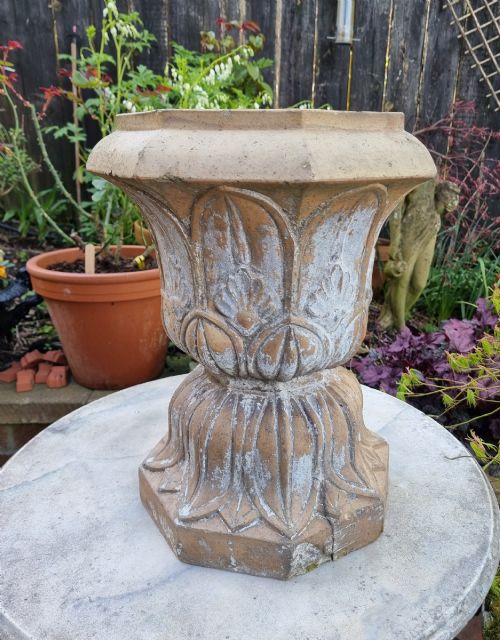
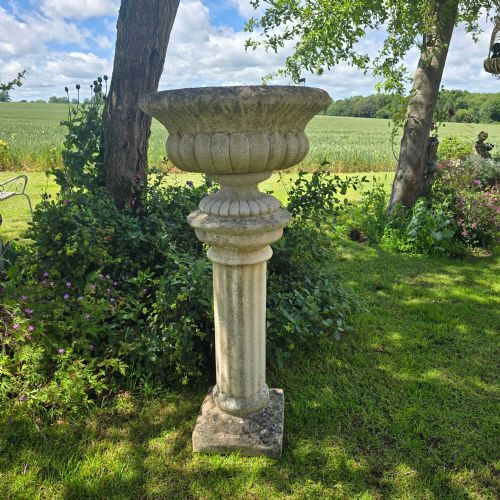
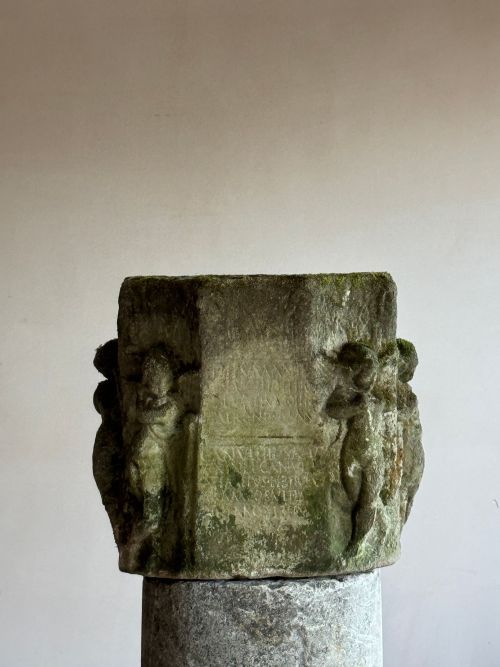
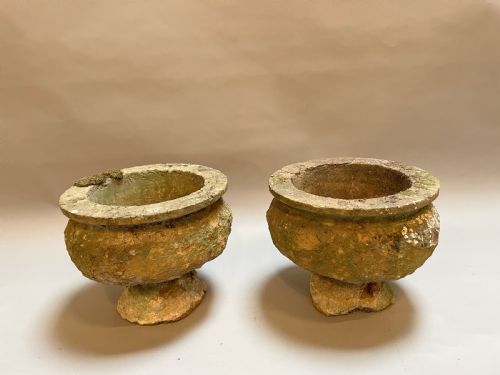


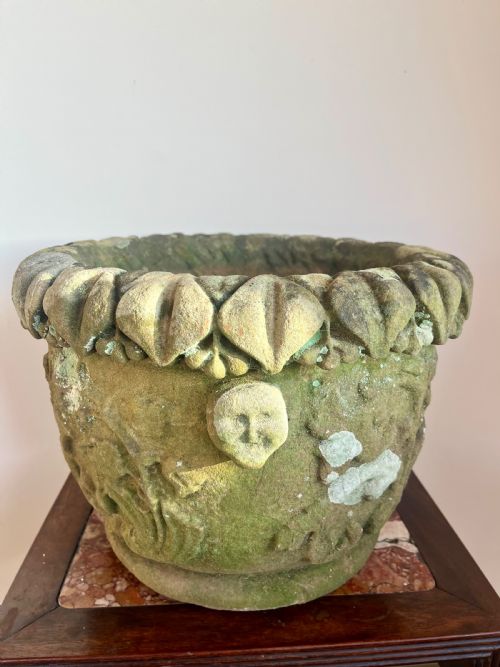


Weathered Stone Garden Planter
Weathered stone garden planter options bring centuries of outdoor history to patios and lawns through time-worn surfaces and classic forms.
Weathered Stone Garden Planter
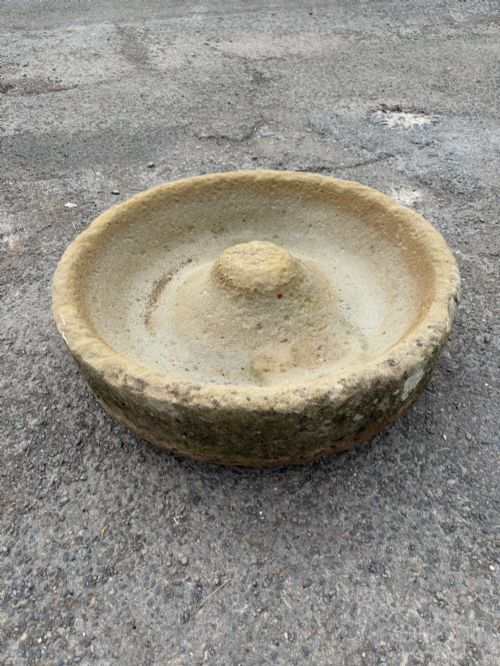
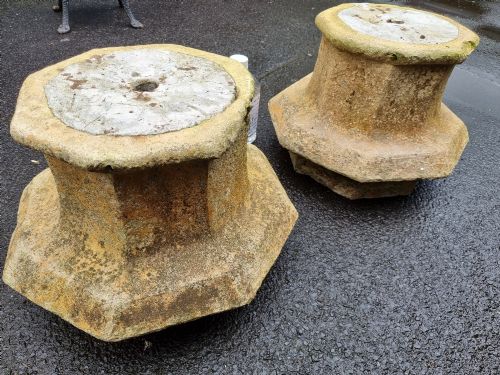
A weathered stone garden planter provides a structural home for flora while displaying the marks of age, exposure and use. Buyers seeking a weathered stone garden planter encounter pieces spanning the eighteenth, nineteenth and twentieth centuries.
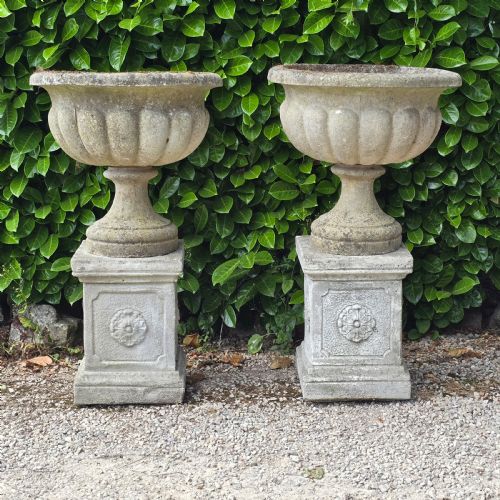
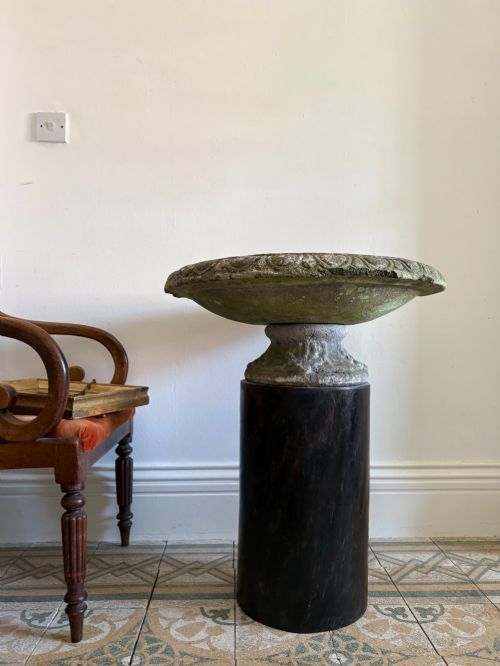
The selection includes campana urns, square troughs, carved stone baskets and birdbath planters. Many items appear as pairs, whilst others stand alone as singular focal points in garden schemes.
Origins stretch from English workshops to Scottish kilns and continental yards, encompassing utility vessels and ornamental pieces alike.
Materials and construction methods
Makers utilised a range of hard materials including natural limestone, sandstone, Purbeck stone, marble and reconstituted or cast stone. Hand carving shaped natural blocks, whilst moulds formed composite and cast stone items.
Terracotta and stoneware examples underwent kiln firing, sometimes featuring applied details like carved heads on handles. Natural weathering processes over decades or centuries then altered the exterior textures of these hard substances.
Listings feature materials spanning natural limestone, sandstone, Purbeck stone, terracotta, marble, cast stone and reconstituted stone across several centuries.
Qualities that distinguish the range
Superior examples display crispness in carved detail alongside deep, organic patination earned through long exposure to the elements. The handling of form, whether neoclassical campana curves or rustic vernacular lines, defines the visual success of a piece.
Depth of ageing and the integrity of the material structure separate the finest survivals from standard garden wares. Surface crust, lichen growth and honest wear contribute to the desirability of older items.
The Weathered Stone Garden Planter Glossary
- Campana urn
- A bell-shaped garden vessel with an everted rim, often mounted on a pedestal base. This classic neoclassical form appeared frequently in eighteenth and nineteenth century gardens.
- Patination
- The surface alteration and mellowing of stone or terracotta caused by age, weather and environmental exposure. It creates the desirable weathered appearance sought by collectors.
- Reconstituted stone
- A manufactured material made from crushed natural stone aggregate mixed with a binder. It was poured into moulds to replicate carved stone ornaments.
- Plinth
- A heavy base block or pedestal that elevates an urn or planter above ground level. Plinths add architectural presence to garden displays.
- Trough
- A rectangular stone vessel originally utilised for agricultural or domestic feeding purposes. Gardeners repurpose these heavy stone boxes for planting.
Weathered Stone Garden Planter: Frequently Asked Questions
How do I date a stone planter?
Dating relies on tool marks, material composition, stylistic clues and the depth of weathering on the exterior surfaces. Eighteenth-century pieces often show hand-chiselled details, while later nineteenth-century items utilise different casting methods.
Comparison with documented examples helps narrow down the period of manufacture. Examining the base and interior provides further clues regarding production techniques.
Are stone planters frost proof?
Most natural stones and solid cast stone items tolerate winter frost well if they have adequate drainage holes. Dense materials resist water absorption and subsequent cracking during freezing temperatures.
Terracotta and softer stone varieties require more careful observation during harsh winters. Raising planters off the ground on pot feet prevents water retention at the base.
How heavy are antique stone planters?
These pieces possess substantial weight due to the density of natural stone, marble and cast concrete compositions. Even medium-sized troughs and urns often require multiple people or mechanical equipment to move safely.
This heft provides stability against high winds in garden settings. Position objects carefully on firm ground or plinths to distribute the load.
Can I plant directly into antique stone?
Direct planting is common for stone troughs, urns and planters once drainage is confirmed. Checking for a central drainage hole prevents waterlogging and protects both the plant roots and the vessel.
Adding a layer of gravel at the bottom improves water flow away from the soil. Lining very old vessels with protective material is rarely necessary for hardy outdoor plants.