



Weathered Iron Garden Planters
These weathered iron garden planters bring classical proportion and substantial weight to outdoor spaces, built to weather the elements over generations.
Weathered Iron Garden Planters
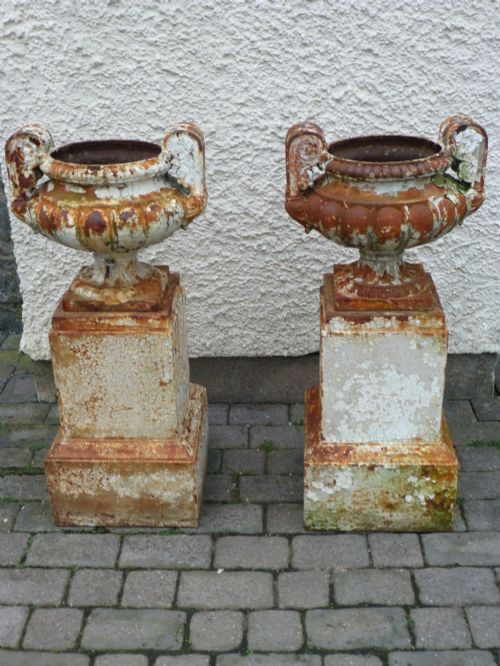
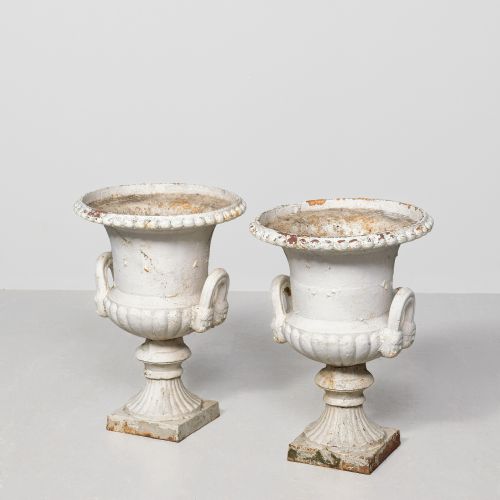
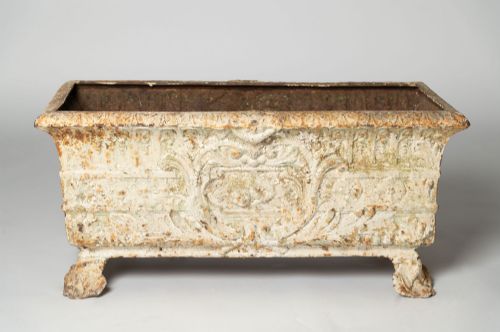
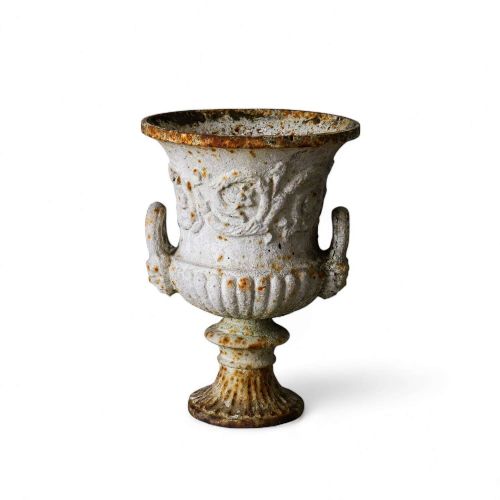
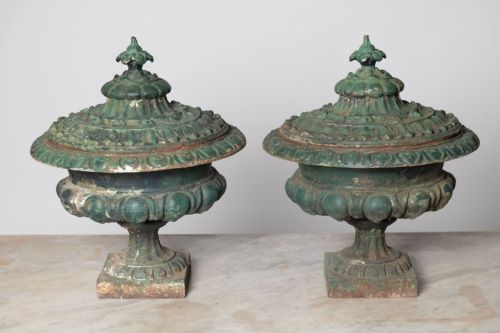
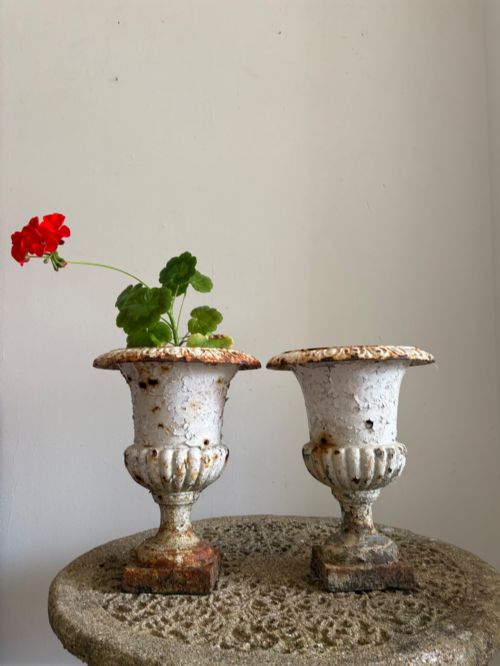
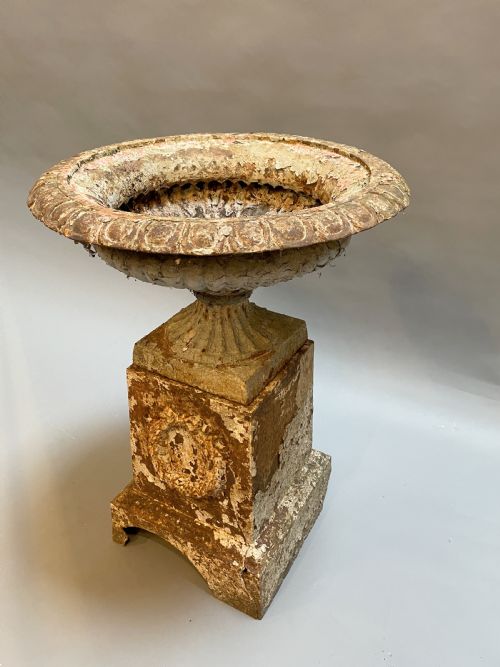
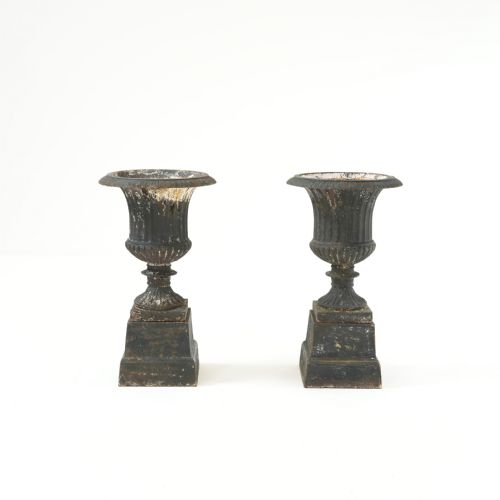
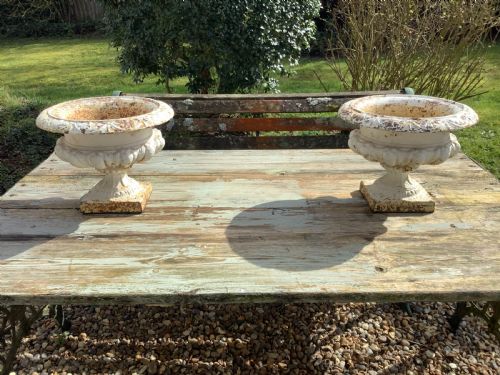
When you search for weathered iron garden planters, you are looking at heavy metal vessels designed for outdoor planting, dominated here by nineteenth-century cast iron forms. The most frequent pieces you will encounter are campana urns and classical garden planters, often set upon matching plinths.
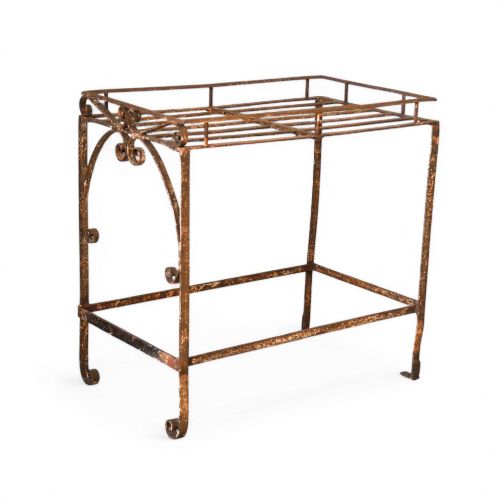
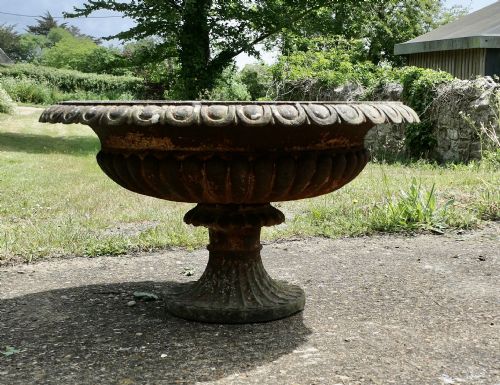
Many examples display the low-slung tazza profile, fluted bowls, or gadrooned ornament derived from neoclassical design. Alongside these urns, you will find wrought iron strapwork planters, plant stands, and occasional estate-made racks that bring architectural structure to terraces and lawns.
Materials and construction methods
The pieces on this page rely primarily on cast iron and wrought iron, shaped through foundry casting or manual forging. Cast iron allows for crisp relief details such as classical foliage and fluting, whilst wrought iron utilises strapwork and riveted bars for lighter structural frames.
Surfaces frequently show layers of original distressed paint over oxidized metal, recording decades of outdoor exposure. Some heavier vessels incorporate separate stone or terracotta elements, combining rigid metal bowls with contrasting pedestals.
The listings span from the Regency era through the mid-twentieth century, featuring cast iron, wrought iron, steel, terracotta, and stone.
Assessing quality in metal planters
Quality rests in the crispness of the foundry casting and the integrity of the metal walls. Finer examples retain sharp architectural details, clean relief work, and balanced proportions without heavy pitting or structural distortion.
The presence of original matching plinths and intact lids elevates a piece significantly. Superior items also demonstrate careful historical paint retention, where weathered surfaces display an even, stable oxidation rather than structural degradation.
Falkirk Carron foundry·Andrew Handyside
The Weathered Iron Garden Planters Glossary
- Campana urn
- A bell-shaped garden vessel with an everted rim, widely produced in cast iron during the nineteenth century. This form originates from classical antiquity.
- Plinth
- A heavy rectangular or square base block that elevates an urn or planter above ground level. These are often cast en suite with the vessel.
- Gadrooned
- Decorated with a series of convex curves or flutes moulded in a parallel pattern around the bowl of an urn. This ornamental detail reflects neoclassical taste.
- Tazza
- A shallow bowl-shaped vessel mounted on a stem and foot, used in garden settings for planting. They offer a wider opening than traditional deep urns.
- Strapwork
- Ornamental work formed of flat strips of wrought iron crossed and riveted in decorative patterns. It provides rigid support with an open, airy visual weight.
Weathered Iron Garden Planters: Frequently Asked Questions
How do I clean a weathered iron planter?
Brush away loose dirt and debris with a soft bristle brush, avoiding harsh wire tools that strip historical patination.
Wash gently with warm water if necessary, leaving the stable oxidized surface intact to preserve the antique character.
Can these iron planters stay outside in winter?
Cast iron handles frost well due to its dense mass, provided proper drainage is maintained at the base of the bowl.
Elevate vessels slightly off frozen ground using pot feet or stone blocks to prevent moisture retention beneath the base.
Are these planters too heavy for a terrace?
Nineteenth-century cast iron vessels possess substantial weight, particularly when filled with damp soil and large plants.
Verify structural load limits for elevated balconies or wooden decking before positioning large campana urns or multi-tier plant stands.
How do I date a cast iron garden urn?
Examine the casting seams, bolt fixings, and surface paint layers for indicators of nineteenth-century foundry production methods.
Stylistic cues such as neoclassical campana profiles and gadrooned banding typically point to Victorian or Regency manufacturing periods.