




Weathered Garden Urn Pair
These weathered garden urn pairs bring classical form and aged character to outdoor spaces, ranging from heavy cast iron to warm terracotta.
Weathered Garden Urn Pair
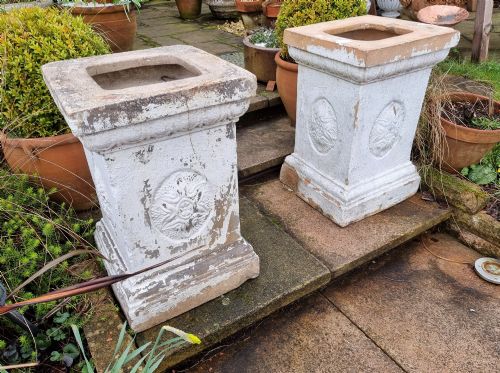
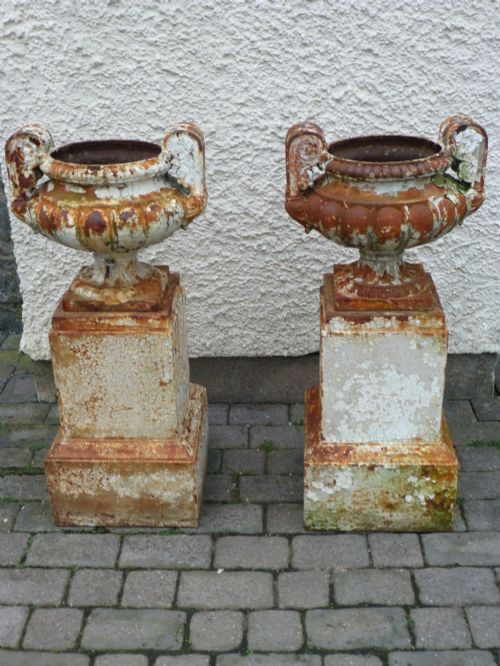
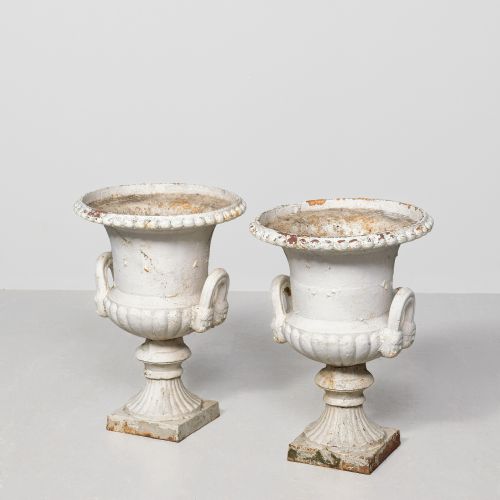
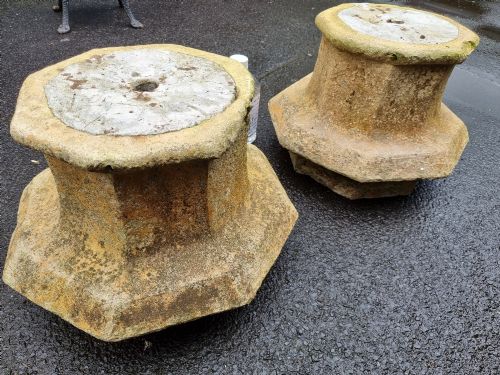
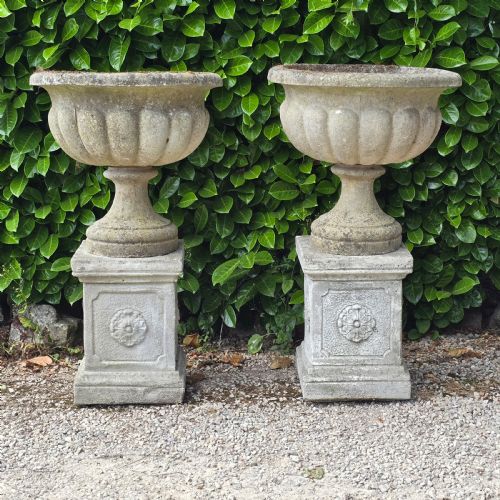
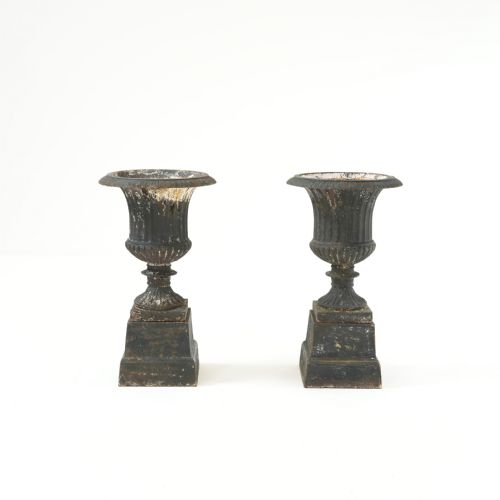
A weathered garden urn pair consists of matching classical vessels intended for outdoor display, most frequently seen in robust cast iron or terracotta forms. Buyers seeking these pieces encounter items spanning the nineteenth century through the mid twentieth century, often accompanied by matching pedestals or plinths. The selection draws heavily from Victorian and Regency influences, alongside campana and tazza shapes designed to anchor garden walks or terrace edges.
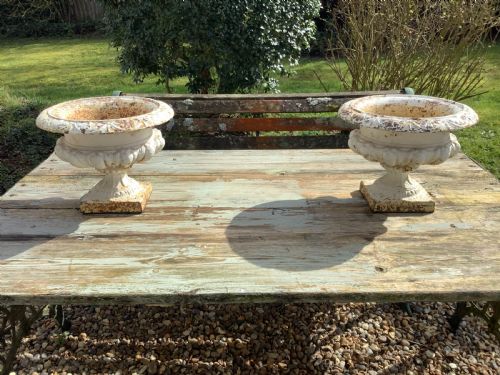
The objects serve as focal points in landscape design, holding planting or standing alone as architectural ornaments. Many examples show the natural erosion of paint and surface over decades of exposure to the elements. This group offers both substantial classical revival proportions and smaller scaled terrace pieces.
How they were made
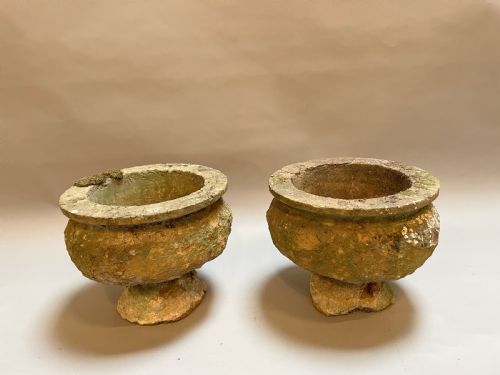
Foundries cast iron into moulds to create sturdy campana and tazza urns, often mounting them on matching plinths for height. Workers also shaped soft stone, carved marble, and composite stone, while potteries fired terracotta and clay to form traditional garden pots. Many iron surfaces received coats of paint that have weathered into distressed finishes over time.
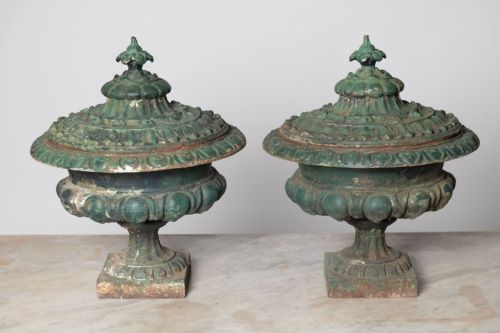
Makers utilised durable materials suited to outdoor conditions, allowing iron, stone, and terracotta to withstand seasonal frost and rain. Details such as fluting, scroll handles, and strapwork were cast or carved directly into the body of the vessel. Original lids and matching pedestals complete the construction of the more elaborate surviving pairs.
Campana and tazza forms dominate the available designs, often accompanied by original pedestals, plinths, or lids.
What varies in quality
Quality rests in the crispness of the casting detail and the proportion of the classical form, distinguishing finely modelled nineteenth century examples from later production. The integrity of the material, whether heavy cast iron or deeply carved stone, dictates the durability and presence of the pair. Matching symmetry between the two vessels and the retention of original pedestals or lids elevate the integrity of the set.
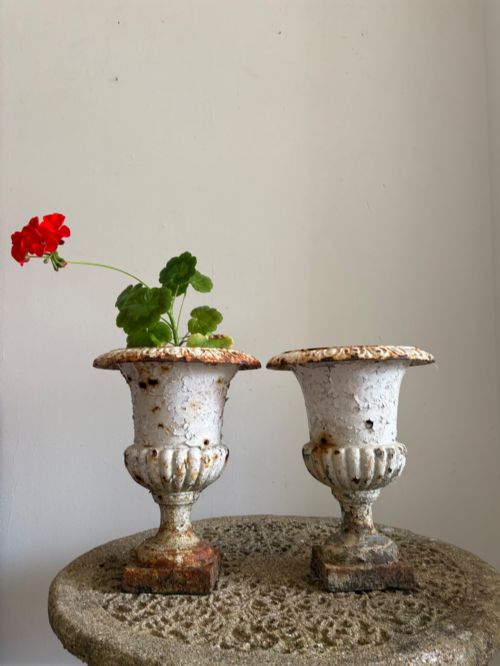
The character of the weathered surface plays a role, with genuine flaking paint and natural patination marking age rather than superficial damage. Superior pairs maintain structural stability despite exposure, with ornament remaining sharp across both matching pieces.
Dunfermline Clay Company·Falkirk Carron foundry·Compton Pottery
The Weathered Garden Urn Pair Glossary
- Campana
- A bell shaped garden urn with a flaring rim and a footed base. This form dominates nineteenth century classical garden ornamentation.
- Tazza
- A shallow bowl shaped vessel raised on a stem and foot. These pieces often feature wide rims suited for trailing plants.
- Reconstituted stone
- A durable material made from crushed stone and a binding agent, moulded into classical shapes. It offers the appearance of natural stone at a manageable weight.
- Plinth
- A block base supporting an urn or pedestal. Plinths elevate garden ornaments to improve sightlines in a landscape layout.
- Strapwork
- Decorative bands or scrolls applied to metalwork or pottery. This detail references historical architectural motifs adapted for outdoor use.
Weathered Garden Urn Pair: Frequently Asked Questions
How do I care for cast iron urns?
Cast iron garden pieces require minimal maintenance beyond checking for drainage to prevent water accumulation during freezing weather.
Applying protective coatings can stabilise existing paint finishes and slow further corrosion if the metal is exposed to continuous moisture.
Are these urns frost proof?
Most cast iron and stone pieces handle cold weather well, though terracotta and composite stone require attention during hard frosts.
Lining pots and ensuring proper drainage holes remain clear helps prevent cracking when temperatures drop.
Do matching pedestals come with the urns?
Some listings include the original plinths or columns that elevate the vessels, while others offer the urns as standalone items.
Checking the title and description clarifies whether the matching base is part of the pair.
How can I tell Victorian pieces apart from later ones?
Nineteenth century examples typically display heavier casting weights, deeper patination, and traditional campana proportions associated with classical revival styles.
Mid twentieth century pieces often present simpler lines and lighter construction materials.