
Waterfall Ceiling Light
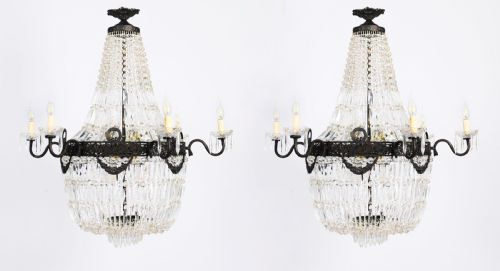
These waterfall ceiling light fixtures bring tiered crystal illumination and French Empire grandeur into a room.
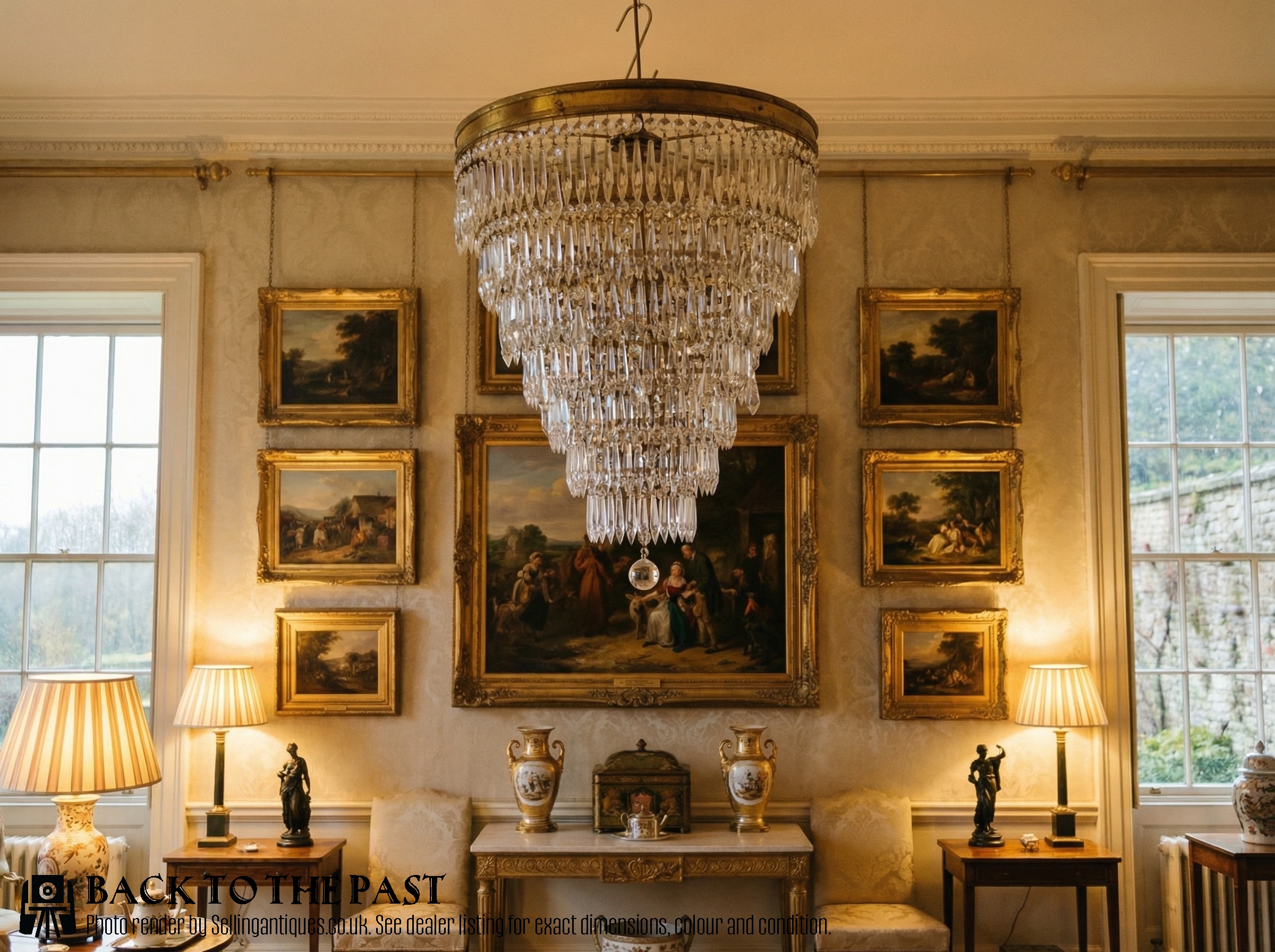
Waterfall Ceiling Light
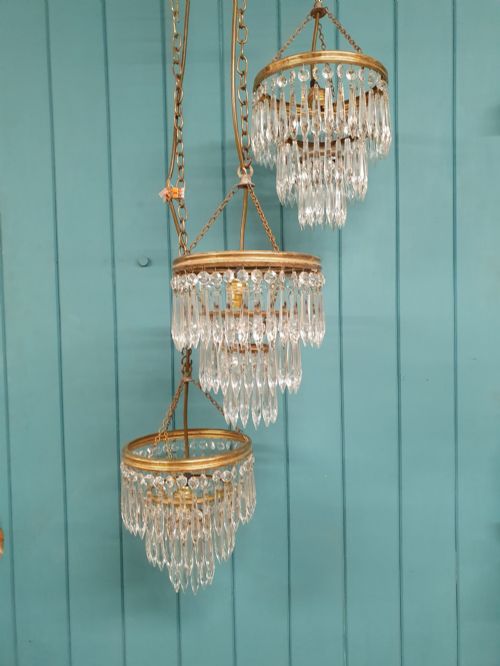
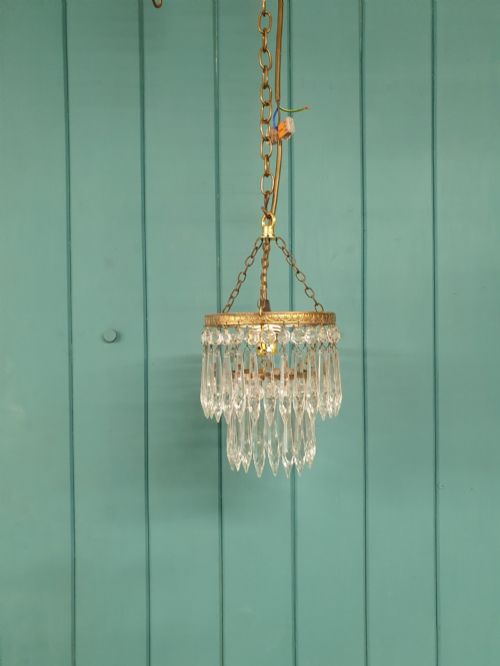
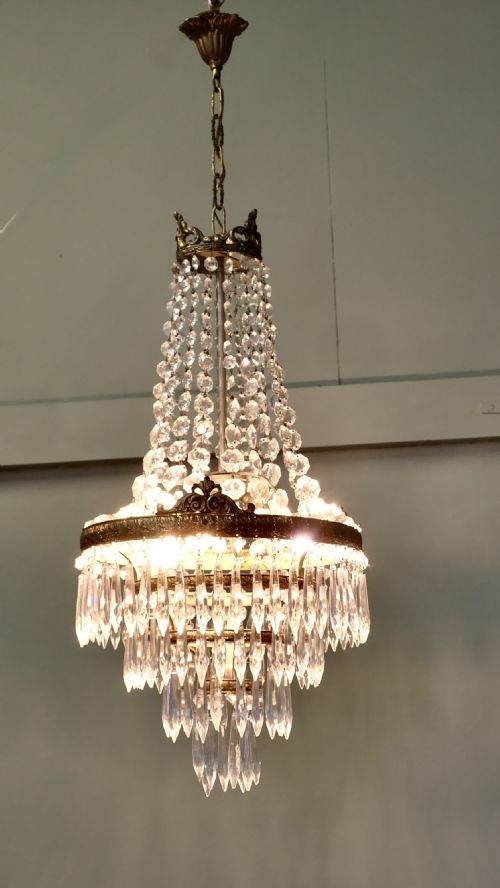
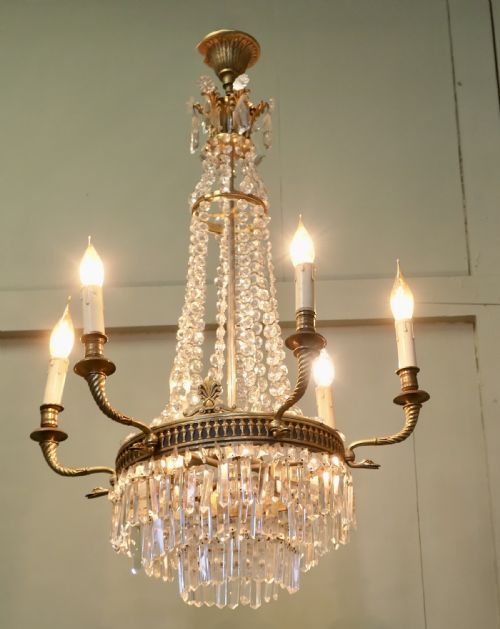
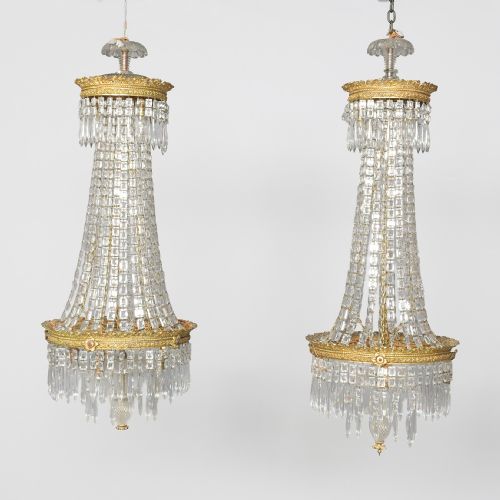
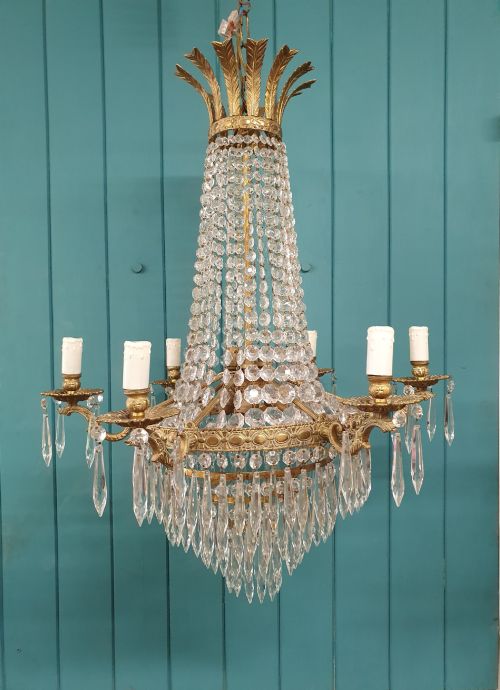
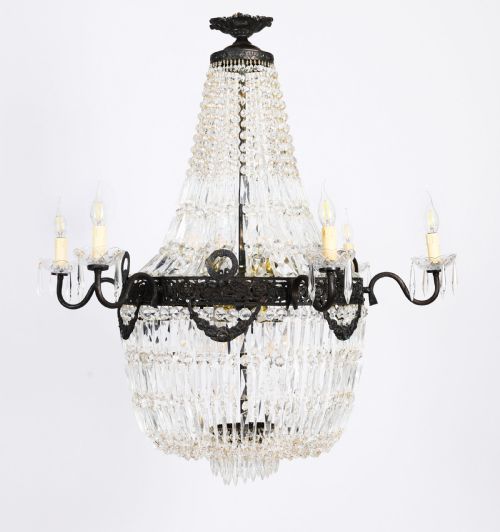
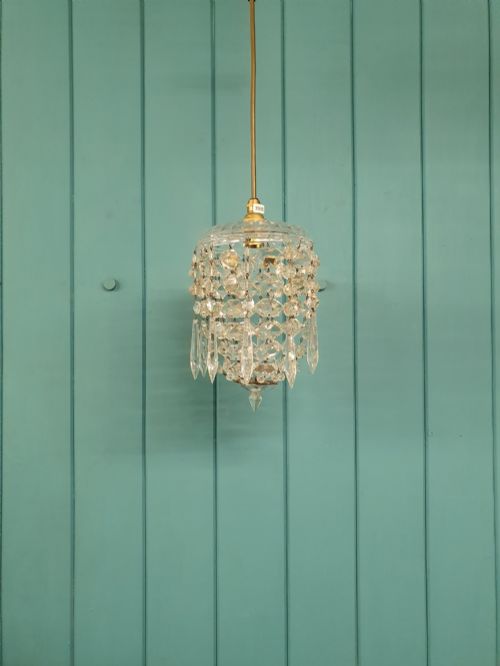
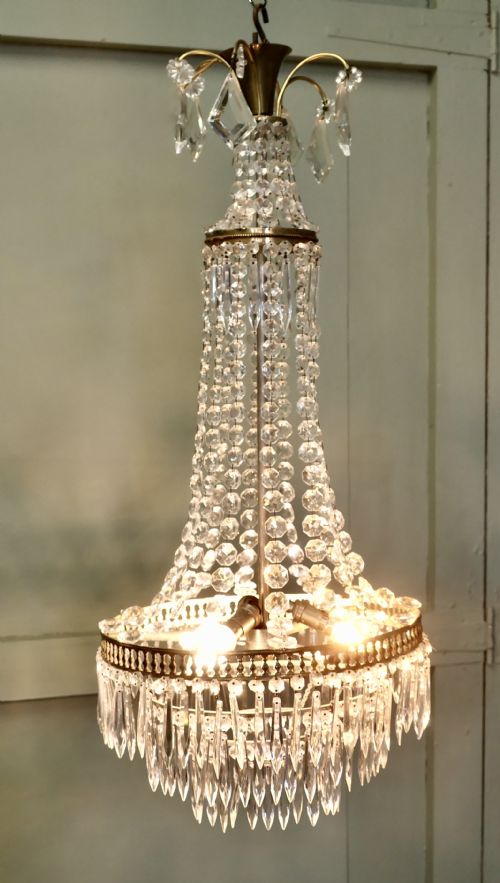
A waterfall ceiling light is a hanging fixture defined by cascading tiers of glass or crystal arranged in tent, bag, or spike formations. These pieces bring vertical depth to a space through layered drops that catch and refract illumination from internal bulbs.
Most examples found here date from the Edwardian era through the 1930s, alongside a few mid nineteenth century brass and bronze variants. French Empire and Louis Revival styles dominate the selection, bringing classical motifs and formal symmetry to domestic interiors.
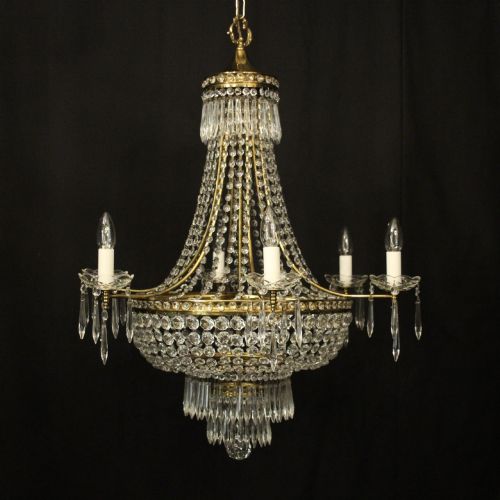
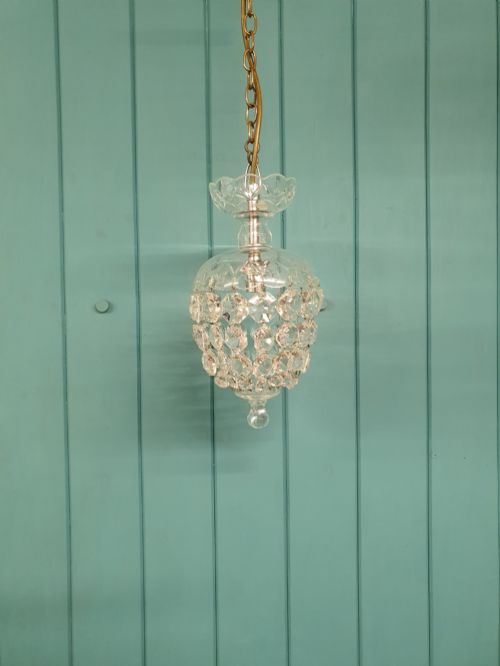
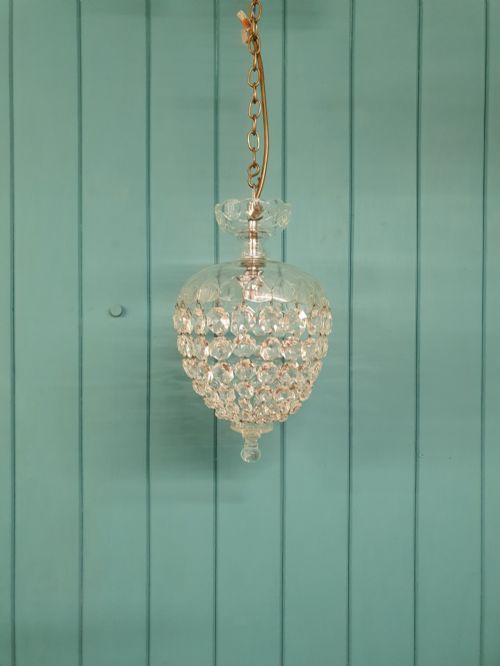
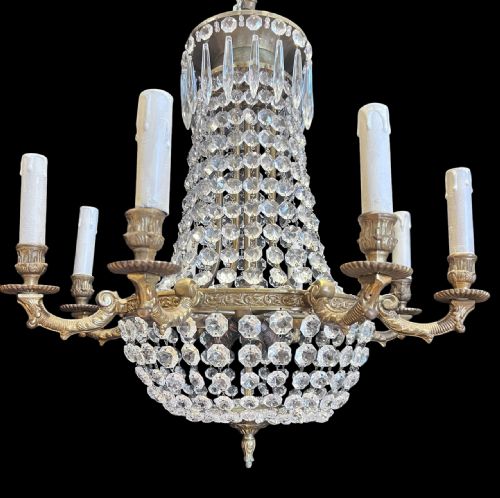
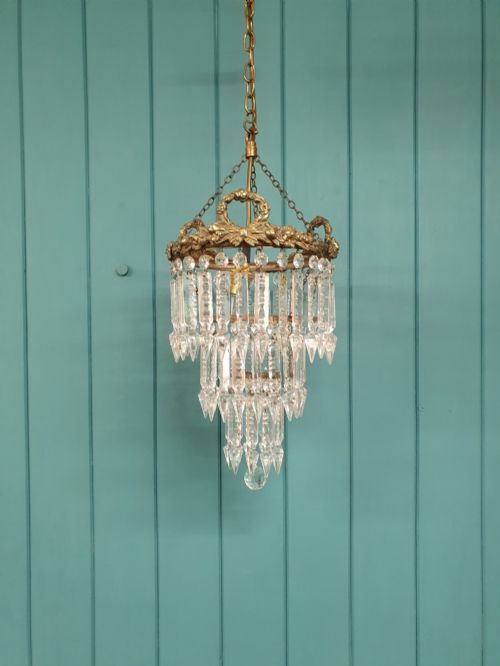
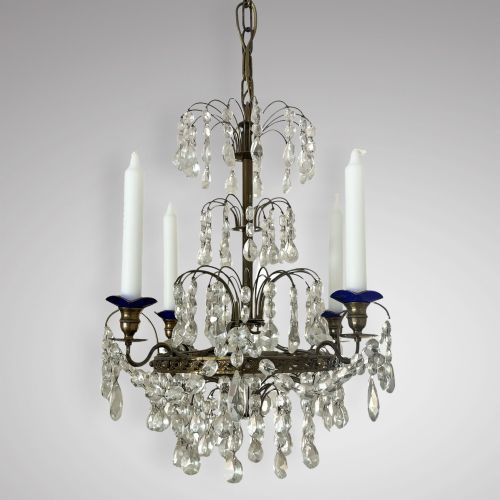
Forms range from small single light plafonieres and compact bag chandeliers measuring a few inches to large fourteen light ballroom centrepieces. Buyers encounter various configurations including spike chandeliers, dome tops, and basket designs framed in brass or gilt metal.
Materials and construction
Construction relies on a metal armature of brass, gilt brass, bronze, or wire that supports the hanging glass elements. Metal mounts often feature cast or leaf decoration framing the upper tiers and suspension points.
Prisms, drops, and beads are fashioned from cut glass and crystal glass, threaded or wired onto the frame to form the characteristic cascading tents and bags. Lustres and spikes complete the lower sections, secured with small metal pins.
Several examples are designated as prison bag chandeliers, offering a remarkably grim name for such sparkly domestic lighting.
Distinctions in craftsmanship
Quality rests in the weight and clarity of the crystal components, where deeper hand cutting produces sharper refractive facets than moulded glass. Heavier brass frames and detailed cast bronze mounts indicate superior manufacture compared to simpler wire structures.
The density and complexity of the bead strands determine the visual richness of the piece, with tightly packed tent and waterfall arrangements outperforming sparse designs. Original metal patination and intact coordinated drops separate high tier examples from altered fixtures.
The Waterfall Ceiling Light Glossary
- Tent and waterfall chandelier
- A fixture featuring an upper conical section of glass strings that cascades down into a wider lower tier. This configuration creates a double layered silhouette designed to maximise light refraction.
- Bag chandelier
- A flat backed or tapered hanging light enclosed in a mesh or basket of crystal drops resembling a small bag. These compact fixtures suit rooms with lower ceiling heights.
- Spike chandelier
- A hanging light characterised by pointed clusters of glass prisms radiating outwards. The arrangement produces a distinct geometric profile.
- Plafoniere
- A ceiling mounted light fixture fitted flush or very close to the plaster. These single light pieces direct illumination downwards through glass bowls or crystal drops.
- Louis Revival
- A decorative style popular in the late nineteenth and early twentieth centuries that reinterprets eighteenth century French royal aesthetics. It utilises ornate cast mounts and abundant crystal foliage.
Waterfall Ceiling Light: Frequently Asked Questions
How do I clean a waterfall ceiling light?
Maintenance requires gentle hand washing of each glass drop using warm water and mild soap while leaving the fixture suspended on its ceiling mount. Cotton gloves help prevent fingerprints during reassembly.
Heavier metal frames should be dusted with a dry cloth to preserve the original brass or bronze finish without stripping the patination.
Will a waterfall ceiling light work in a modern room?
These fixtures integrate into contemporary interiors by providing a reflective focal point that contrasts against minimalist surfaces. Their scale works effectively in hallways, bedrooms, and reception spaces.
Wiring must be checked by a qualified electrician to ensure compatibility with current domestic safety standards before installation.
How do I determine the correct ceiling height?
The vertical drop of the fixture must allow sufficient clearance for movement beneath it, particularly in high traffic areas or zones with standard ceiling dimensions. Smaller bag and dome configurations suit restricted vertical spaces.
Larger multi light chandeliers require taller rooms to balance their physical presence and light output.