

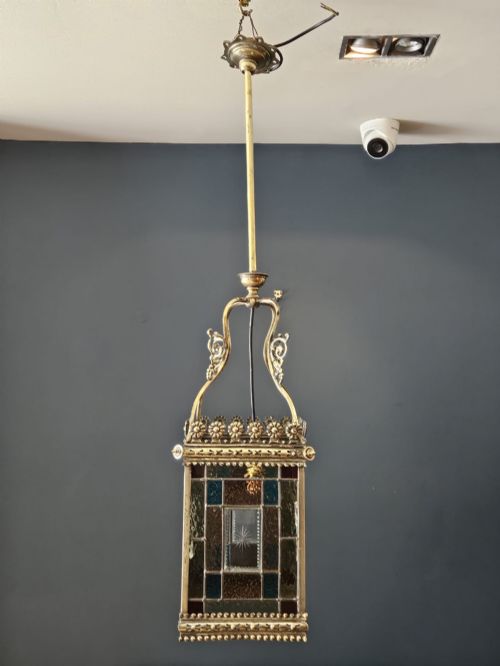
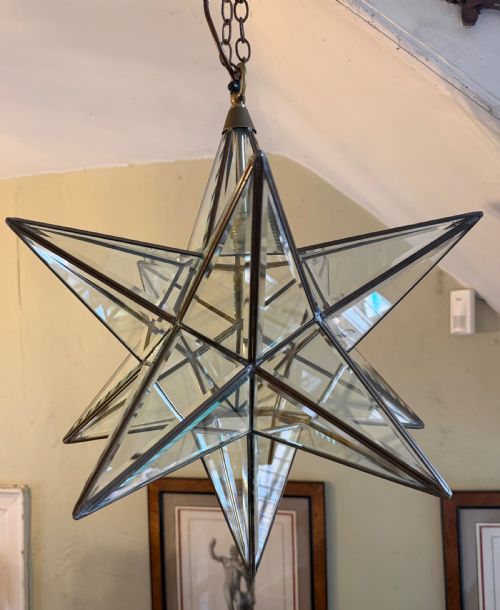
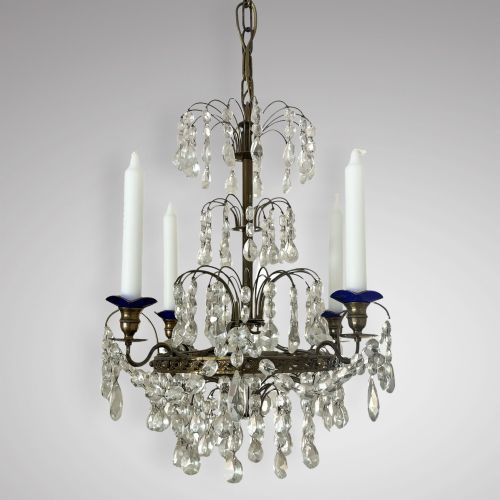
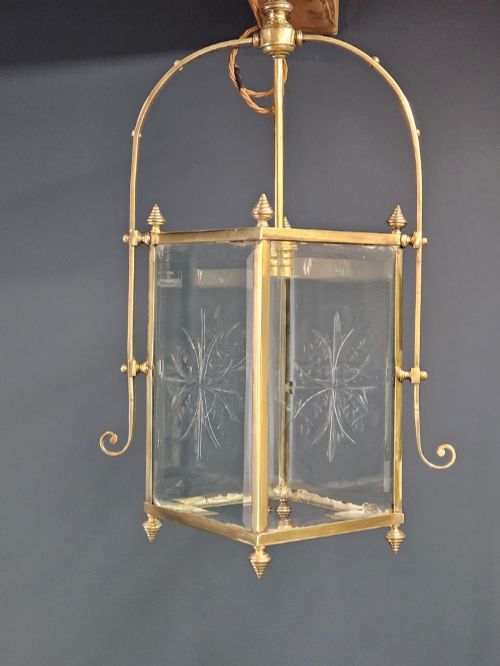


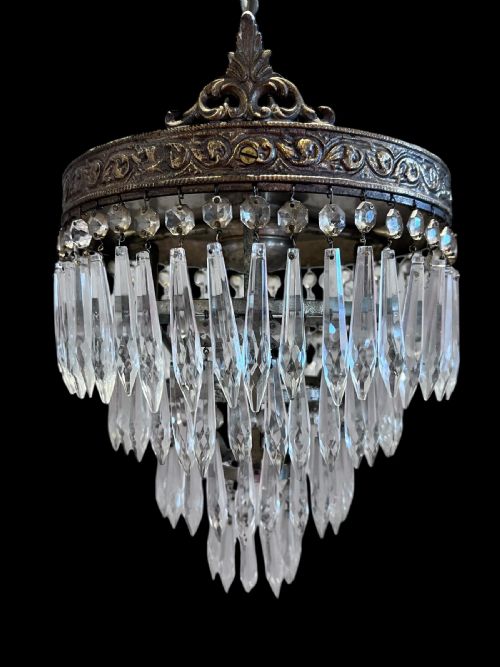


Brass Frame Light
A brass frame light brings functional illumination together with structural metalwork, offering both ambient glow and period character.
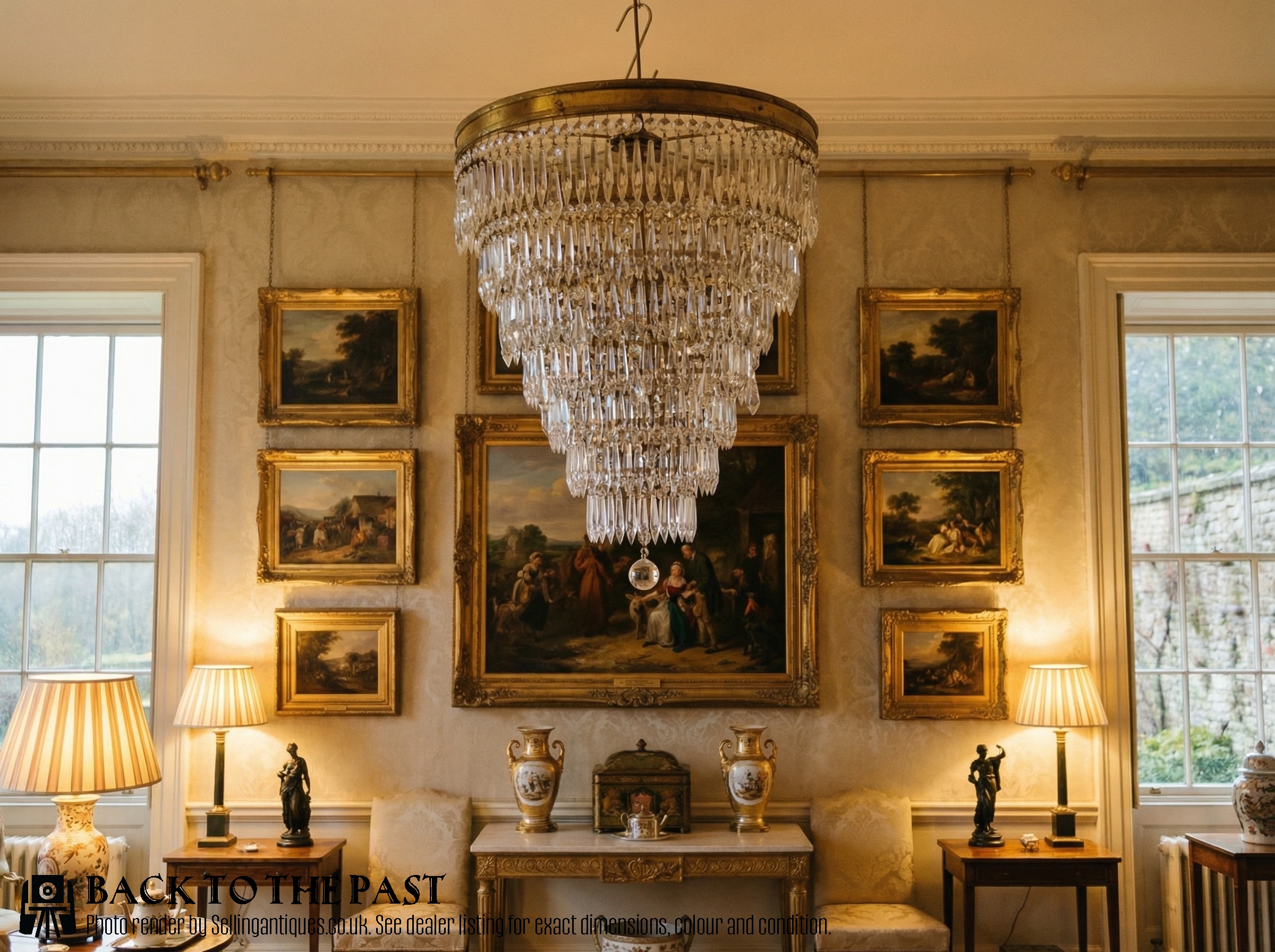
Brass Frame Light
A brass frame light encompasses ceiling lighting, wall lights, and hanging lanterns constructed around visible metal skeletons. Buyers searching for a brass frame light will encounter pieces primarily from the Victorian and Edwardian eras, alongside numerous early twentieth-century examples.
The selections span grand French cage chandeliers, star lanterns, and multi-tier waterfall fittings alongside simpler wall sconces and mirrors. Such diversity means these fixtures suit both central hallway placement and targeted architectural accentuation.
Materials and construction
Makers constructed these fixtures using cast or sheet brass and gilt metal to form the structural framework, which frequently houses panels of bevelled, leaded, or cut glass. Crystal drops, beads, and prisms are then suspended from the metal armature to refract the light.
Assembly often relies on mechanical joints and pins to secure glass plates within metal channels or to attach cascading crystal swags. This combination of heavy metal framing and delicate glass elements defines the physical construction seen across the eras.
Listings feature brass frame lights spanning the nineteenth century through the nineteen-fifties, incorporating glass, crystal, lead, and gilt metal.
Assessing quality and execution
Quality reveals itself in the substance of the metalwork and the precision with which the glass components are cut and fitted. Finer examples display crisp casting details on the brass frames and substantial, clear glass or leaded panels rather than thin stampings.
The integration of decorative elements, such as intricate crystal bead swags and heavy leaded glass construction, distinguishes superior pieces. Proportion, balance, and the heaviness of the primary brass or gilt metal structure separate standard production from exceptional work.
The Brass Frame Light Glossary
- Cage chandelier
- A lighting fixture featuring a metal skeletal frame enclosing internal lamps and draped with crystal drops.
- Plafonniere
- A ceiling-mounted light fixture designed to sit flush or very close to the ceiling surface.
- Bevelled glass
- Glass panes with angled edges cut along the perimeter, adding visual depth and light refraction.
- Gilt metal
- Base metal treated with a thin layer of gold or gold-coloured finish to simulate solid ormolu.
- Moravian star
- A multi-pointed geometric lantern design constructed with individual glass panes held in a metal channel frame.
Brass Frame Light: Frequently Asked Questions
How do I hang a heavy brass chandelier safely?
Hanging a heavy brass and crystal fixture requires securing the primary support directly to ceiling joists using rated structural hardware. Independent load-bearing chains take the physical weight while the electrical flex remains completely slack.
Professional installation is strongly advised for multi-tier or large cage chandeliers due to their substantial combined weight of metal and glass.
What rooms suit a brass frame wall light?
Brass frame wall lights and sconces function effectively in hallways, living rooms, and dressing areas where they provide layered illumination at eye level. Their reflective metal backs and glass elements bounce natural and artificial light around smaller spaces.
Matching pairs are frequently positioned to frame mirrors, fireplaces, or architectural doorways for balanced composition.
How do I clean delicate crystal and brass?
Cleaning requires removing dust with a soft brush before applying a mild soap solution to glass and crystal components in situ. Metal frames should be dusted gently without abrasive polishes that might strip historic patination or applied gilt finishes.
Individual crystal drops may be detached for thorough washing and drying when cumulative grime obscures their refractive quality.
Are these lights wired for modern standards?
Period lighting fixtures generally require rewiring with modern cable and lamp holders to comply with contemporary electrical safety regulations. A qualified electrician can adapt internal wiring without altering the exterior historic appearance of the metal frame.
This process ensures the piece accommodates standard modern bulbs while remaining structurally secure for daily domestic use.