


Warwick Urn Vase
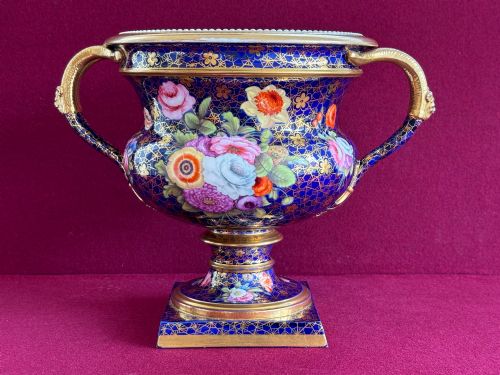
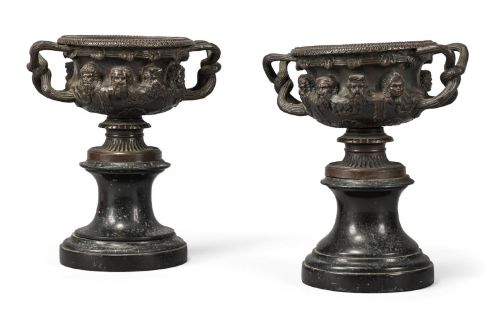
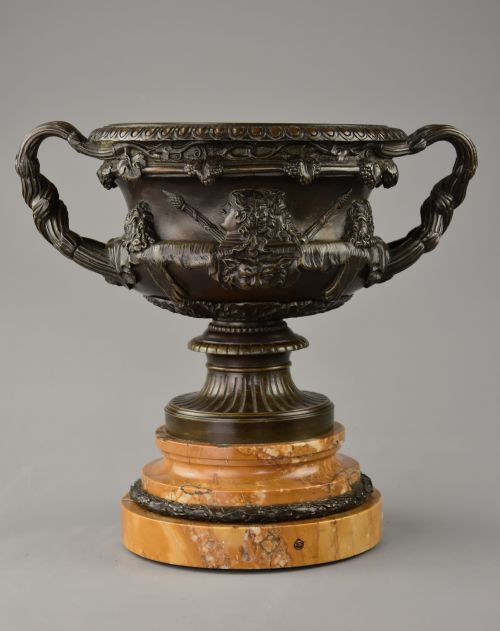
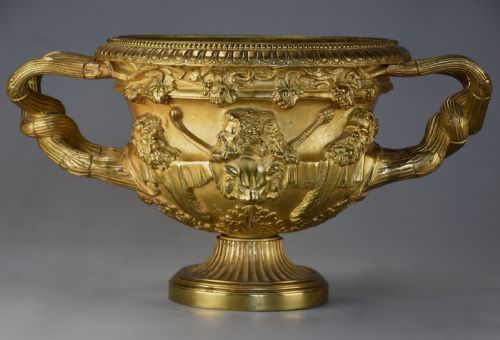
These warwick urn vase examples bring classical antiquity into nineteenth-century interiors through bronze and porcelain reductions.
Warwick Urn Vase
A warwick urn vase follows the classical form of the ancient marble krater discovered at Hadrian's Villa and housed at Warwick Castle. These decorative objects take the shape of a bell krater with twin intertwined vine handles and classical mask ornamentation.
Buyers seeking a warwick urn vase on this page will most commonly find nineteenth-century Grand Tour bronze reductions produced in Italy, France, and Britain. Porcelain versions from English factories also appear alongside these metal castings.
The objects serve as ornamental urns and decorative vases rather than utilitarian vessels. They range from small cabinet pieces to large proportions suited for architectural planters.
How they were made
Bronzes from the Grand Tour period rely on metal casting techniques to capture the intricate relief figures and vine leaf decoration of the original marble. Founders applied patination or gilt bronze and ormolu finishes to highlight the sculptural details.
Porcelain examples from makers such as Spode and Worcester involve ceramic manufacturing and hand painting. Artisans decorated the porcelain bodies with enamel colours and gold leaf accents to echo the neoclassical aesthetic.
Some nineteenth-century tourists bought these heavy bronze reductions home in luggage, testing the structural limits of Victorian travel trunks.
What varies in quality
Material application and surface finish divide the range. Finely chased ormolu and deep patination separate exceptional foundry work from standard souvenir items.
Barbedienne Paris·Flight Barr and Barr·Thomas Lowe·Spode
The Warwick Urn Vase Glossary
- Grand Tour
- A traditional trip of Europe undertaken by upper-class young men in the eighteenth and nineteenth centuries. Souvenirs collected included classical bronze reductions.
- Ormolu
- Gilded bronze used widely in nineteenth-century decorative arts. The technique involves applying a gold amalgam to a bronze base.
- Neoclassical
- A Western cultural movement drawing inspiration from the art and culture of classical antiquity. It dominates the design of these classical vases.
- Patinated
- A surface treatment applied to metal to alter its colour through chemical processes or ageing. This finish accentuates sculptural relief details.
Warwick Urn Vase: Frequently Asked Questions
What is a warwick urn vase?
A warwick urn vase is a decorative vessel modelled after the famous ancient Roman marble vase discovered at Tivoli. These pieces replicate the distinctive bell krater shape and classical mask handles of the original antiquity.
Nineteenth-century makers produced them as cabinet ornaments and architectural planters in bronze, gilt bronze, and porcelain.
How were they used historically?
These vessels functioned primarily as ornamental art objects rather than practical containers for flowers. Wealthy collectors displayed them on pedestals or mantelpieces as symbols of classical learning and refined taste.
Many examples originated as Grand Tour souvenirs brought back from travels in Italy during the Victorian period.
Are they made of bronze or porcelain?
Both materials appear frequently across the period examples. Bronze and gilt bronze versions predominated among Grand Tour foundry souvenirs, often featuring dark patination or ormolu highlights.
English ceramic factories also produced porcelain variations decorated with enamel and gold leaf during the Regency era.
How do I date a warwick urn vase?
Dating relies upon material composition, foundry marks, and stylistic indicators associated with nineteenth-century production. Regency porcelain pieces bear specific factory painting styles, while bronze reductions reflect Victorian casting methods.
Grand Tour pieces typically date from the nineteenth century, aligning with the revival of classical styles.