
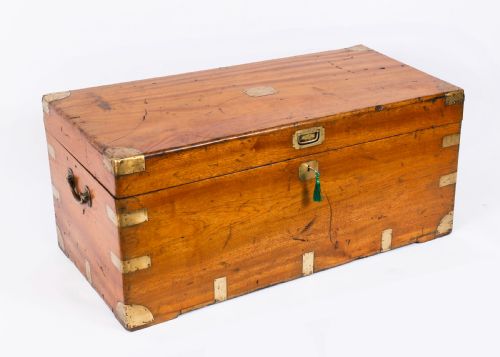
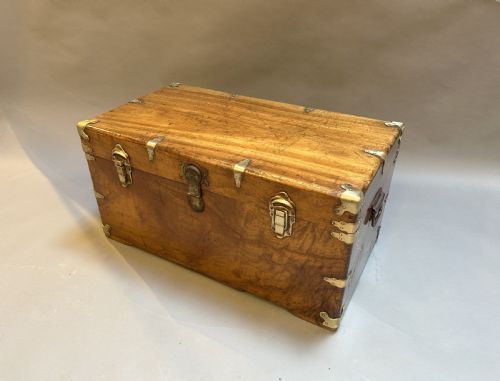
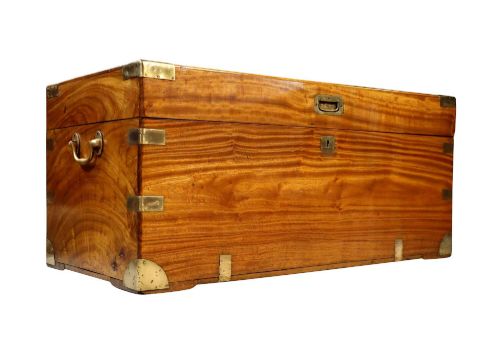
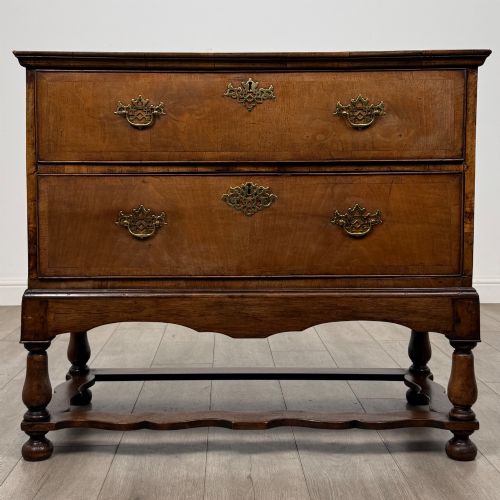
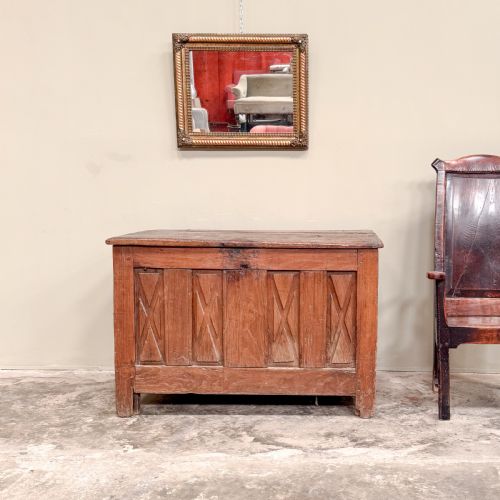
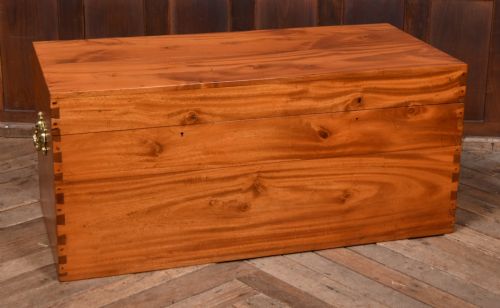
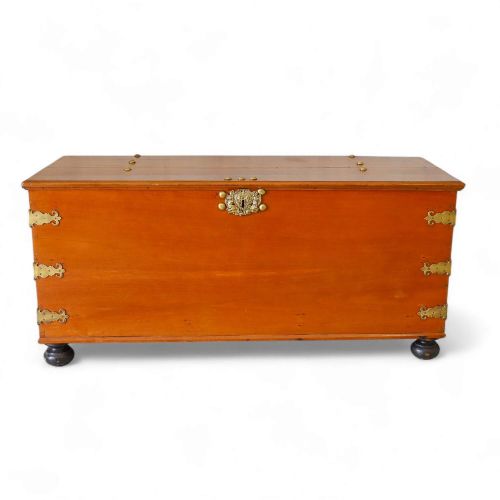
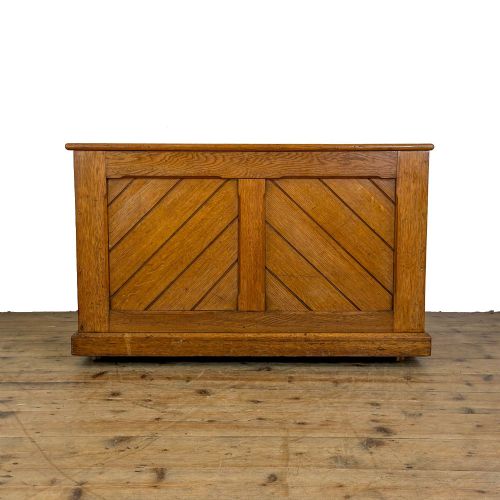
Warm Brown Wooden Coffer
A warm brown wooden coffer brings solid storage and deep timber tones into a room, spanning periods from the seventeenth century onwards.
Warm Brown Wooden Coffer
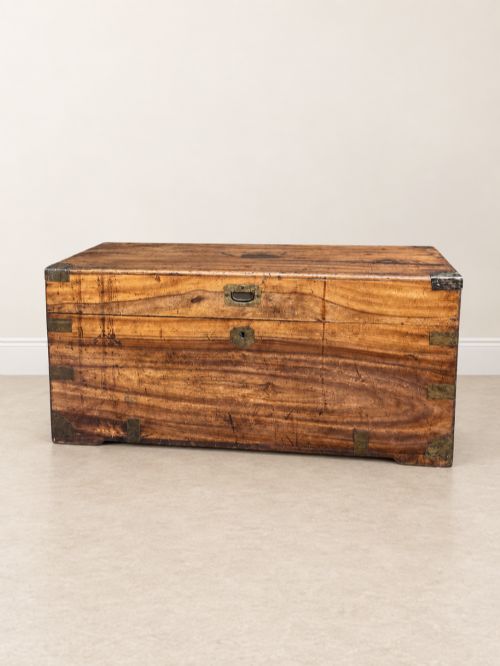
A warm brown wooden coffer is a heavy storage box or blanket chest built for domestic use or military travel. These pieces serve as blanket boxes, toy boxes and dowry chests across centuries of British and international craftsmanship.
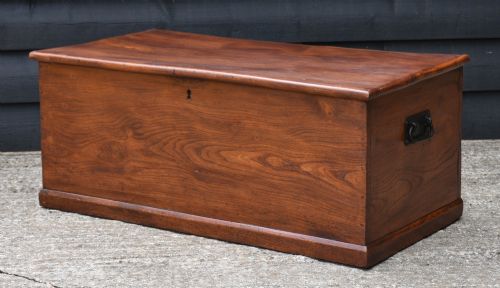
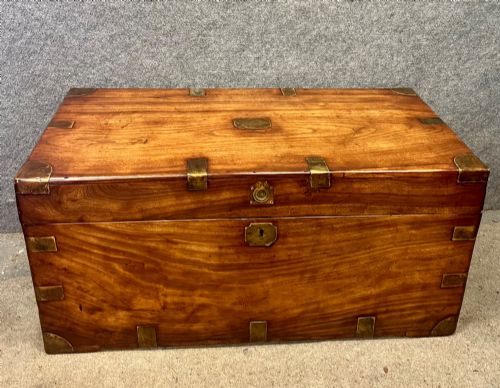
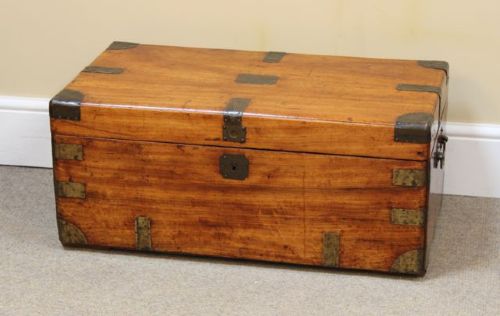
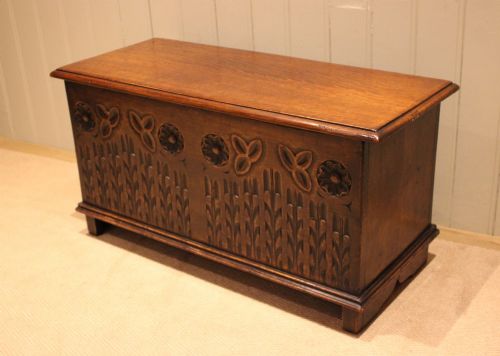
The selection here draws heavily on nineteenth-century campaign trunks in camphorwood and teak alongside earlier oak, elm and walnut examples. Buyers encounter everything from plain six-plank boards to brass-bound travel chests with fitted interiors.
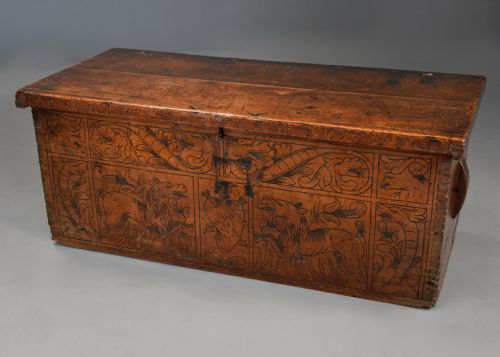
Origins stretch from local English workshops to colonial outposts in India and Italy, yielding variations in carving and construction. Each piece relies on solid timber construction designed to endure heavy daily use.
Materials and construction methods
Carpenters constructed these coffers using durable timbers including oak, elm, walnut, teak and camphorwood. Dense exotic woods suited travel trunks for their resilience against pests and moisture.
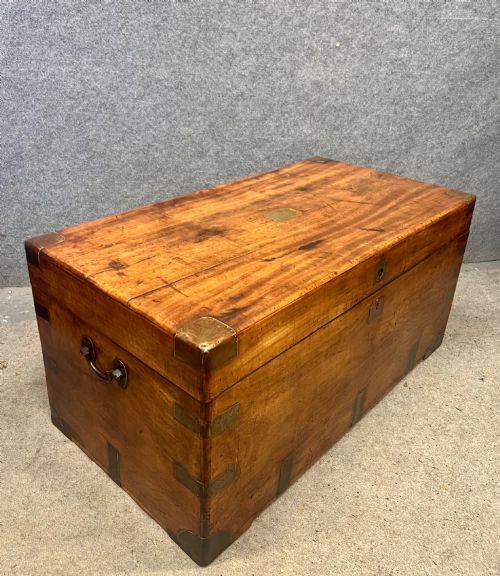
Metal reinforcement defines campaign styles, utilising brass bindings, corners and flush-fitting handles to protect edges during transit. Iron hardware appears on earlier domestic chests to secure heavy lids.
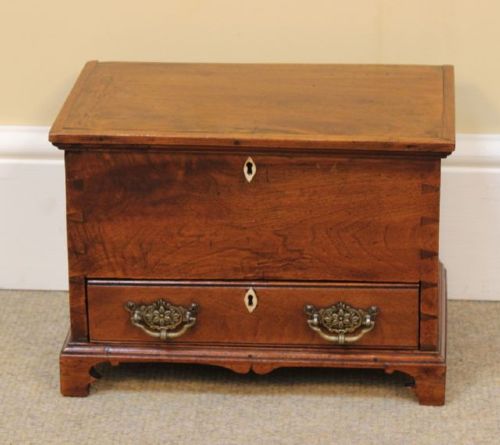
Joinery ranges from simple six-plank board construction secured with pegs to dovetailed corners on refined walnut and mahogany-toned pieces. Surfaces often retain original patination developed through decades of wax polishing.
Listings feature camphorwood, oak, elm, walnut and teak across periods spanning the seventeenth to the twentieth century.
Judging quality and craftsmanship
Quality rests upon the integrity of the timber selection and the precision of the original joinery. Solid secondary woods and tight corner dovetails distinguish superior cabinet work from utilitarian boxes.
Hardware integrity elevates certain pieces, particularly campaign coffers retaining original recessed brass fittings and functioning locks. Replacements alter the historical weight of an object.
Surface preservation marks the division between untouched pieces with rich patination and those stripped back to bare timber. Original patination reflects age accurately without modern interference.
The Warm Brown Wooden Coffer Glossary
- Campaign trunk
- A portable storage chest made in sections with recessed brass hardware for military transport.
- Coffer
- A heavy wooden chest traditionally used for storing valuables, linen or documents.
- Six-plank construction
- A primitive method where a chest is built from six vertical and horizontal boards joined at the edges.
- Patina
- The deep sheen and surface character acquired by timber through age and handling.
- Dovetail
- An interlocking joint formed by interlocking wedge-shaped fingers used to secure corners.
Warm Brown Wooden Coffer: Frequently Asked Questions
What is a warm brown wooden coffer used for?
These pieces function primarily as deep storage chests for blankets, bedding and household items. Their flat tops also allow them to double as coffee tables or window seating in modern interiors.
Historically, campaign versions travelled with military officers while domestic boxes stored family valuables. Today they suit hallways and living spaces needing hidden storage combined with antique character.
How do I care for camphorwood and teak chests?
Maintain the timber by applying a natural beeswax polish occasionally to preserve the grain and moisture content. Avoid placing these chests near direct heat sources or strong sunlight which can dry out the wood.
Camphorwood naturally repels insects, so the interior requires minimal intervention beyond gentle dusting. Keeping the brass hardware clean with a dry cloth prevents tarnish build-up.
How can I tell a campaign coffer from a standard chest?
Campaign chests feature distinctive flush brass handles inset into the sides and corners to prevent snagging during travel. Many are split into two stacking sections with removable carrying handles on the flanks.
Standard domestic coffers rely on traditional front hinges and stationary feet without travel hardware. The timber choice also tends toward local oak or elm rather than exotic camphorwood or teak.
How old is my wooden coffer?
Dating relies on examining the joinery style, hardware construction marks and timber species. Hand-cut dovetails and forged iron nails suggest earlier periods, while machine-cut elements point toward the later nineteenth century.
Stylistic cues such as chip carving or specific brass stamps help narrow down the decade of production. Comparative examination of known campaign and domestic forms confirms the likely era.