

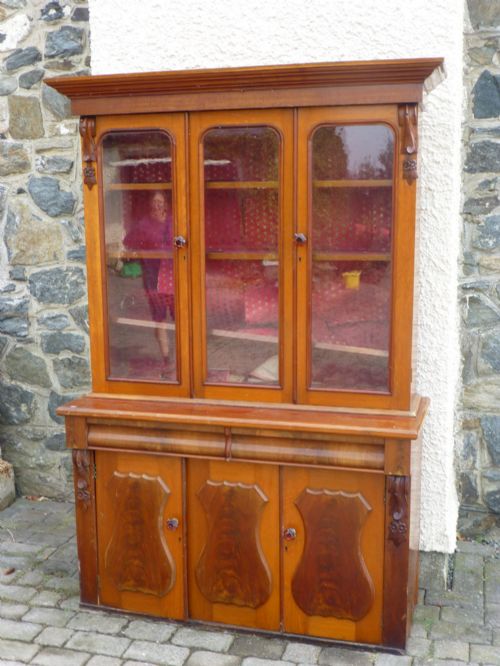
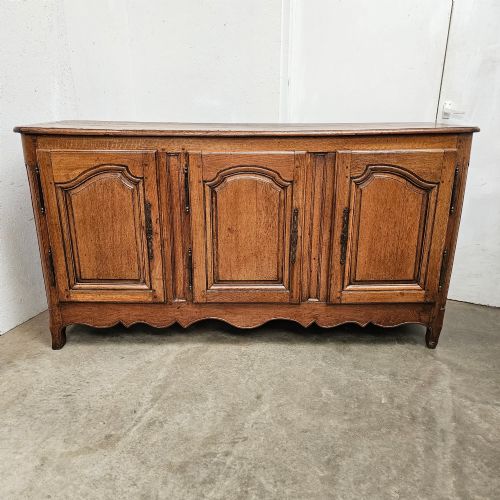
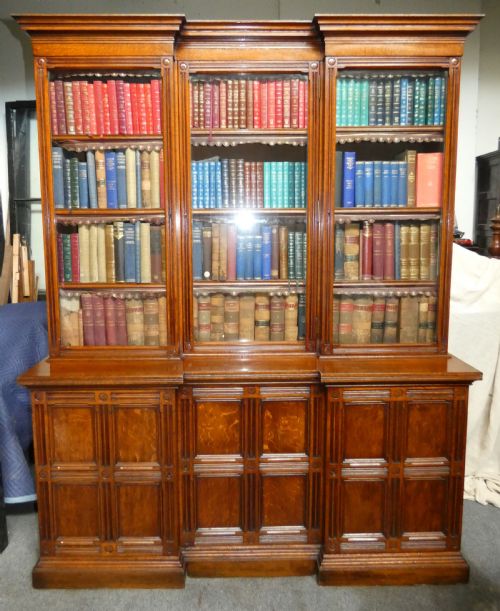
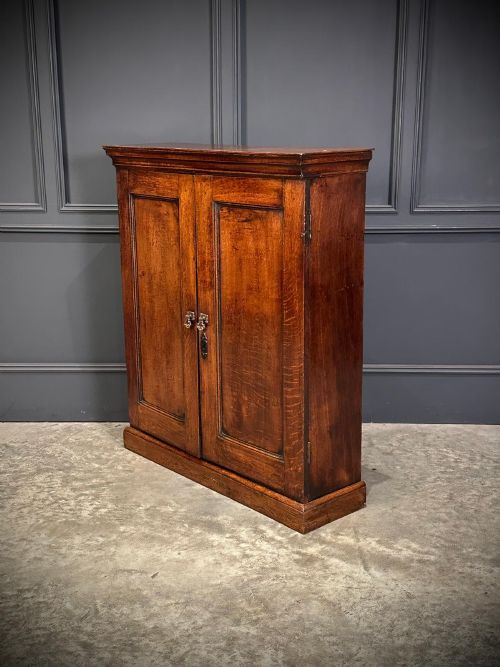
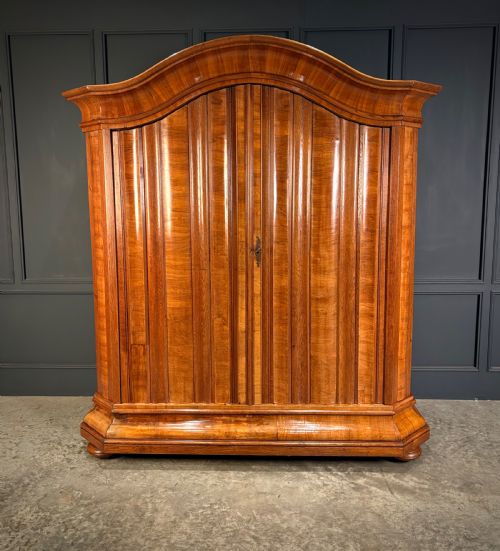
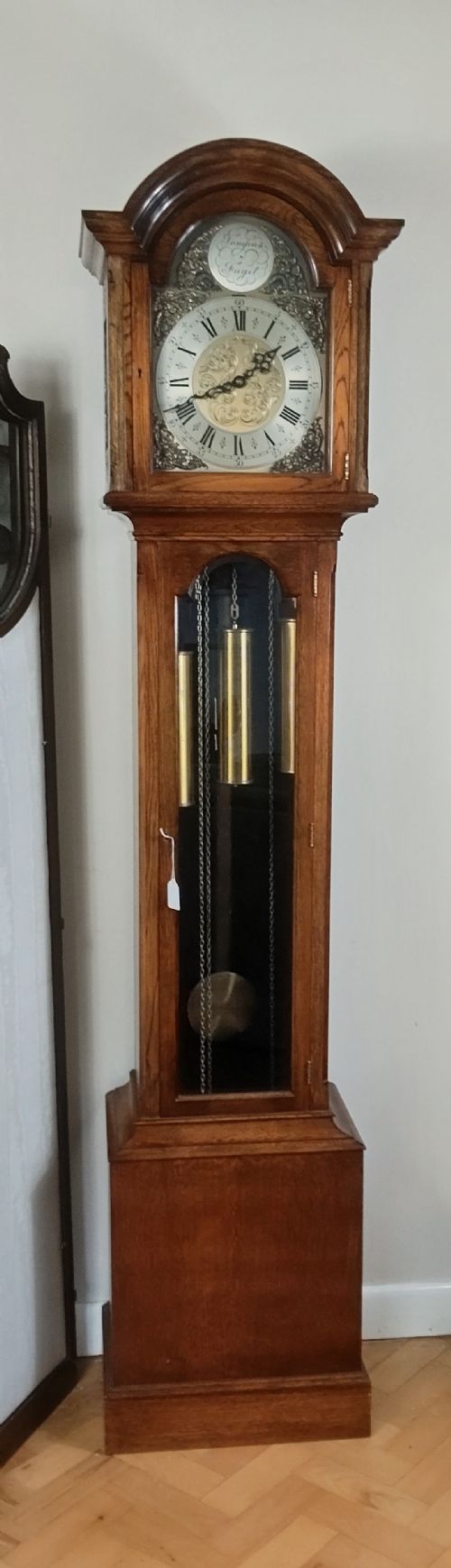

Warm Brown Oak Doors
Warm brown oak doors bring deep tone and sturdy grain to domestic interiors, offering architectural presence through enduring hardwood construction.
Warm Brown Oak Doors
Warm brown oak doors encompass architectural panels, cupboard fronts, and wardrobe closures originating from periods spanning the eighteenth century through the mid-twentieth century. Buyers seeking warm brown oak doors encounter heavy timber constructions that often feature panelled designs or glazed apertures.
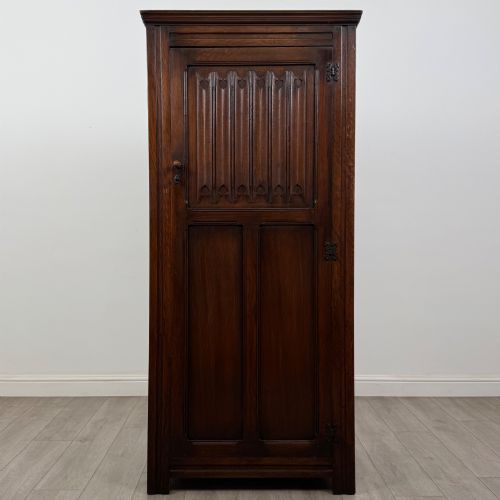
The selection ranges from early Georgian examples and Edwardian pieces with linenfold carving to Arts and Crafts creations and robust 1930s cabinetry. Such items demonstrate how utilitarian domestic carpentry evolved into decorative joinery whilst retaining the foundational strength of oak.
Materials and construction methods
Carpenters utilised solid oak planks, frequently complemented by secondary timbers and fitted with brass, iron, or wrought iron hardware such as hinges and handles. Cabinetmakers employed traditional frame and panel construction to accommodate the natural expansion and contraction of timber across varying atmospheric conditions.
Surface finishes relied on historical polishing and waxing techniques that accentuated the natural medullary rays and rich grain patterns inherent in the wood. Certain architectural elements incorporated scumbled panels or faux finishes to mimic high-status timbers.
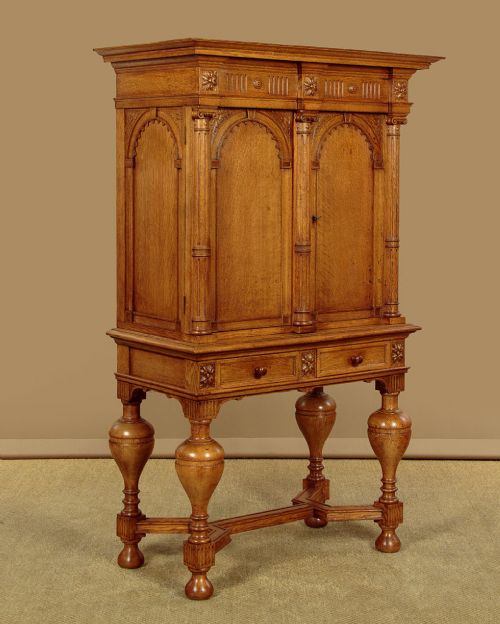
Listings feature oak alongside walnut, pollard oak, fruitwood, and mahogany across pieces dated from the eighteenth to the mid-twentieth century.
Assessing quality in construction
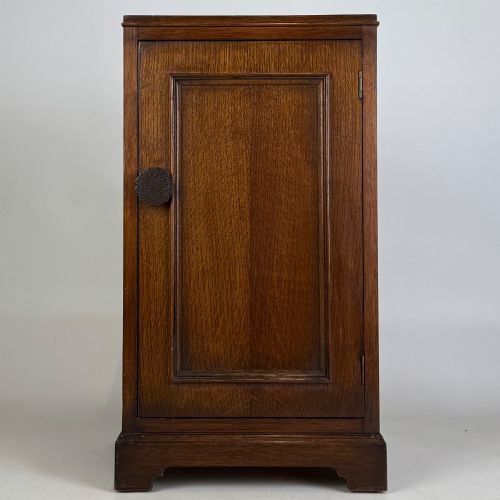
Quality rests upon the selection of timber and the precision of the joinery, particularly the tightness of mortise and tenon joints in the frame. Superior pieces display carefully matched grain patterns across panels and robust original hardware that operates smoothly within the rebate.
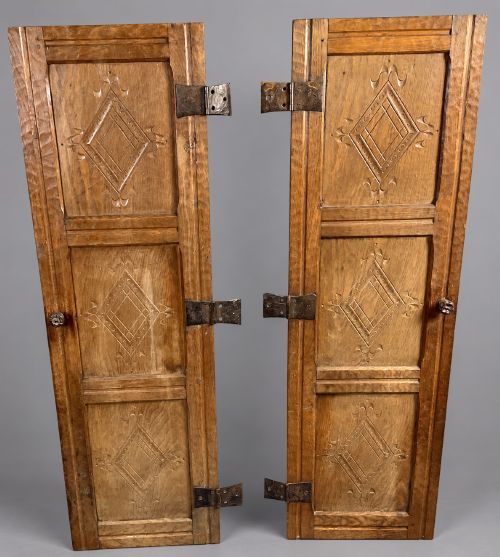
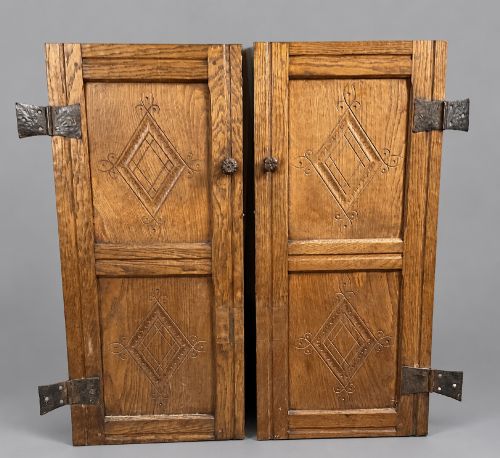
The presence of hand-carved details, such as linenfold motifs or geometric moulding, distinguishes higher-grade workshop production from utilitarian architectural joinery. Alterations to original hanging configurations or replacement hardware influence the integrity of the piece.
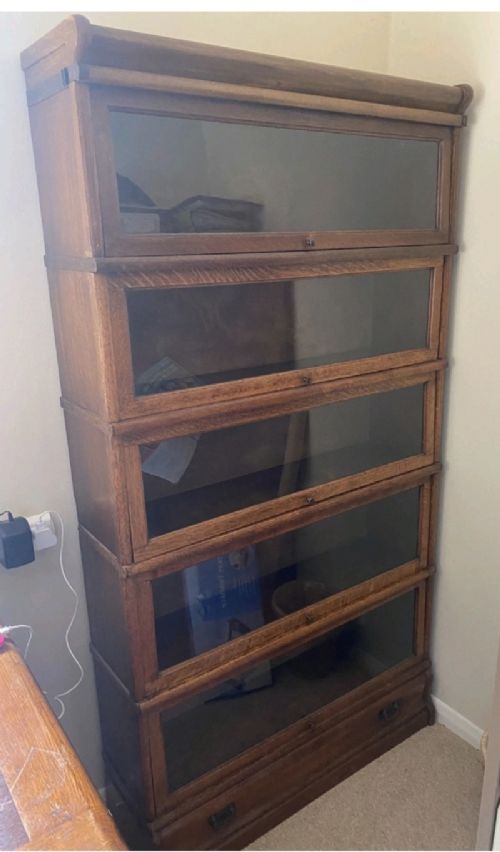
Maple and Co·Globe Wernicke
The Warm Brown Oak Doors Glossary
- Linenfold
- A style of relief carving used on wooden panels to imitate folded fabric, popular in domestic joinery from the Tudor period onwards. This technique creates a textured surface that catches light across the grain.
- Scumbled
- A decorative painting technique involving the layering of translucent or opaque glazes over a base coat to simulate wood grain or figure. It was frequently applied to secondary woods to match premier hardwoods.
- Enfilade
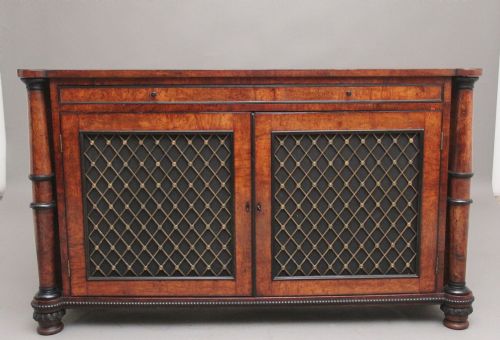
- A suite of rooms formally aligned with doorways in a straight line, or a long low sideboard cabinet designed for dining rooms. The term describes both architectural layouts and large storage furniture.
- Quarter sawn
- A method of milling logs radially from the centre to produce boards with linear grain patterns and prominent medullary rays. This cut offers enhanced dimensional stability for cabinet doors.
Warm Brown Oak Doors: Frequently Asked Questions
How do I date an oak door?
Dating relies on examining the construction marks, hinge types, and joinery methods visible on the reverse of the panel. Hand-cut timbers and forged iron hardware typically point towards eighteenth or early nineteenth-century production.
Stylistic indicators such as linenfold carving or Edwardian Arts and Crafts motifs further narrow the manufacturing window. Comparing the depth of the timber colour and the patina helps confirm the age of the surface finish.
Can antique oak doors be resized?
Trimming solid oak doors requires caution because altering the stiles or rails compromises the frame and panel integrity. Professional joiners must execute any adjustments to ensure the mortise and tenon joints remain secure.
Older timber is prone to splitting if planed incorrectly, so removal of material should be minimal and restricted to specific edges. Maintaining the original proportions preserves both the aesthetic balance and the historical value.
How should I maintain oak panel surfaces?
Routine maintenance involves dusting with a dry, soft cloth and applying a traditional beeswax formulation sparingly to nourish the dry hardwood. Avoid silicon-based polishes that build up a sticky residue and attract dust over time.
Keep the timber away from direct heat sources and dramatic humidity fluctuations to prevent warping or splitting of the panels. Environmental stability ensures the wood retains its natural lustre and structural strength.
What is the difference between architectural and cabinet doors?
Architectural doors were built to separate rooms or line alcoves within a building structure, possessing heavier stiles and larger dimensions. They carry the marks of heavy domestic traffic and fixed wall installations.
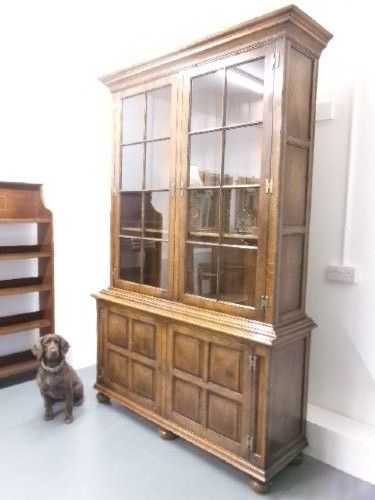
Cabinet doors form part of freestanding furniture items like wardrobes, bookcases, and sideboards, featuring lighter joinery suited to smaller enclosures. Their scale and hardware reflect internal domestic storage rather than room entry.