
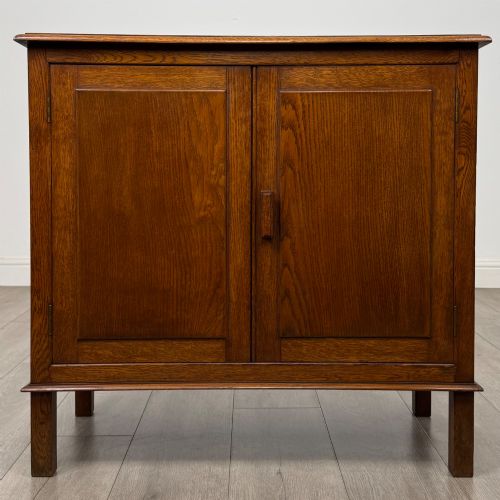


Solid Oak Cupboard Doors
Solid oak cupboard doors turn up on repurposed furniture, architectural salvage and fitted cabinets spanning from the seventeenth century through to the mid-twentieth century.
Solid Oak Cupboard Doors
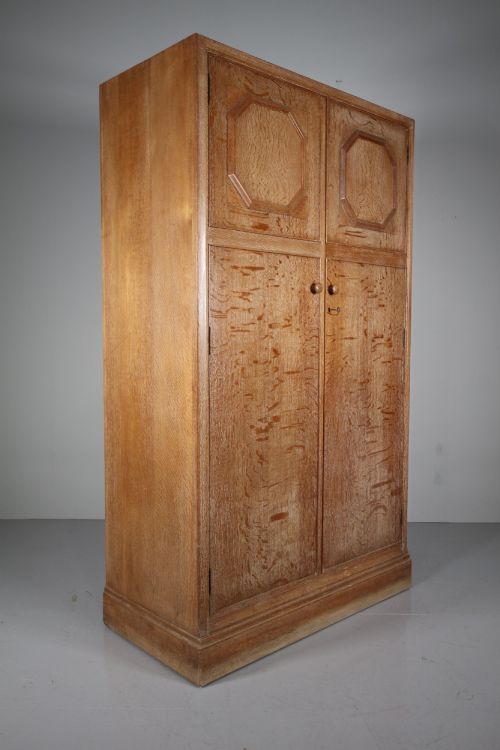
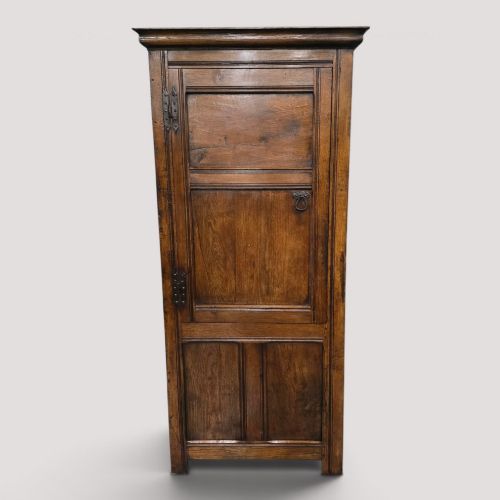
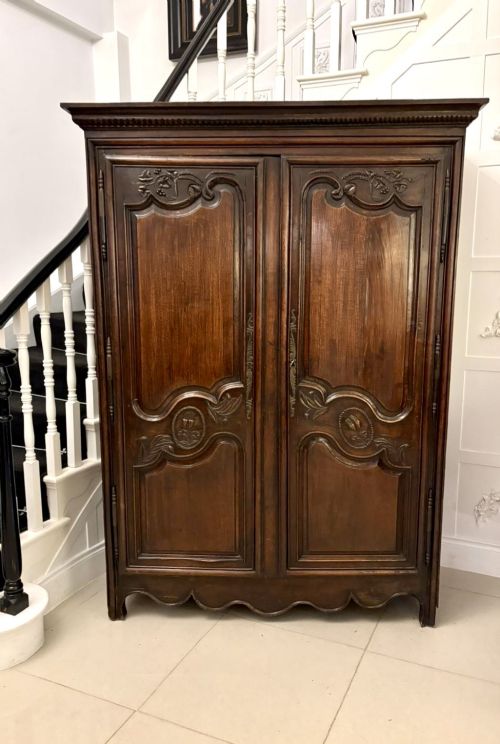
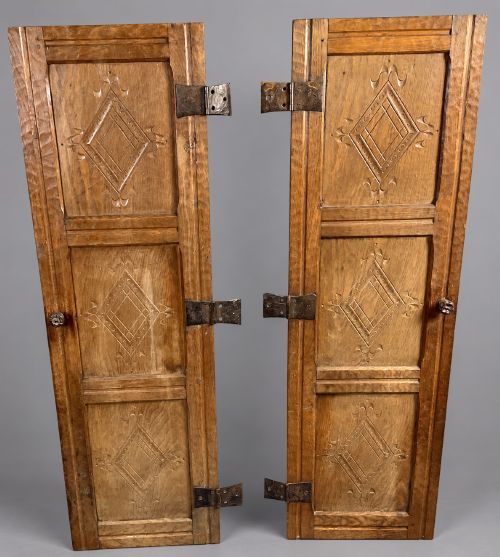
Solid oak cupboard doors form the architectural and storage components of larger pieces such as wardrobes, armoires, sideboards, dressers and fitted wall cabinets. When you search for solid oak cupboard doors, you encounter panels salvaged from full items or offered as matching pairs from periods ranging from the late seventeenth century up to the 1940s.
The styles mapped across these pieces shift from early French Provincial and Jacobean Revival through Arts and Crafts, Edwardian, and Cotswold School designs to 1920s utilitarian forms. You find heavy planked timber with traditional joinery alongside lighter golden oak variations and pieces featuring specific decorative motifs like linenfold carving.
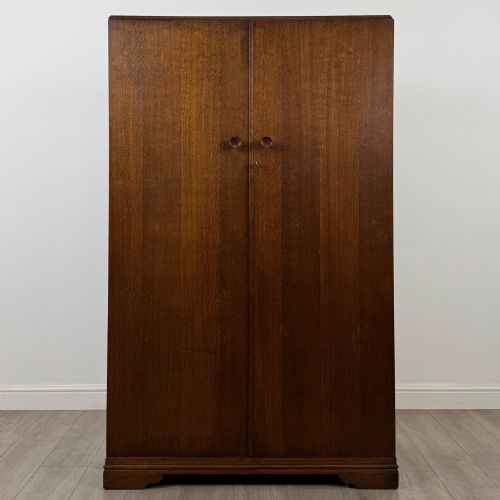
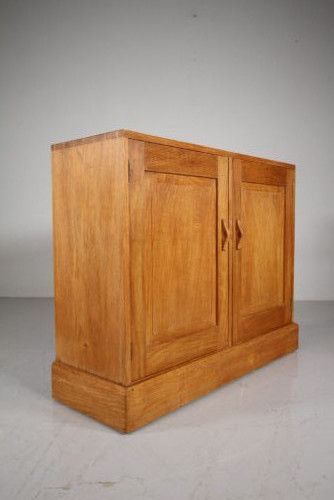
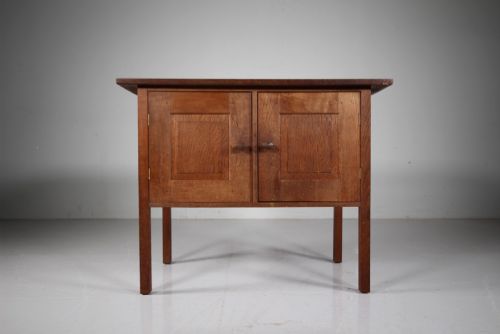
Many listings present complete cabinets, wardrobes and bookcases rather than loose panels, meaning the doors function as the primary visual facade of the storage unit. Whether sourced from a Georgian hanging corner cupboard or a 1930s cupboard by Peter Waals, the timber provides a heavy, enduring structural element.
How they were made
Makers built these cupboard doors using solid English and continental oak, relying on traditional framing techniques to accommodate the natural movement of timber over centuries. Carpenters joined rails and stiles using mortise and tenon joints, often securing panels with pegged construction in earlier periods.
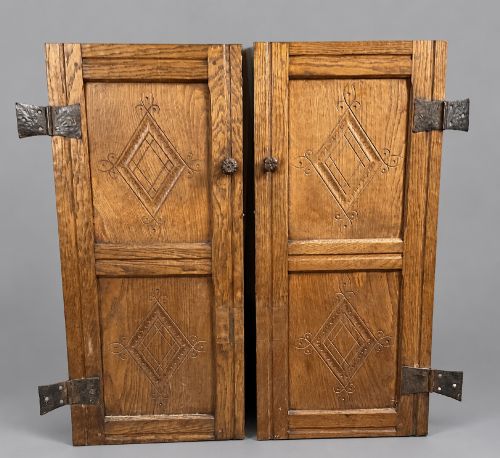
Hardware played an integral functional and decorative role, with original brass, iron, wrought iron, and copper hinges and latches fitted to secure the heavy timber frames. Surface finishes developed through hand-waxing and polishing, enhancing the natural grain of the oak across provincial French workshops and English craft schools alike.
At least one pair of oak doors carries the lingering suspicion of being carved by the famous mouseman.
What varies in quality
Quality rests in the selection of the timber and the integrity of the joinery, distinguishing heavy seventeenth-century French provincial panelling from later mass-produced alternatives. Tighter grain patterns, substantial thickness in the solid oak boards, and hand-cut joints indicate superior craftsmanship.
The presence of original period metalwork, such as wrought iron hinges or brass latches, elevates an individual piece, as does documented workshop origin from makers associated with the Cotswold School or notable furniture houses.
Crown Furniture·Peter Waals·Mouseman
The Solid Oak Cupboard Doors Glossary
- Linenfold
- A style of wood carving that imitates folded linen or parchment, frequently seen on panels from the early twentieth century and earlier.
- Cotswold School
- An English craft movement associated with furniture makers who emphasised honest construction, simple forms, and visible hand-craftsmanship in oak.
- Stile
- The vertical outer member of a panelled door frame that holds the central board in place.
- French Provincial
- A rustic yet refined style of furniture originating from the French countryside, typically constructed from heavy local timbers like oak.
Solid Oak Cupboard Doors: Frequently Asked Questions
Are these doors sold individually or in pairs?
The inventory includes both single doors and matched pairs, depending on whether they originate from larger wardrobes, sideboards, or corner cupboards. Single panels often suit architectural conversion projects, while pairs remain attached to their original storage units.
Descriptions specify the configuration, allowing you to identify whether you are purchasing a standalone pair of cupboard doors or a complete cabinet fitted with matching doors.
How do I date an oak cupboard door?
Dating relies on assessing the construction methods, the type of iron or brass hardware, and the prevailing style, such as Jacobean revival, Arts and Crafts, or French provincial. Tool marks and joint types provide clear indicators of whether a piece dates to the seventeenth century or the Edwardian era.
Earlier examples display hand-pegged joinery and heavier hand-carved panels, whereas mid-century and 1940s items show more standardised machining and lighter framing.
Can these doors be used for architectural salvage?
Many buyers repurpose solid oak cupboard doors and panels for interior renovation projects, wall panelling, or bespoke cabinetry installations. The robust nature of solid English and continental oak makes the timber suitable for practical adaptation.
You should verify the exact dimensions and thickness listed for each item to ensure the salvaged timber fits your intended architectural application.
What is Cotswold School oak furniture?
Cotswold School furniture represents an offshoot of the Arts and Crafts movement, focusing on traditional hand-tool techniques and solid timber construction. Pieces from this tradition often feature unadorned surfaces that highlight the natural grain of the oak.
Items associated with this school, including cupboards and sideboards, prioritize structural honesty and utilitarian design over excessive ornamentation.