





Architectural Salvage Oak Doors
Architectural salvage oak doors bring heavy timber and centuries of craftsmanship straight into modern interiors.
Architectural Salvage Oak Doors
Architectural salvage oak doors encompass sturdy entranceways, interior panels, and cupboard fixtures hewn from durable timber. When searching for architectural salvage oak doors, buyers encounter robust examples spanning several centuries.
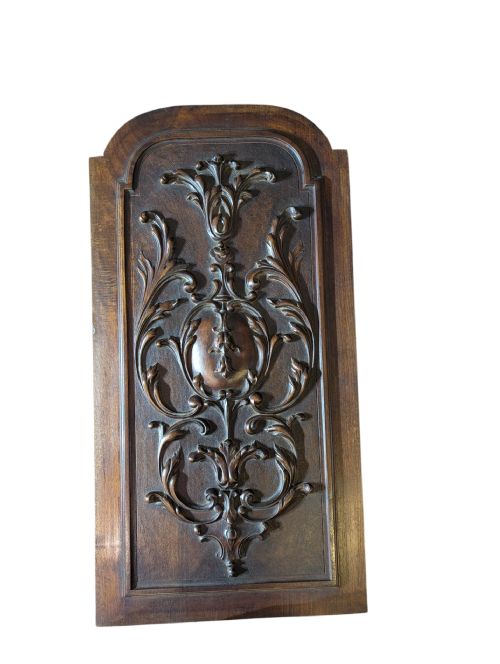
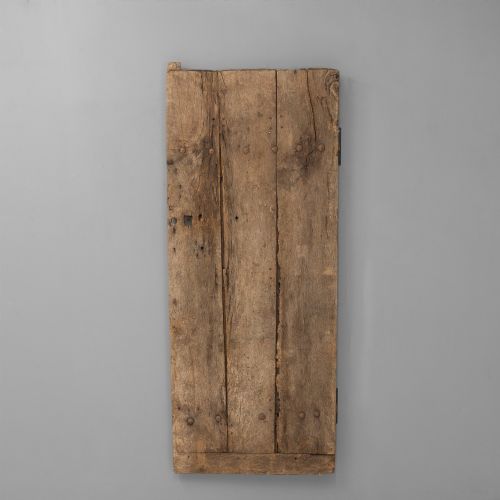
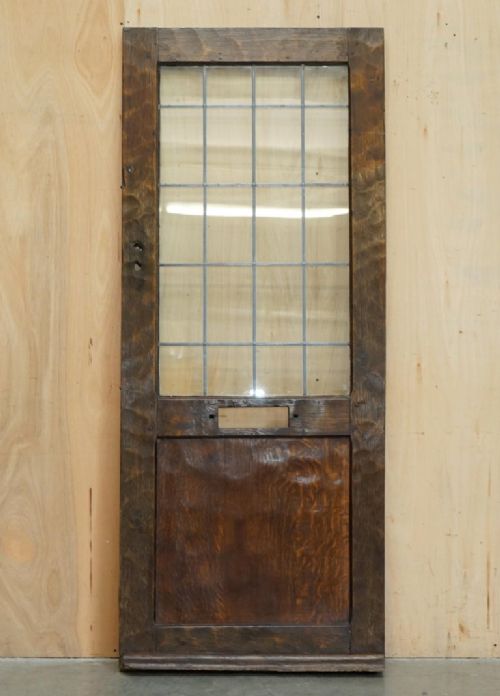
The selection ranges from early seventeenth century panels to nineteenth century French chateau pieces and twentieth century workshop creations. Solid construction defines these items, often accompanied by historic ironmongery or intricate carved details.
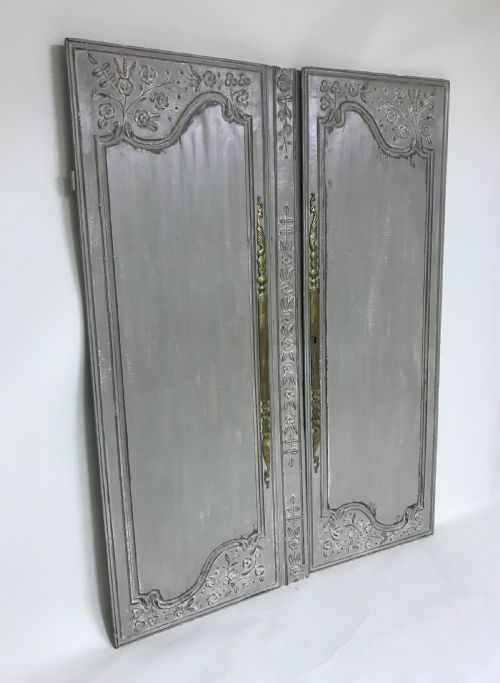
Makers and periods vary widely, offering everything from simple rustic painted finishes to heavily carved overdoors and pediments. Each piece carries the distinct marks of its original setting, whether domestic, civic, or agricultural.
How they were made
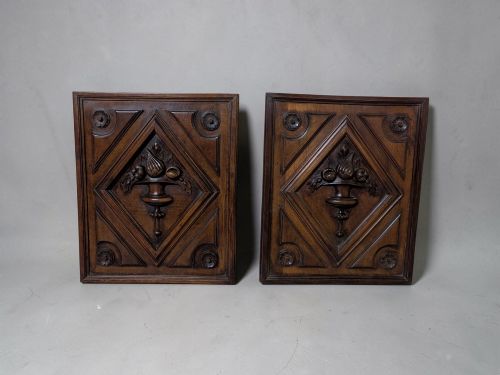
Carpenters utilised dense oak timber, supplemented occasionally by walnut and pollard oak, shaped with traditional hand tools and joinery methods. Surfaces display linenfold carving, raised panels, or painted finishes such as scumble to imitate finer grains.
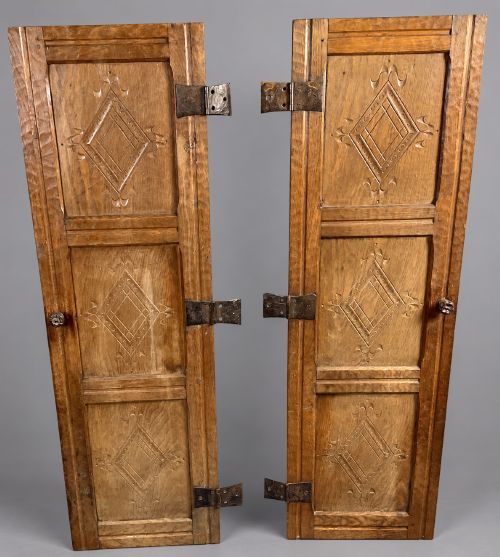
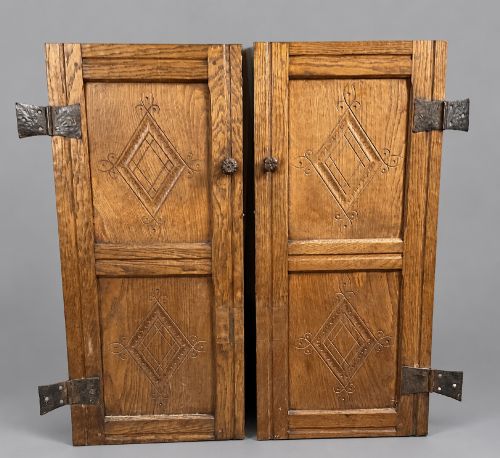
Structural integrity relied on pegged mortise and tenon joints, while iron, brass, and steel hardware secured the heavy frames. Locks, keys, and wrought iron components were forged by hand to withstand daily use over generations.
Keep a sharp eye out for hidden carved mice scurrying across twentieth-century woodwork.
What varies in quality
Quality rests upon the depth and skill of the carving, the integrity of the timber, and the originality of the hardware. Pieces attributed to notable workshops or master carvers stand apart through superior joinery and sculptural detail.
Condition and completeness also dictate distinction, separating heavily weathered utility timber from finely preserved interior joinery and complete pairs with original locks.
Robert Mouseman Thompson·Edward Pearce
The Architectural Salvage Oak Doors Glossary
- Linenfold
- A style of wood carving that imitates folded linen, commonly seen on Tudor and seventeenth century panels. This technique gives flat wooden surfaces a textured, textile-like appearance.
- Overdoor
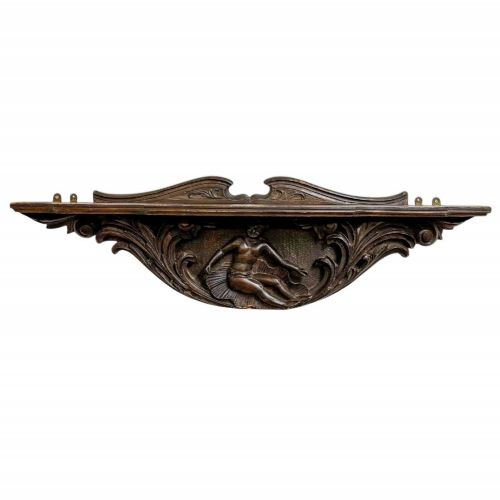
- A decorative panel, pediment, or shelf placed directly above a doorway. These architectural elements often feature prominent carvings or woodwork.
- Scumble
- A decorative painting technique involving a translucent glaze dragged over a base coat to simulate wood grain. It was frequently used to give ordinary timber the appearance of expensive oak.
- Box lock
- A self-contained locking mechanism enclosed in a metal box fixed to the surface of a door. Georgian examples often include working keys and heavy iron plates.
- Pediment
- A triangular or curved architectural ornament placed above doors, windows, or overdoors. They are frequently carved from solid oak or walnut.
Architectural Salvage Oak Doors: Frequently Asked Questions
How do I date an oak door?
Dating relies on examining the joinery methods, tool marks, and carving styles characteristic of specific periods like the seventeenth century or the Georgian era. Pegged joints and hand-adzed boards typically indicate older construction.
Hardware such as box locks and wrought iron hinges also provide reliable chronological clues when original to the piece.
Can antique doors be resized?
Adjusting heavy oak doors requires careful trimming by a skilled joiner to preserve the structural balance and historic frame. Solid timber allows for minor reductions, though care must be taken near joints.
Altering nineteenth century or earlier pieces may affect their original proportions and salvage value.
How do I clean salvaged oak?
Maintenance involves removing surface dust with a dry or slightly damp cloth without stripping the historic patina. Harsh chemical strippers should be avoided to protect the aged wood and original painted or scumbled finishes.
Applying microcrystalline wax helps nourish dry timber and protects against further wear.
What is an overdoor used for?
Overdoors and pediments served as decorative architectural transitions above interior or exterior doorways in period buildings. They added visual height and formal grandeur to important rooms.
Today they are often mounted independently as wall reliefs or decorative shelf displays.
Are painted antique doors original?
Paint finishes on salvage pieces frequently date from later refurbishments, though some retain original decorative schemes like faux oak scumble. Painted surfaces protected the timber from moisture in domestic pantries and cupboards.
Inspect layers of paint closely to determine the chronological depth of the finish.