
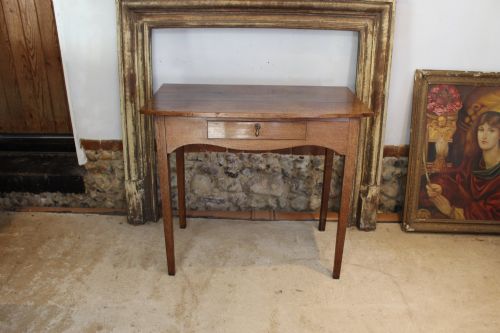
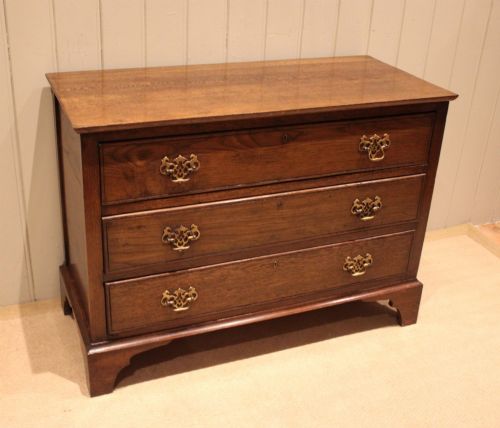
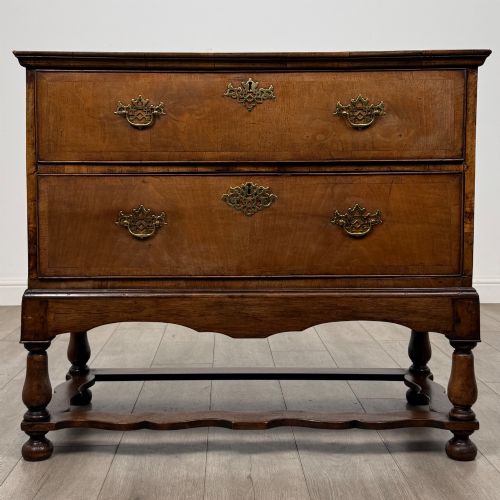
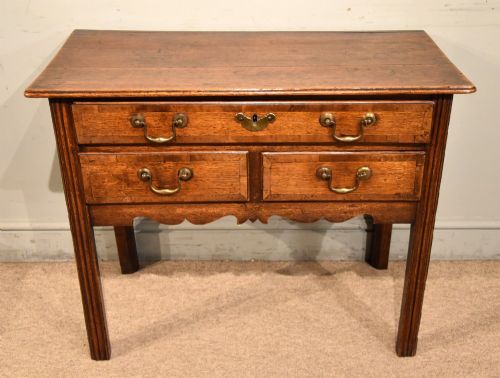
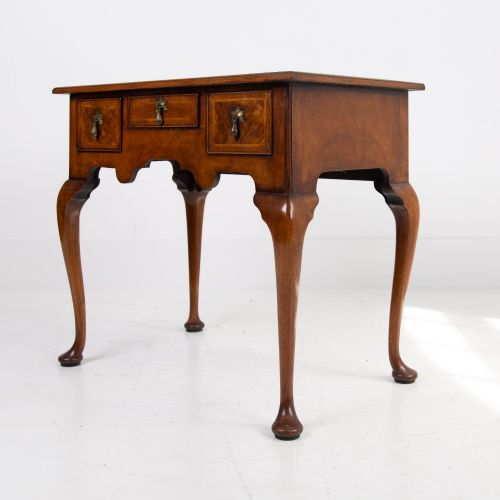
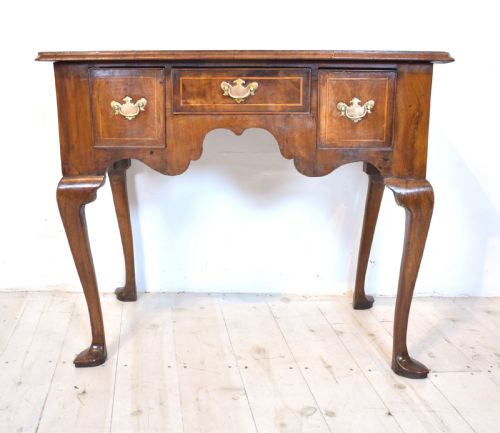
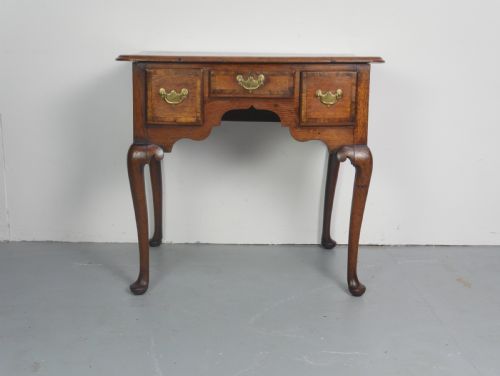


Warm Brown Lowboy
A warm brown lowboy offers compact table storage, combining understated utility with the rich tones of period timber.
Warm Brown Lowboy
A warm brown lowboy is a small side table featuring drawers, designed primarily for dressing or general storage in domestic rooms. These pieces emerged prominently during the eighteenth century, serving as functional furniture with modest proportions and accessible surfaces.
You will most frequently encounter walnut and oak examples spanning the Georgian era, alongside later interpretations in mahogany, fruitwood, and cherrywood. Their low height and drawer configurations distinguish them from larger chests of drawers or full dresser bases.
Materials and construction
Cabinetmakers constructed these tables using native and imported timbers, notably walnut, oak, mahogany, and fruitwood like cherry. Surfaces often display feather banding or boxwood inlay to accent the grain of the wood.
Joinery techniques included mortise and tenon frames, hand-dovetailed drawer boxes, and wood-turned legs or carved cabriole legs linked by stretchers.
The material palette recorded across these pieces includes brass handles, oak, walnut, mahogany, fruitwood, cherrywood, burr walnut, and boxwood inlay.
Judging quality in lowboys
Quality rests upon the selection of timber figures, such as burr walnut or dense quarter-sawn oak, matched symmetrically across drawer fronts. Finer pieces demonstrate precise inlay work and crisp carving on cabriole legs rather than plain turned supports.
The integrity of the internal construction, including original drawer linings and uncompromised framing, separates standard utility tables from exceptional cabinet work.
The Warm Brown Lowboy Glossary
- Lowboy
- A small side table or dressing table fitted with one or more rows of drawers, standing on relatively short legs. They function as versatile surface furniture in bedrooms or living spaces.
- Cabriole leg
- A furniture leg that curves out at the knee and tapers inward toward the foot, often ending in a pad or club toe. This style gained widespread use during the early Georgian period.
- Feather banding
- A decorative inlay technique using veneer slices arranged to form a herringbone pattern around the edges of a drawer front. Craftsmen utilised contrasting timbers to achieve this effect.
- Dresser base
- A long, low piece of furniture featuring multiple drawers, related in form to larger sideboards. These items provide substantially more horizontal surface area than a standard lowboy.
Warm Brown Lowboy: Frequently Asked Questions
What is a lowboy used for?
A lowboy functions primarily as a small side table with integrated drawer storage. Historically, people utilised them for grooming in bedrooms or as serving surfaces in reception rooms.
In modern interiors, they serve well as compact desk spaces, hallway tables, or lamp stands where floor space is limited.
How do I date an 18th-century lowboy?
Dating relies on examining the timber species, leg shapes, and drawer construction methods. Early Georgian examples often feature walnut with cabriole legs, while later pieces shift towards mahogany or oak with straight or turned supports.
Hand-cut dovetails and timber shrinkage patterns provide further physical clues to the exact period of manufacture.
Are lowboys made of solid wood?
Many lowboys combine solid framing timbers with decorative veneer applications on flat surfaces like drawer fronts and tabletops. Oak and walnut frequently appear in both solid forms and as veneers over secondary woods.
Checking the drawer sides and interior framing helps reveal the core materials used by the original cabinetmaker.
Where should I place a lowboy?
Their modest depth and low height make these tables ideal for narrow hallways, landings, or living room alcoves. They fit comfortably beneath wall mirrors or alongside seating furniture.
Avoid placing antique timber tables in direct sunlight or beside active heat sources to protect the polished wood finish.