
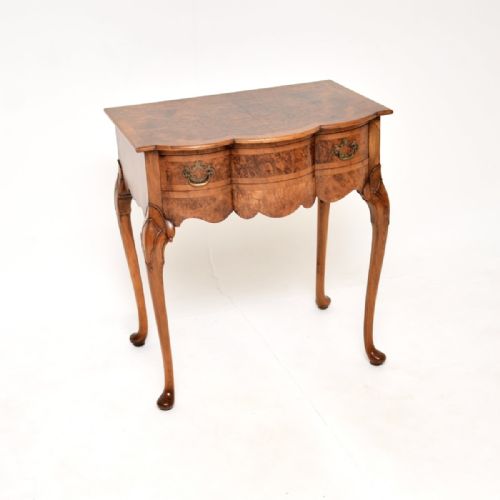
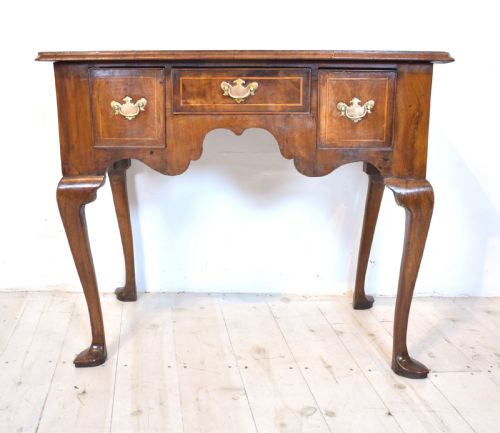


Queen Anne Walnut Lowboy
A queen anne walnut lowboy is a compact, elegant table offering drawers and graceful cabriole legs, designed to suit bedroom or parlour use.
Queen Anne Walnut Lowboy
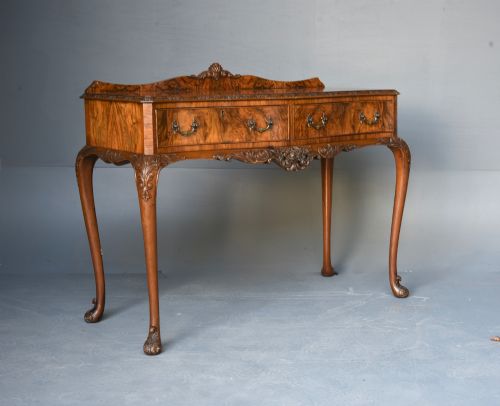
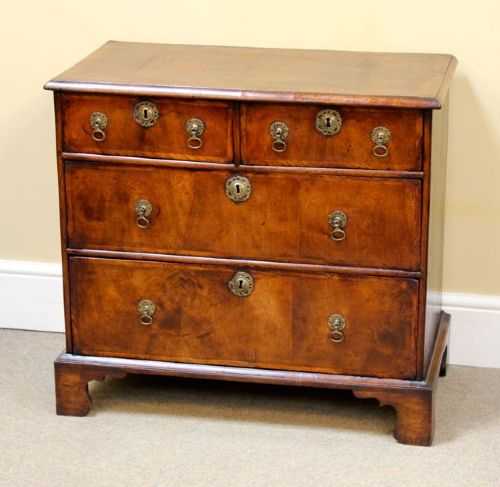
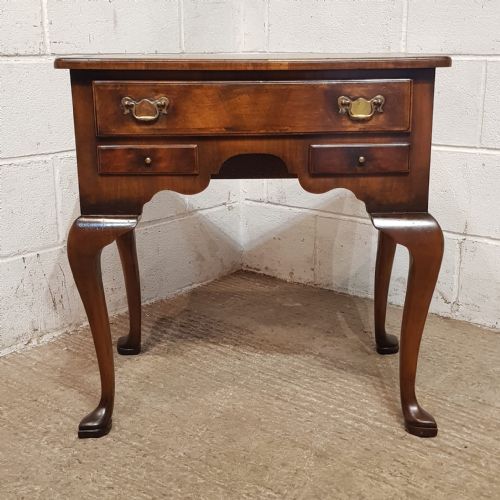
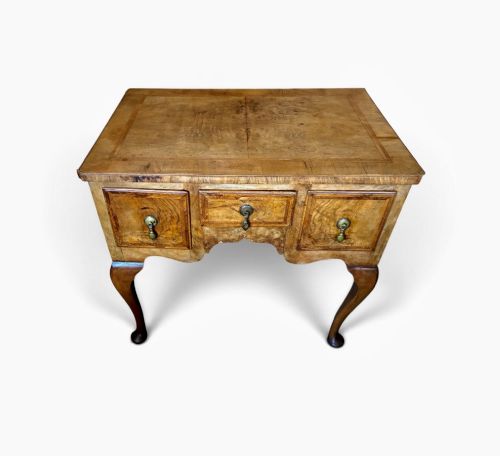
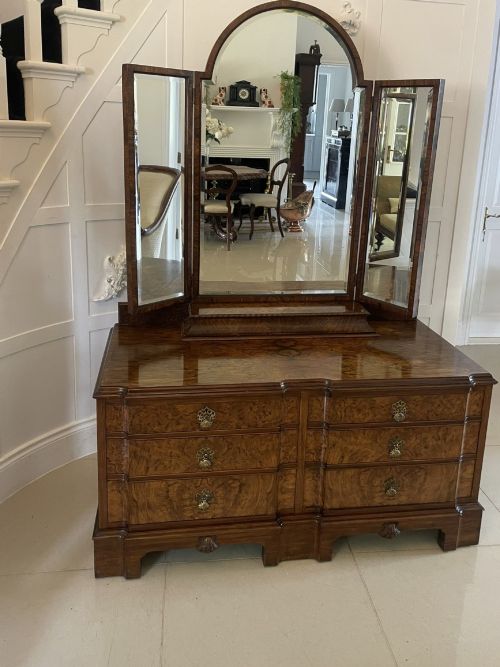
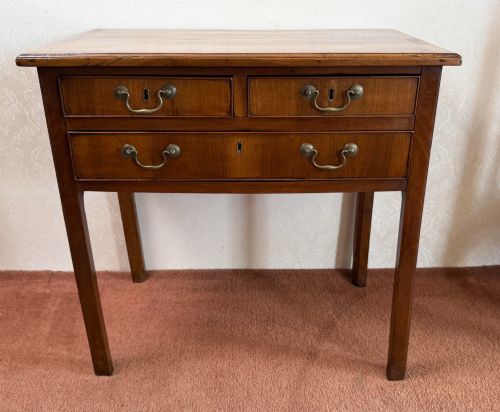
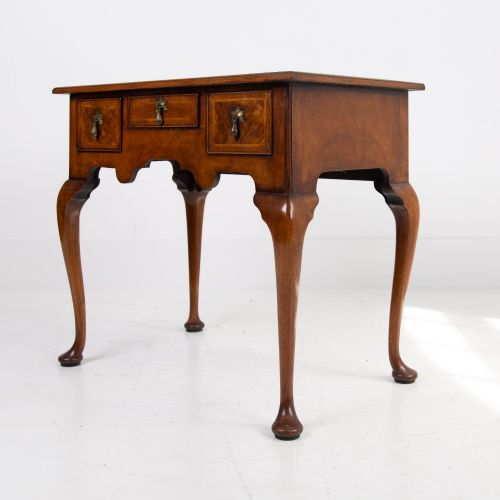
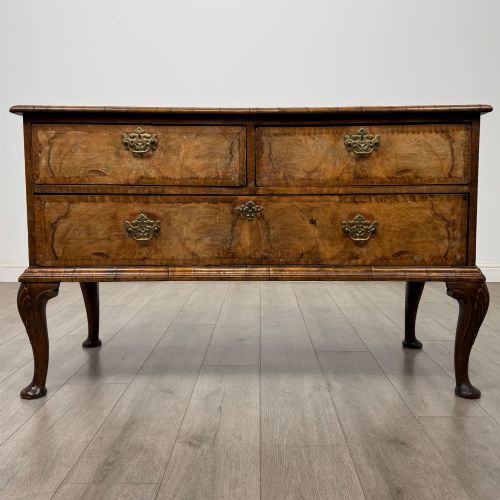
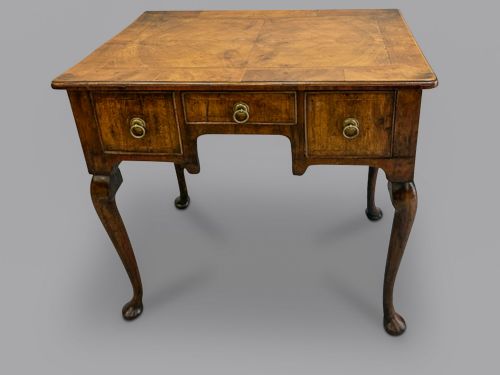
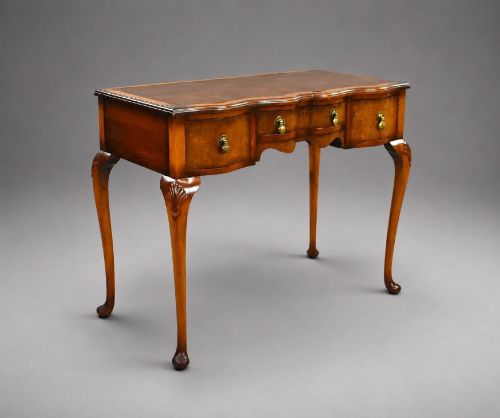
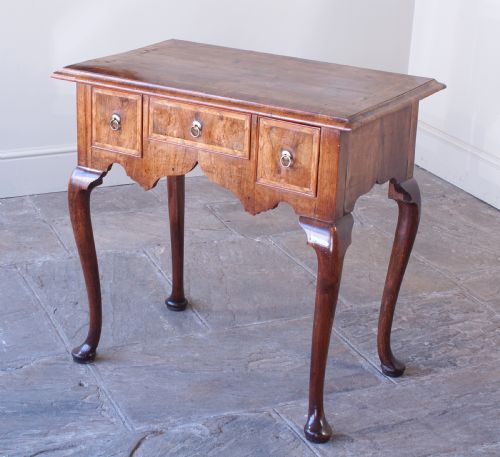
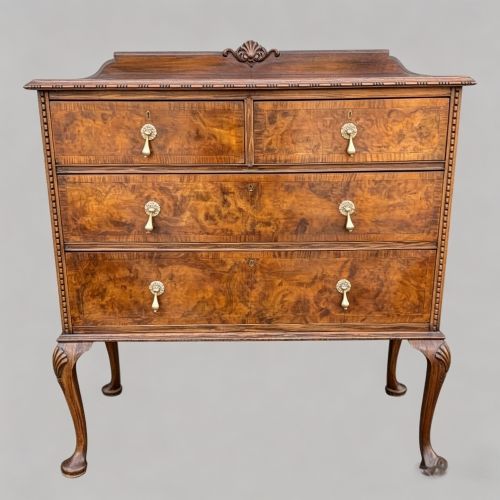
When you examine a queen anne walnut lowboy, you encounter a low side table typically fitted with two or three drawers beneath a polished top. These pieces date from the 18th century as well as later revival periods spanning the Edwardian era up to the 1930s.
The form functions primarily as a dressing table, writing surface, or small console table. Alongside authentic period examples, revival pieces appear frequently, constructed to emulate the proportions and aesthetic of early Georgian craftsmanship.
How they were made
Cabinet makers utilised solid walnut, oak as secondary timber, and burr walnut veneer to cover surfaces with rich, figured grain patterns. Fruitwood marquetry inlay and brass handles complete the construction of these tables.
Joinery techniques involve precise drawer construction and the shaping of cabriole legs, sometimes integrating carved details to achieve the characteristic silhouette associated with the style.
Listings feature walnut, burr walnut veneer, oak, fruitwood marquetry, brass, and mirror glass across 18th-century and 20th-century revival periods.
What varies in quality
Quality rests in the selection of timber, particularly the depth and movement found in burr walnut veneer or solid walnut panels. Superior examples display refined proportions and meticulous attention to leg carving and drawer lining.
Later revival pieces show differing standards of execution, ranging from utilitarian commercial production to faithful interpretations that honour 18th-century design principles with accomplished cabinet work.
Shoolbred and Co·Maple's of London
The Queen Anne Walnut Lowboy Glossary
- Lowboy
- A small table with drawers, standing on legs, originating in the early 18th century. It serves variously as a dressing or side table.
- Cabriole leg
- A furniture leg that curves out and then in, resembling the leg of an animal. This form defines the typical silhouette of the style.
- Burr walnut
- A prized wood harvested from the abnormal growth of a walnut tree, yielding intricate swirling grain patterns. Cabinet makers apply it as a veneer to tabletops and drawer fronts.
- Marquetry
- Decorative inlay work using various woods to create intricate pictorial patterns on furniture surfaces. Fruitwood is frequently utilised for this purpose.
Queen Anne Walnut Lowboy: Frequently Asked Questions
What is a lowboy used for?
Originally utilised as a dressing table or a small side table for domestic storage and grooming, a lowboy fits easily into compact spaces.
Today, owners often place them in hallways or living rooms as console tables or writing desks.
How do I date a walnut lowboy?
Dating relies on examining construction methods, timber choice, and hardware such as brass handles and backplates. Period pieces from the 18th century show distinct internal drawer construction compared to Edwardian or 1930s revivals.
Stylistic cues like the sharpness of the cabriole leg curve also provide clues to the era of manufacture.
Are all lowboys made of solid walnut?
Many examples utilise solid walnut, but cabinet makers frequently applied burr walnut veneer over oak or secondary timbers to achieve decorative grain effects.
This technique highlights the natural figure of the wood on drawer fronts and tabletops while maintaining structural stability.
How do I care for antique walnut furniture?
Protect walnut surfaces by keeping them away from direct sunlight and maintaining stable room humidity to prevent timber movement.
Regular dusting with a soft, dry cloth preserves the finish without requiring heavy polishing.