
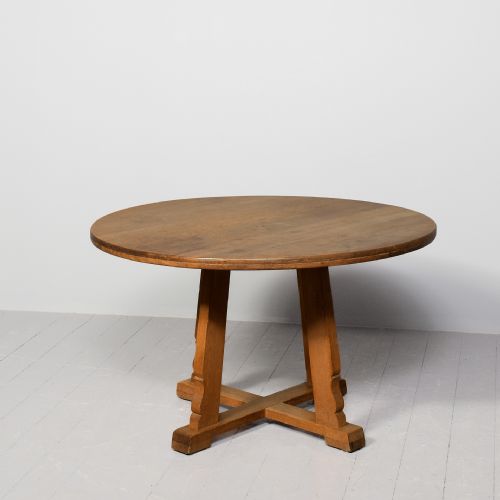


Warm Brown Breakfast Table
A warm brown breakfast table brings rich timber grain and compact utility to a morning room.
Warm Brown Breakfast Table
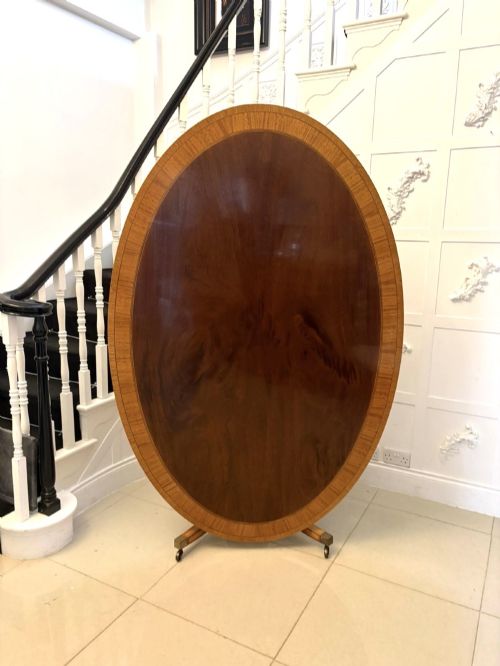
A warm brown breakfast table is selected for daily dining and casual gatherings in the kitchen or parlour. These pieces span Georgian, Regency, and Victorian eras, along with later revivals, offering diverse forms suited to smaller spaces.
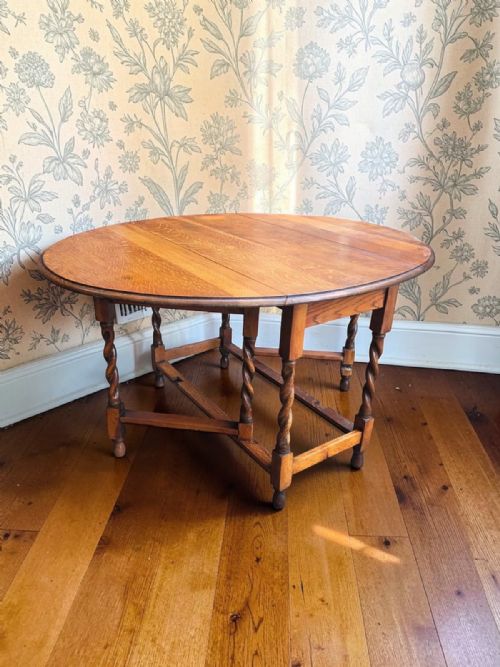
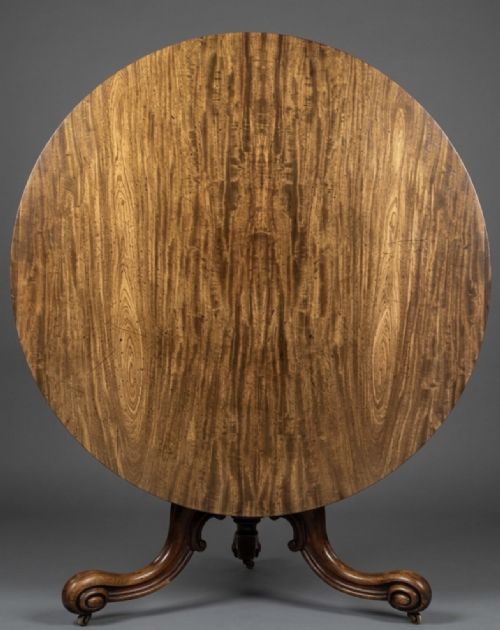
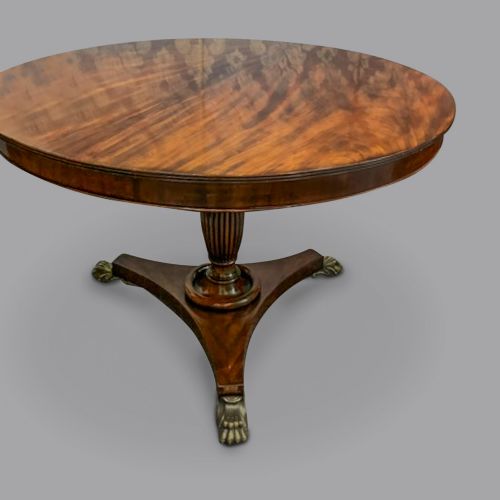
The most common versions met on this page are circular centre tables, tilt-top designs, and dropleaf formats in oak and mahogany. Examples range from simple country kitchen tables to refined pedestal pieces in yew wood and cherrywood.
Buyers encounter regional variations including French provincial elm pieces and 19th-century Dutch tables of unusual form. Each type provides practical surface space while displaying the deep patination characteristic of older timber.
Materials and construction methods
Makers utilised solid timbers such as mahogany, oak, and elm, often selecting burr yew or cherrywood for distinct figuring. Brass fittings appear on tilt mechanisms and castors, adding functional detail to pedestal and gateleg designs.
Construction techniques involve traditional joinery, including gateleg actions, snap-top catches, and drop-leaf hinges that allow tables to fold or extend. Surfaces were finished to highlight the natural warmth and grain of the wood.
Several tables here feature clever folding leaves and pivoting tops designed to vanish against a parlour wall after breakfast.
Distinctions in quality
The upper tier of these tables is defined by the choice of cabinet timber, such as figured mahogany or yew wood, paired with fine turning like barley twists or pedestal columns. Lesser examples rely on utilitarian construction intended strictly for functional kitchen use.
Proportion and stability separate standard utility pieces from sophisticated parlour furniture. Superior examples maintain balance in tilt-top mechanisms and feature mellow, untouched patination on the primary surfaces.
Sir Robert Stoddart Lorimer·George Bullock
The Warm Brown Breakfast Table Glossary
- Tilt top table
- A table with a hinged top that pivots vertically to save space when not in use. These designs often feature a snap mechanism to lock the surface horizontal.
- Pembroke table
- A small rectangular table with hinged drop leaves on two opposing sides. They frequently include one or two small drawers.
- Gateleg table
- A table with hinged leaves supported by swing-out legs that resemble a gate. This construction allows the surface area to expand significantly.
- Centre table
- A freestanding table designed to be viewed from all sides rather than pushed against a wall. They are commonly circular or oval in shape.
- Snap top
- A spring-loaded mechanism that secures a pivoting table top in the horizontal position. It prevents the surface from tipping unexpectedly.
Warm Brown Breakfast Table: Frequently Asked Questions
How were these tables used?
These tables served primarily for morning meals, tea service, and writing in smaller rooms or private parlours. Drop-leaf and tilt-top mechanisms allowed owners to tuck them away against walls when floor space was needed.
Kitchen variants provided sturdy work surfaces for food preparation and family suppers. Centre tables sat in the middle of rooms to hold lamps, books, or breakfast trays.
How do I live with a wooden breakfast table?
Position the table away from direct heat sources and strong sunlight to prevent the timber from drying out or fading. Use coasters and placemats to protect the polished surface from moisture and heat marks.
Regular dusting with a soft cloth maintains the finish. Occasional application of suitable wax preserves the deep colour of the wood without building up heavy residue.
How can I tell the period?
Examine the timber selection, construction joints, and edge profiles to determine the likely era of manufacture. Georgian and Regency pieces often feature refined mahogany or yew wood with slender pedestals, while Victorian and later examples may show heavier oak turnings or vernacular elm construction.
Tool marks on the underside and the type of fixings used provide further clues to age. Machine-sawn timber generally indicates 19th-century or later production.