





Walnut Writing Desk Box
Walnut writing desk box pieces are portable portable writing desks and stationery cabinets that bring nineteenth-century elegance to modern surfaces.
Walnut Writing Desk Box
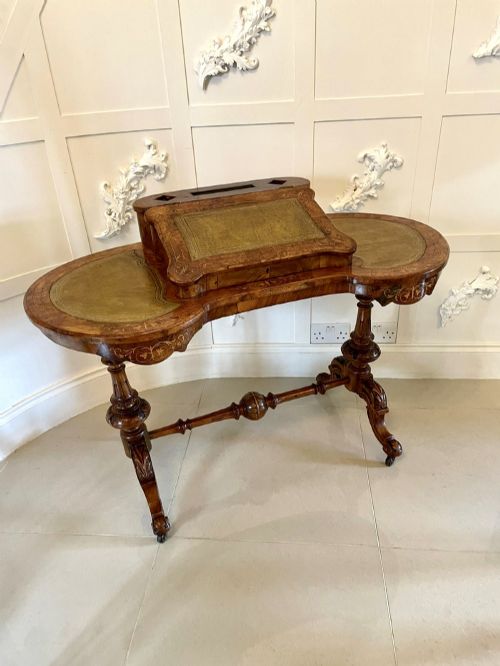
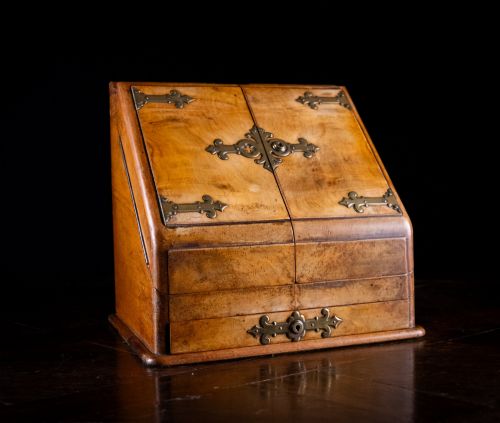
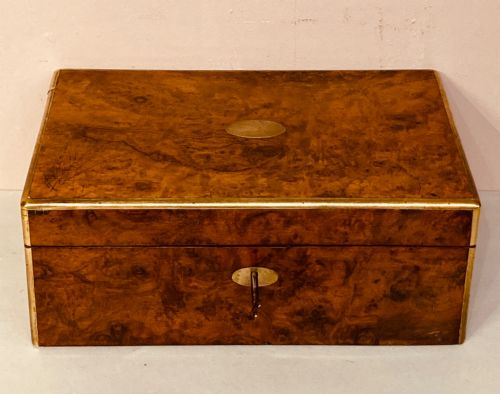
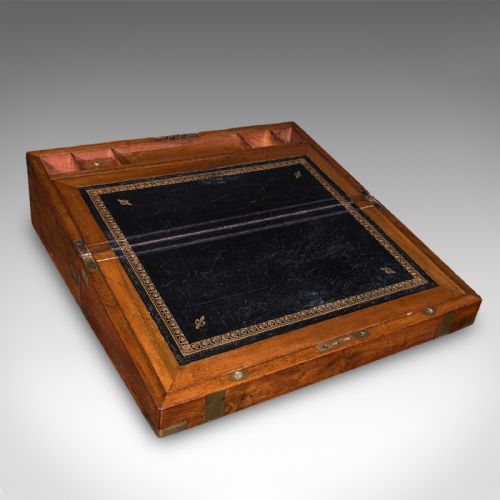
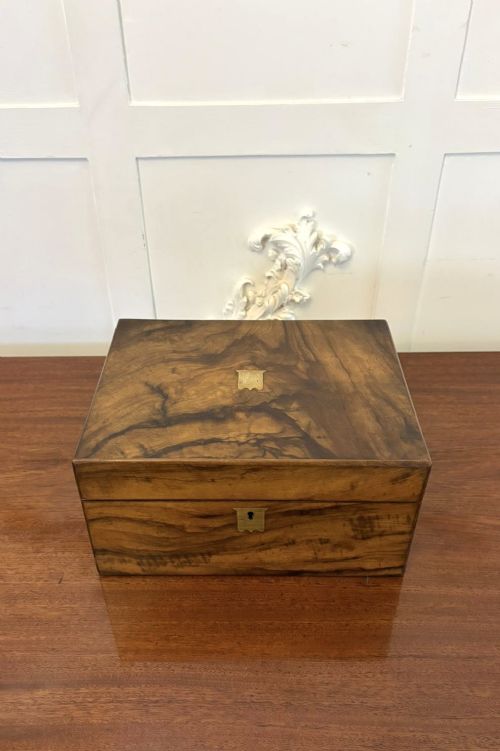
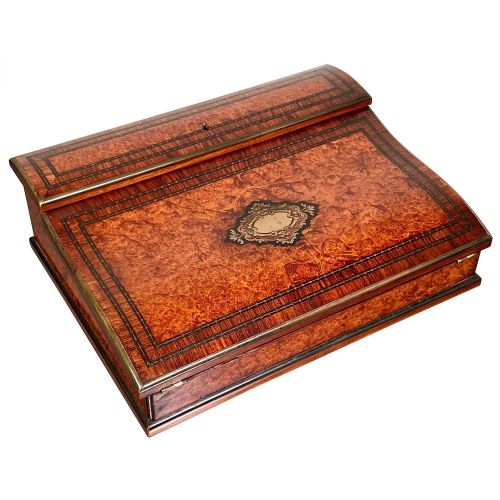
A walnut writing desk box encompasses writing slopes, correspondence cases, and stationery cabinets originating primarily from the Victorian and Georgian eras. These pieces served as portable desks or desktop organisers for letter-writing and document storage before the widespread availability of fitted home furniture. The selection on this page is dominated by Victorian burr walnut examples featuring hinged lids and sloping fronts.
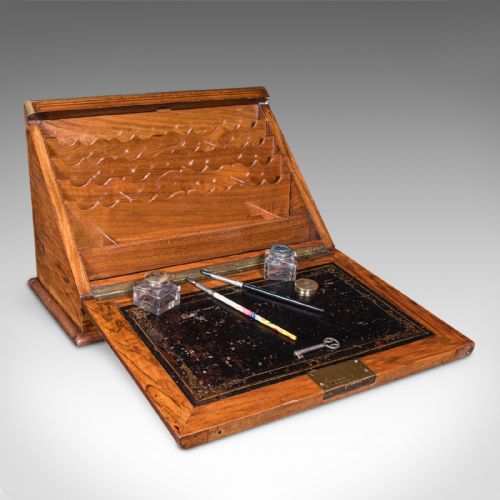
Makers and workshops of the nineteenth century produced these boxes in various formats, ranging from simple lap desks to elaborate campaign chests and stationery cabinets with fitted interiors. Pieces often include secret drawers, leather writing surfaces, and compartments for inkwells and pens. Examples span the Regency, William IV, and later Victorian periods, showcasing distinct regional variations including Irish and French craftsmanship.
Materials and Construction
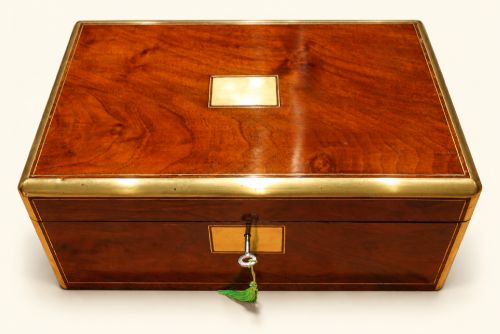
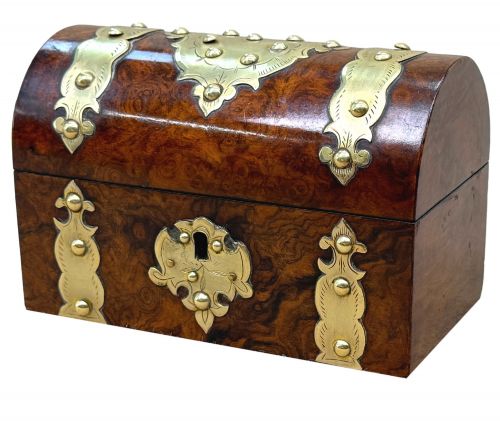
Cabinet makers utilised walnut timber, specifically burr and figured walnut veneers, applied to solid secondary woods to create richly patterned exterior surfaces. These housings were frequently reinforced with brass binding, corner mounts, and escutcheons to withstand travel and daily use.
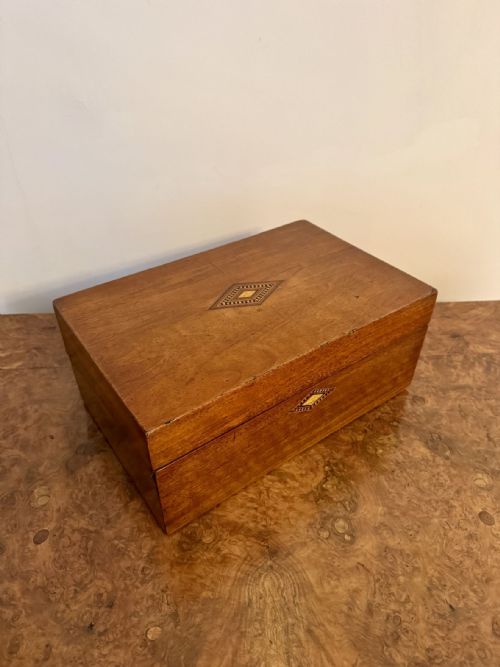
Interiors integrated secondary timbers alongside specialised details such as boxwood stringing, mother-of-pearl inlay, and Tunbridge ware mosaic work. Mechanisms relied on robust brass hardware, including Bramah locks and secret drawer releases concealed within the internal partitions.
Walnut Writing Desk Box Retail Price Guide 2026
Typical asking prices for walnut writing desk box among the pieces listed under this phrase on Sellingantiques today, from the lower quarter to the upper quarter. They describe what is for sale here now, not the wider market.
Secret drawers often require removing an inkwell to trip the hidden spring.
Judging Quality
Quality rests in the selection of the timber veneers and the precision of the brass work. Superior pieces display matched burr walnut grain across the entire exterior surface rather than patchworked sections.
Internal fittings reveal the standard of production, distinguishing standard commercial boxes from bespoke commission work. Fully operational secret drawers, original Bramah locks with working keys, and intact leather writing surfaces elevate a piece significantly.
William Austin·Edmund Nye·Mappin & Webb·Asprey
The Walnut Writing Desk Box Glossary
- Writing slope
- A portable box with an inclined lid designed to hold writing paper and provide an angled surface for writing letters.
- Burr walnut
- A distinctive timber veneer harvested from walnut tree growths, prized for its swirling, highly figured grain patterns.
- Bramah lock
- A high-security cylindrical lock invented by Joseph Bramah, commonly found on better-quality nineteenth-century boxes.
- Tunbridge ware
- A form of decorative woodwork featuring intricate mosaic patterns made from tiny segments of naturally coloured woods.
- Campaign box
- A sturdy portable desk constructed for travel, featuring recessed brass handles and reinforced corners.
Walnut Writing Desk Box: Frequently Asked Questions
How do I use a writing slope?
Opening the hinged box reveals an inclined writing surface, often lined with leather or velvet, alongside compartments for nibs, stamps, and inkwells. Documents and stationery store flat inside the base.
Many slopes feature folding flaps that expand the writing area and conceal hidden compartments or secret drawers beneath the internal stationery wells.
How do I date a walnut writing box?
Dating relies on stylistic clues, hardware types, and timber choices. Georgian and Regency examples often feature simpler lines and stringing, whereas Victorian pieces frequently utilise heavy burr walnut veneers and brass edge binding.
Maker marks, patent locks, and specific decorative techniques like Tunbridge ware mosaic work also help narrow the period of manufacture.
What are secret drawers?
Secret drawers are concealed storage compartments built into the internal structure of a writing box. They usually require removing a false partition or lifting a specific divider to release the spring mechanism.
Cabinet makers included these hidden spaces to secure valuables, personal letters, and money during an era when privacy depended on physical security.