
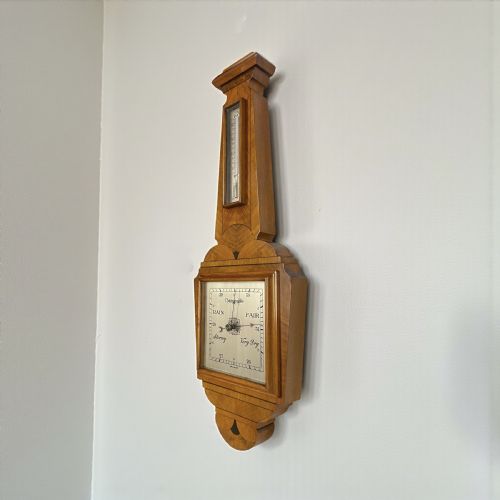

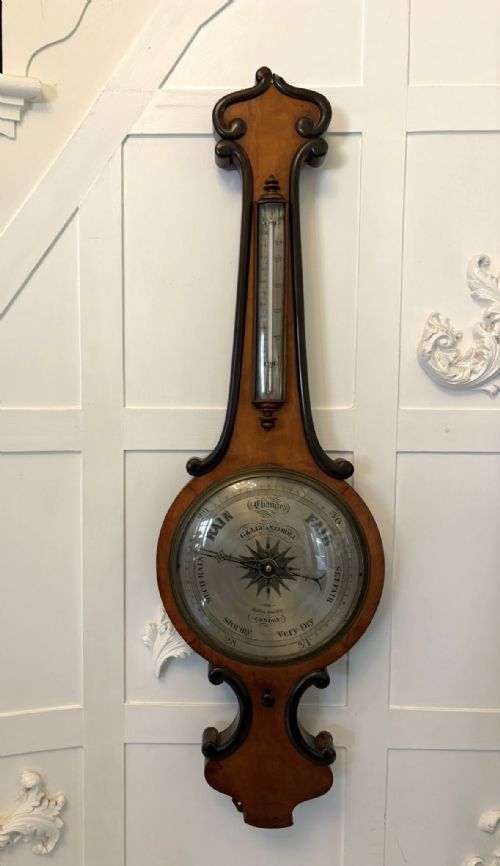


Walnut Wall Barometer
A walnut wall barometer brings practical science and rich timber grain together on the domestic wall, spanning decades of precise domestic measurement.
Walnut Wall Barometer
A walnut wall barometer is a functional domestic instrument designed to measure atmospheric pressure, presented in timber cases ranging from early Georgian forms to Victorian banjo styles and Art Deco designs.
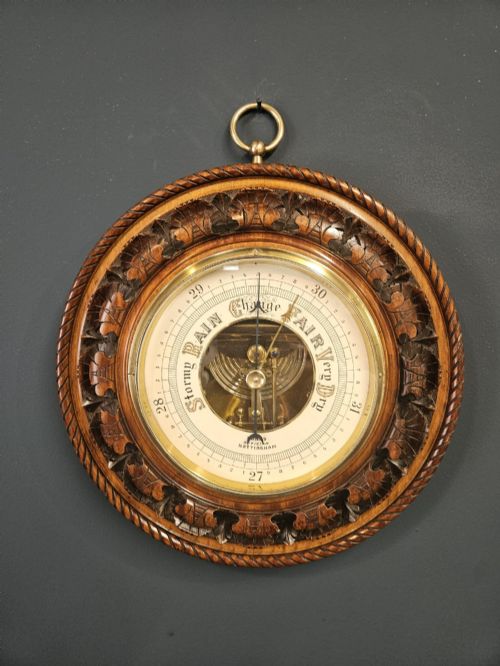
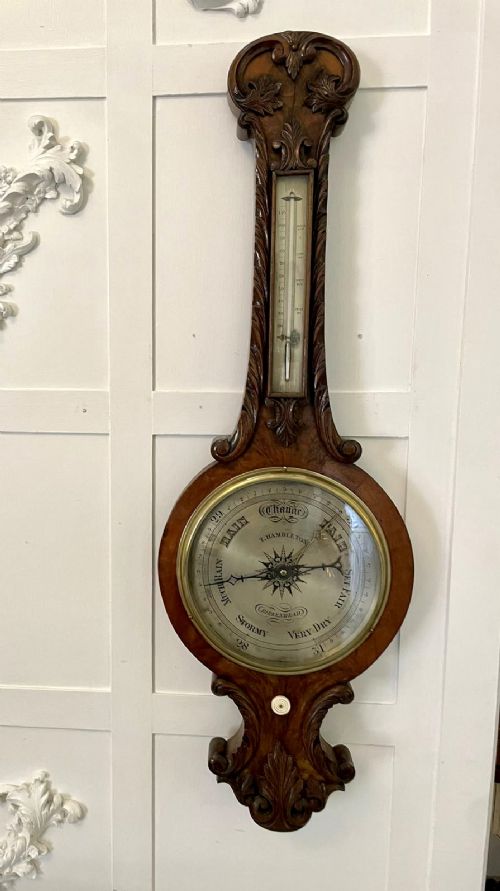
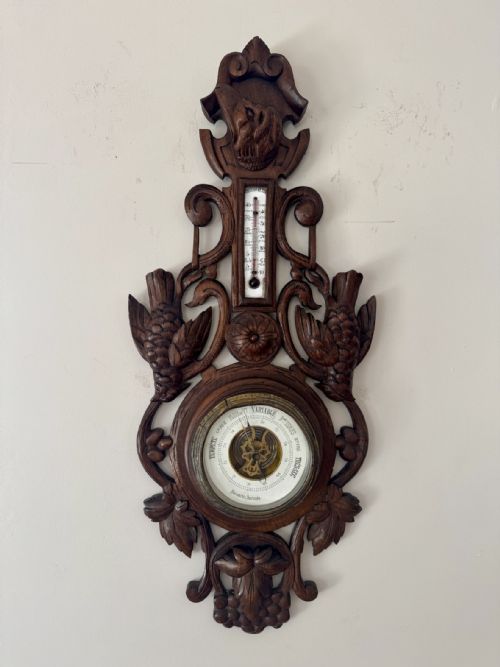
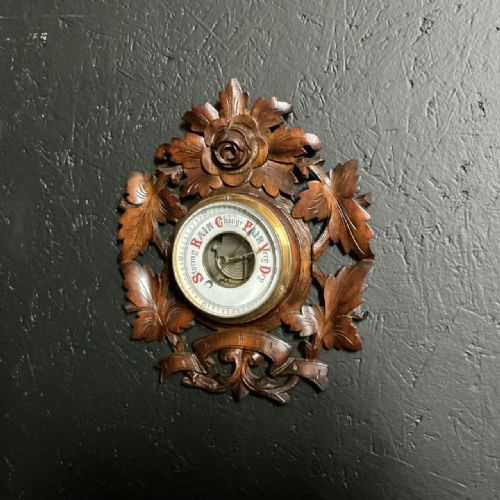
You are most likely to meet Victorian and 19th-century examples on this page, particularly carved Black Forest pieces and English banjo barometers featuring combined thermometers or clock dials.
These instruments serve as both weather-recording tools and decorative wall furnishings, utilising the deep brown tones and distinct figures of walnut timber.
Materials and construction
Cases are constructed from solid walnut, burr walnut, and wood veneer, often shaped through detailed hand carving to display the natural figuring of the timber.
Internal mechanisms integrate brass fittings, glass dials, porcelain components, and mercurial or aneroid tubes to translate atmospheric pressure into visible pointer movement.
Stylistic influences such as Rococo Revival and Black Forest traditions dictate the ornate foliage and scrollwork carved directly into the wooden surrounds.
Walnut Wall Barometer Retail Price Guide 2026
Typical asking prices for walnut wall barometer among the pieces listed under this phrase on Sellingantiques today, from the lower quarter to the upper quarter. They describe what is for sale here now, not the wider market.
Listings feature walnut wall barometers spanning the eighteenth, nineteenth, and twentieth centuries, incorporating materials like brass, porcelain, and glass.
Judging quality and craftsmanship
The distinction between standard and superior pieces rests on the depth and crispness of the carved woodwork, particularly the intricate detailing found on Black Forest and Victorian banjo frames.
Choice of timber elevates an instrument, with burr walnut veneers displaying rich, swirling grain patterns that demand expert cabinet-making to apply smoothly across curved surfaces.
Signatures from notable makers such as Negretti & Zambra or Short & Mason add historical weight, supported by the clarity of the ceramic or glass dials and the preservation of the original mechanical components.
G & L Guanziroli London·Negretti & Zambra London·Short & Mason London
The Walnut Wall Barometer Glossary
- Aneroid barometer
- A non-liquid barometer that measures atmospheric pressure using a small, flexible metal box called an aneroid cell. This clever mechanism expands and contracts with pressure changes to move the dial pointer.
- Banjo barometer
- A domestic barometer housed in a tall, curved wooden case resembling the stringed instrument. It typically incorporates a hygrometer, thermometer, and spirit level alongside the main dial.
- Stick barometer
- A tall, narrow barometer that uses a vertical glass tube filled with mercury to measure atmospheric pressure. These early designs offer a direct and precise reading of barometric height.
- Black Forest style
- A carving tradition originating in central Europe known for deeply sculpted natural motifs. These pieces often feature bold foliage, animals, and rustic architectural elements rendered in walnut.
- Burr walnut
- A specialised timber cut from the abnormal growths on walnut trees, prized for its complex and swirling grain patterns. Cabinet-makers slice this wood into thin veneers for decorative surfaces.
Walnut Wall Barometer: Frequently Asked Questions
How do I read a walnut wall barometer?
Most domestic barometers feature a dial marked with weather descriptors like rain, change, and fair, showing where the pointer rests currently. Tapping the glass gently before reading helps settle the internal mechanism to give an accurate atmospheric pressure indication.
Combined instruments may also include a thermometer or hygrometer on the same wooden backboard. Comparing these readings together gives a fuller picture of atmospheric conditions in the room.
Where should I hang a wall barometer?
Select an interior wall that avoids direct sunlight and sudden temperature shifts from radiators or open fires. Stable conditions protect the delicate wooden case and prevent the internal mechanism from binding.
Ensure the wall fixing is secure enough to support the weight of the timber and glass. Most pieces require a sturdy screw or hook matching the mounting bracket on the reverse.
How do I clean a carved walnut case?
Dust the carved wooden surfaces gently using a soft, dry brush to reach into the recesses of the foliage and scrollwork. Avoid using wet cloths or harsh chemical polishes that can damage the antique finish of the walnut.
Applying a light coat of natural beeswax occasionally helps nourish the timber grain. Buff the surface gently after application to maintain a soft, natural lustre without buildup.