



Traditional Weather Instrument
A traditional weather instrument records pressure and temperature through brass and glass, bringing mechanical science into domestic rooms.
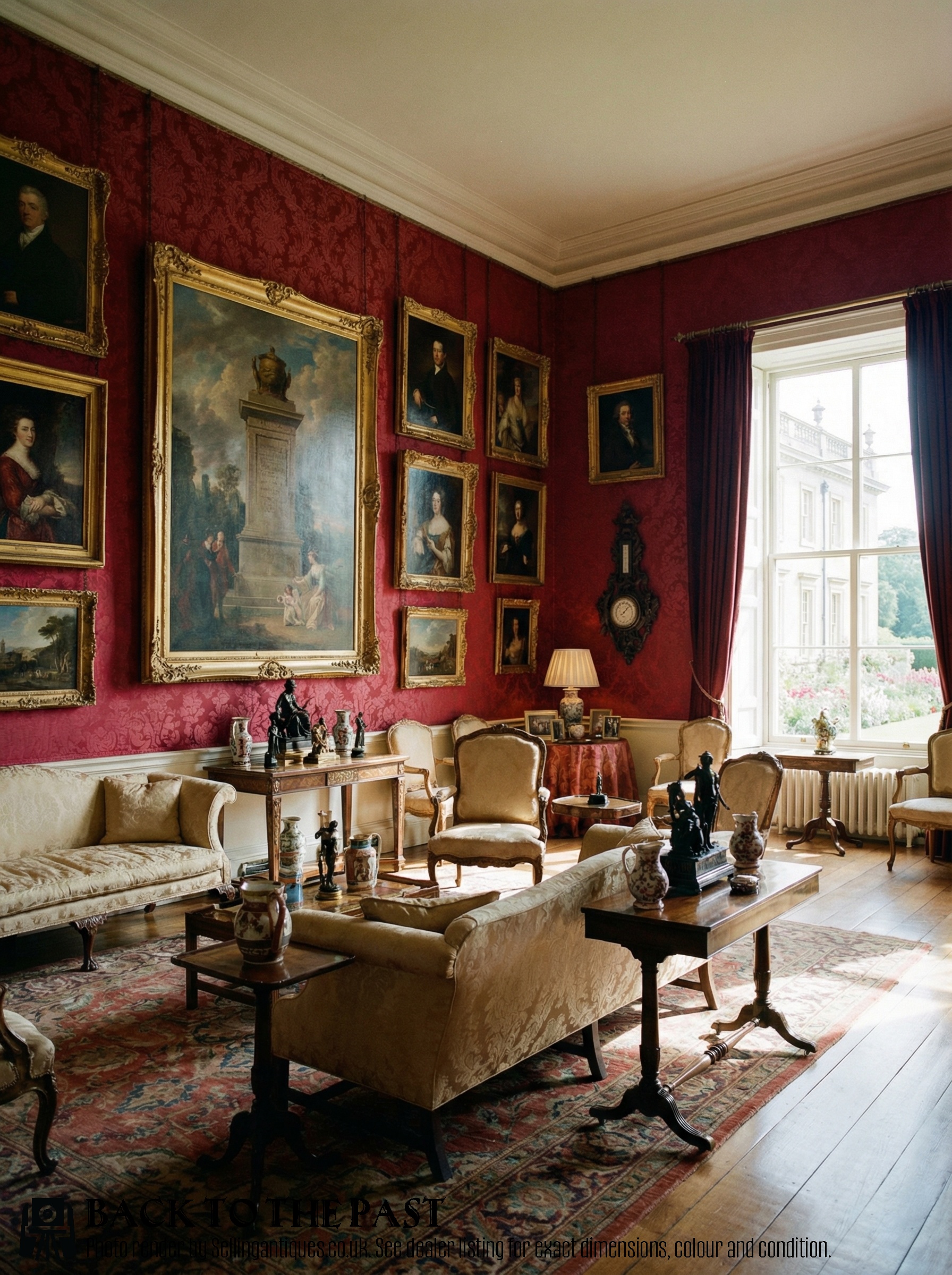
Traditional Weather Instrument
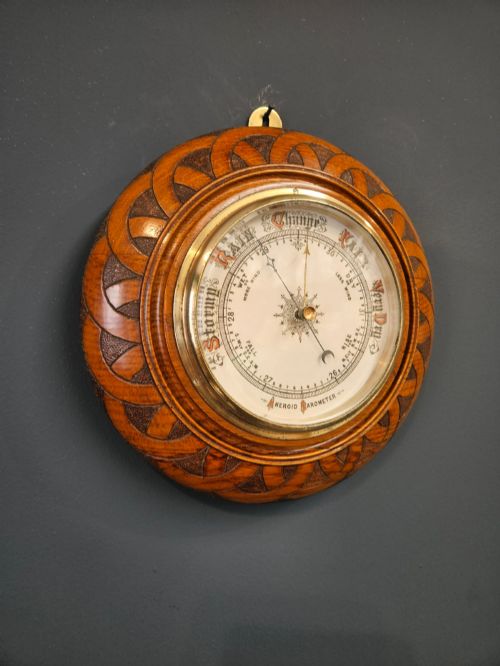
A traditional weather instrument encompasses barometers, barographs, and wall clocks that measure atmospheric changes for daily practical use in homes and offices. When searching this phrase, buyers encounter wall barometers most frequently, alongside table barographs fitted with recording drums.
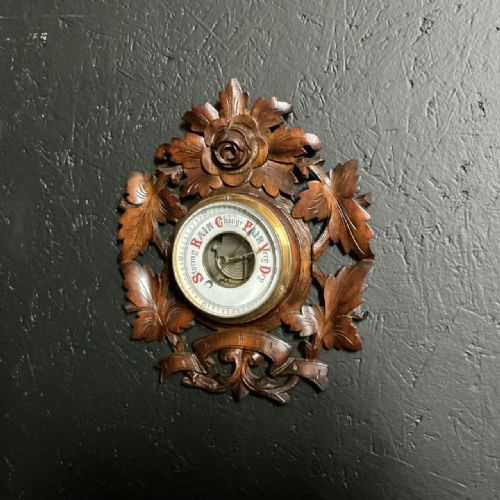
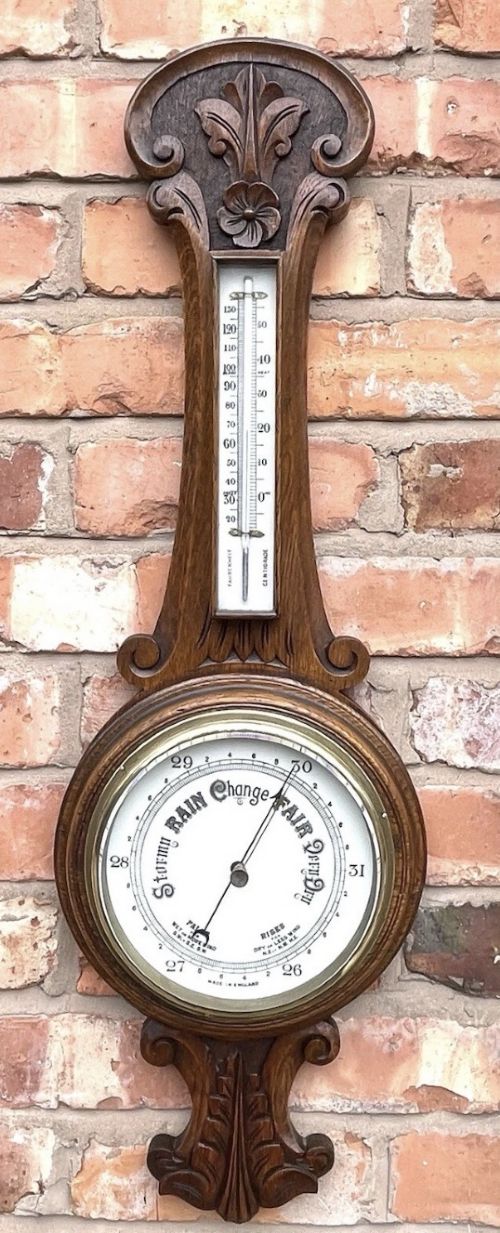
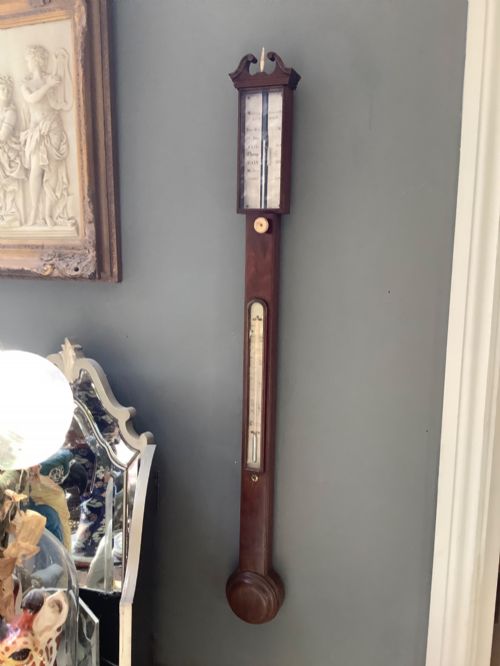
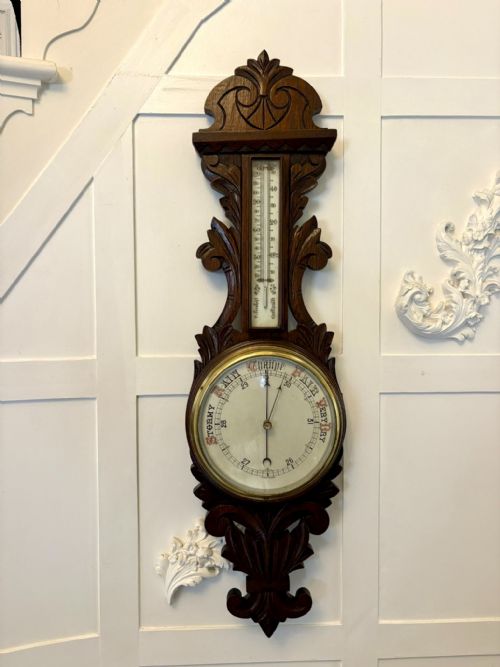
The pieces span several distinct historical eras, ranging from Georgian stick barometers to Victorian carved oak banjo styles and Edwardian examples. Materials include oak, mahogany, walnut, beechwood, ebonised wood, and carved wood alongside brass and glass components.
Origins vary from English workshops and retailers to continental European makers, including Black Forest styles and Italian names operating in Britain. Domestic interiors relied upon these scientific instruments to predict rain, set fair weather, and display mechanical craftsmanship.
Materials and Construction
Makers constructed the external cases primarily from dense hardwoods like oak, mahogany, walnut, and rosewood, often utilising carved wood, mother of pearl inlay, and ebonised finishes for decoration. These timber housings protected the sensitive internal movements while presenting a formal appearance suited to period wall spaces.
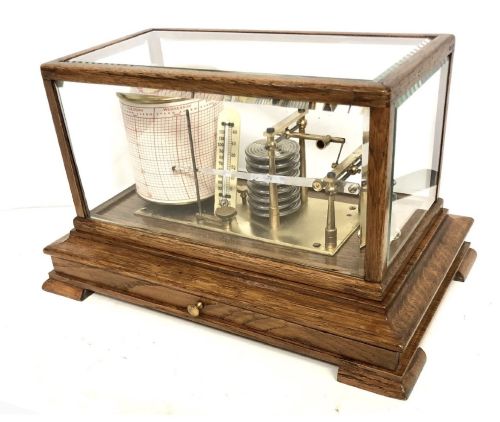
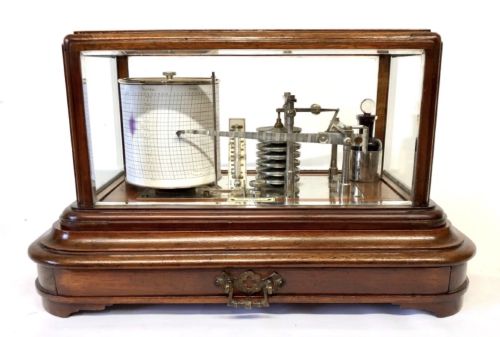
Internal mechanical components combined brass dials, steel springs, bone scales, and mercury or aneroid glass tubes to translate atmospheric pressure into visible pointer movement. Bevelled glass protected the dial faces, and ancillary thermometers or chart drawers were frequently incorporated into barograph cases.
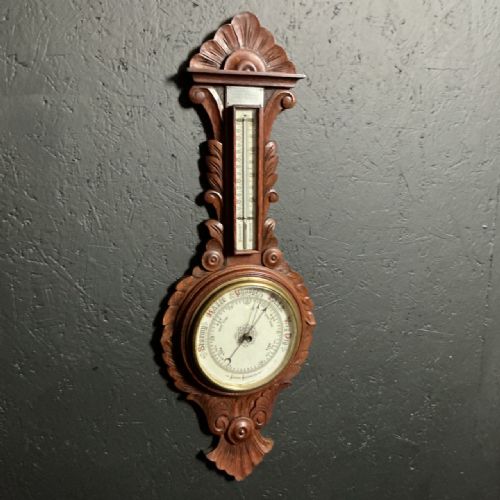
Several Victorian banjo barometers include built-in thermometers so you can measure how cold the room is while noting that rain is coming.
Assessing Quality
Quality rests in the crispness of the timber carving, the depth of the wood grain, and the legibility of the engraved brass or bone scales. Finer examples display meticulous attention to case detail, such as elaborate Black Forest carvings or precise mother of pearl inlays within rosewood veneers.
The reputation of the maker inscribed on the dial or scale plate elevates the standing of an instrument. Signed works by established scientific instrument makers demonstrate superior calibration and enduring mechanical integrity compared to unmarked utilitarian pieces.
GAUPP & CO HONGKONG & SINGAPORE·Negretti & Zambra·Maple & Co·James H Kelly of Glasgow·Vecchio & Co of Shaftsbury·BIANCHI·CIRESA OF MILAN·Bassi
The Traditional Weather Instrument Glossary
- Aneroid barometer
- An instrument that measures atmospheric pressure using a flexible metal box called an aneroid capsule, without liquid mercury. This design allowed for compact banjo and wall-hung formats.
- Stick barometer
- A tall, narrow instrument containing a vertical glass tube filled with mercury to measure atmospheric pressure against a scale. George III and Victorian examples often feature exposed scales and vernier adjustments.
- Barograph
- A recording barometer that plots barometric pressure onto a rotating paper chart over the course of a week. These devices are typically housed in mahogany or oak cases with bevelled glass panels.
- Banjo barometer
- A domestic wall barometer shaped like a banjo, featuring a circular dial at the base and a long stem holding a thermometer or hygrometer. They frequently utilise carved oak or mahogany cases.
- Mercurial barometer
- A traditional device relying on a column of liquid mercury balanced against atmospheric pressure. These require careful handling during transport due to the fluid column.
Traditional Weather Instrument: Frequently Asked Questions
How do I read a barometer?
Locate the main pointer to read the current pressure indicated on the dial scale. Setting the moveable hand over this pointer allows you to observe whether pressure rises or falls over subsequent hours.
Rising pressure generally points toward improving weather conditions, while falling pressure signals approaching rain or wind. Comparing the current reading against previous marks provides a reliable local forecast.
Where should I hang a wall barometer?
Select an interior wall away from direct sunlight, radiators, and exterior doors to prevent artificial temperature fluctuations. Consistent ambient conditions ensure the internal mechanical parts operate accurately.
Ensure the mounting hook fixes securely into solid wall framing or plaster plugs, as wooden cases carry significant weight. Hang the instrument at eye level so the dial and thermometer remain easily visible.
How do I tell an aneroid from a mercurial barometer?
Inspect the instrument for a visible glass tube containing a silvery liquid column, which identifies a mercurial design. Aneroid versions rely entirely on an internal metal vacuum capsule connected to a mechanical linkage and dial pointer.
Mercurial instruments usually take the form of tall stick barometers, whereas aneroid movements frequently appear in circular dials and carved banjo cases.
How do I maintain the wooden case?
Dust the oak, mahogany, or walnut surfaces regularly with a soft, dry cloth to prevent grime accumulation. Avoid applying silicone polishes or heavy waxes that might attract dust or discolour aged timber.
Treat the wood occasionally with a sparing application of quality furniture wax to nourish the grain. Keep the bevelled glass clean using standard glass cleaner applied to a cloth rather than sprayed directly.