
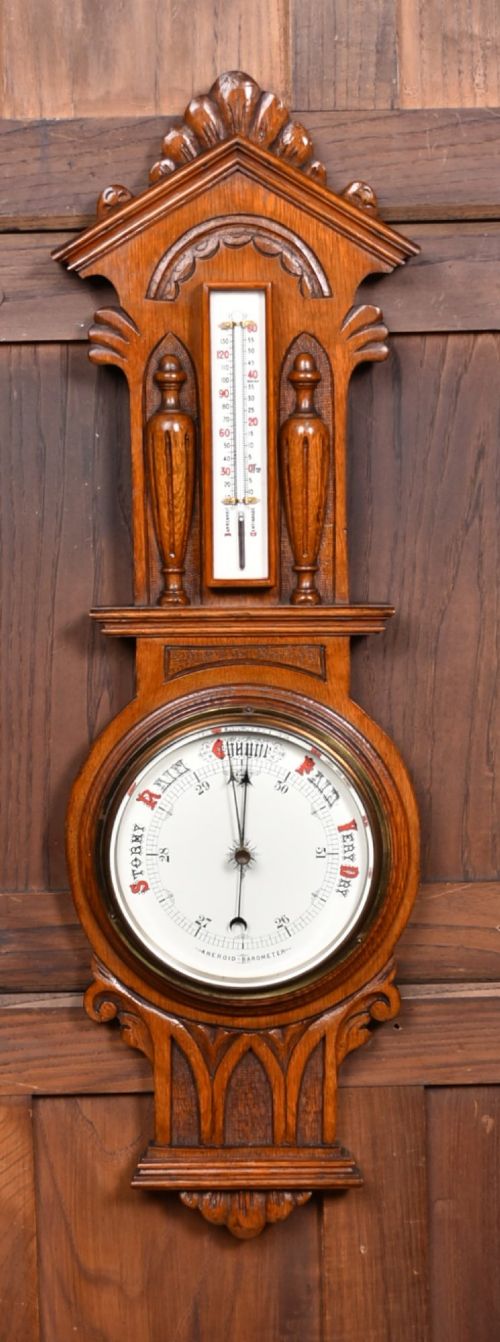
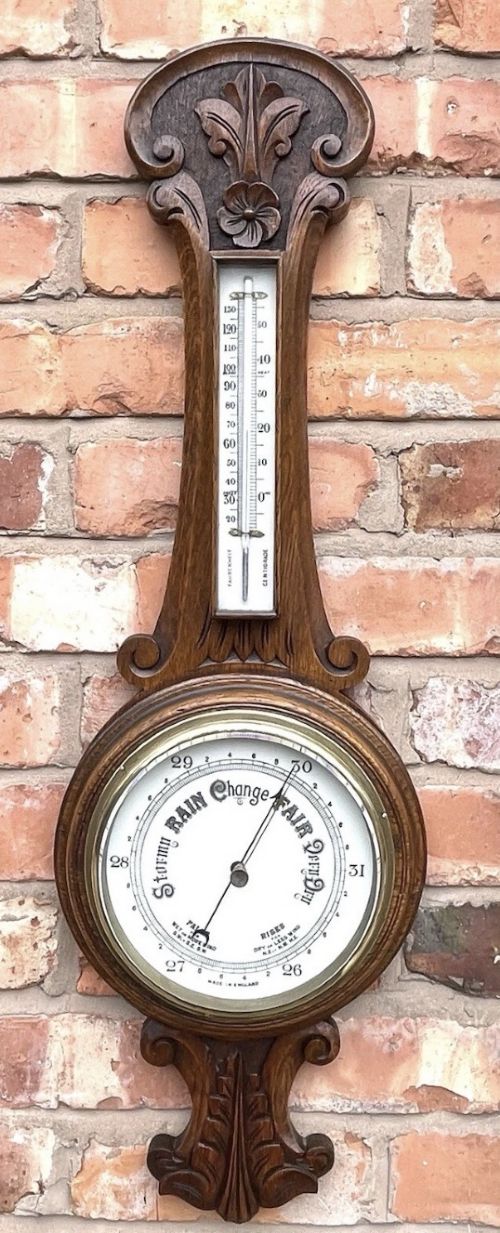
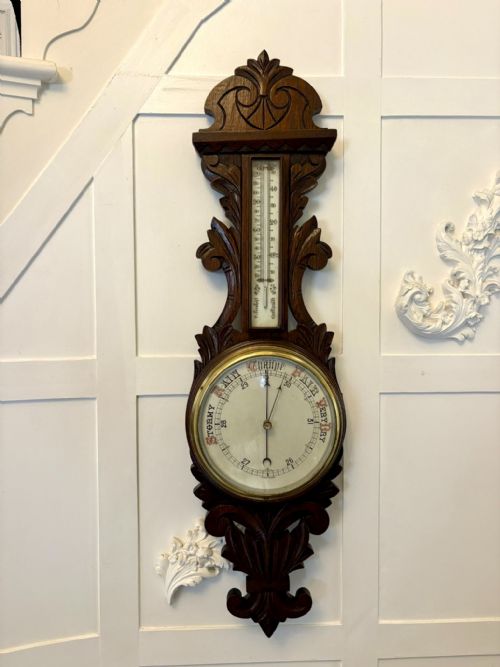


Carved Wood Wall Barometer
A carved wood wall barometer brings mechanical weather measurement into a room through shaped timber, glass, and brass.

Carved Wood Wall Barometer
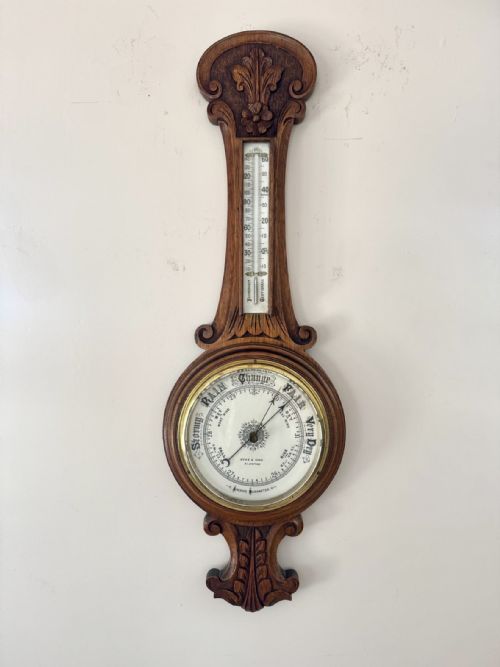
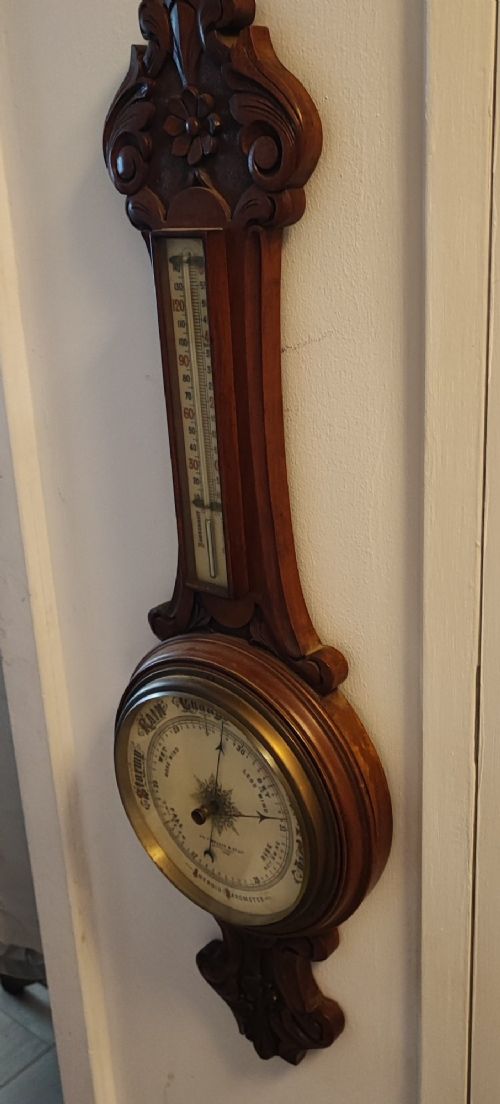
A carved wood wall barometer is a domestic instrument designed to measure atmospheric pressure, housed within timber frames from the Victorian and Edwardian periods as well as the nineteenth century. These instruments appear most frequently in oak, walnut, and mahogany, taking the form of banjo barometers, stick barometers, and wheel barometers.
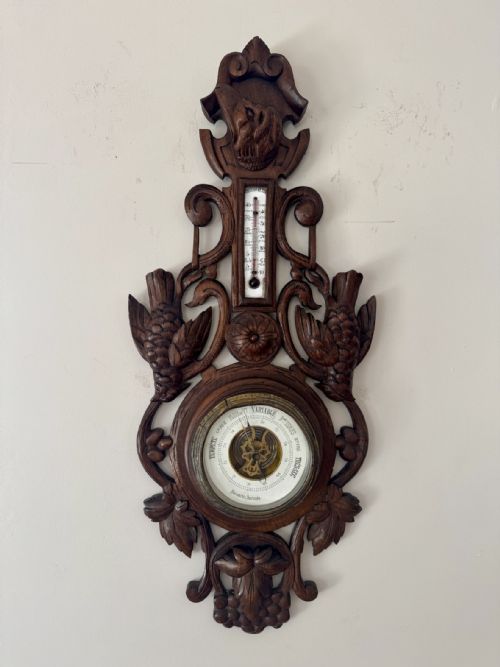
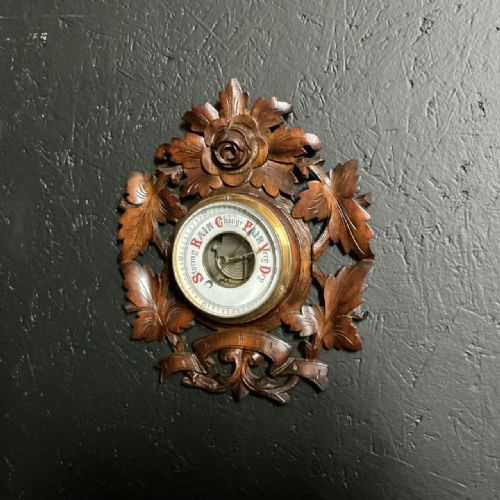
The versions met most often on this page date from the nineteenth century into the early twentieth century, spanning Victorian and Edwardian eras. Black Forest examples show deep naturalistic carving, whilst other pieces employ classical marquetry or simple circular beechwood surrounds.
Many designs combine the barometer mechanism with a thermometer, a clock, or both on a ceramic or glass dial. Origin points range from English makers in London and Sleaford to Dutch, Scandinavian, and American workshops.
What varies in quality
Quality separates pieces through the depth and crispness of the wood carving, particularly in Black Forest or heavily ornamented Victorian banjo designs. Crisp relief work and well-figured timber indicate superior craftsmanship compared to plain or mechanically stamped surrounds.
The distinction also rests in the maker's signature on the dial or scale plate, where established instrument houses provide greater mechanical refinement. Original glass, legible ceramic dials, and integrated subsidiary instruments like thermometers elevate the standing of an individual barometer.
One exceptional piece commemorates the life of the Duke of Wellington.
Hyde & Sons Sleaford·Negretti & Zambra·W Watson & Sons·Maple & Co·James Pitkin London
The Carved Wood Wall Barometer Glossary
- Aneroid barometer
- An instrument that measures atmospheric pressure using a flexible metal box called an aneroid capsule, without utilising liquid mercury. This design allowed barometers to be built into compact wall-hanging banjo shapes.
- Stick barometer
- A tall, narrow barometer utilising a vertical glass tube filled with mercury over a cistern, offering a direct view of the physical column height. These pieces often feature exposed scales mounted on mahogany or oak backplates.
- Banjo barometer
- A domestic weather glass housed inside a curved, symmetrical wooden frame resembling a banjo. The upper section holds the dial while the lower bulb often contains a thermometer.
- Wheel barometer
- A round dial barometer connected to a pulley and float system inside the case, driven by a siphon tube of mercury. The visible pointer rotates in response to pressure changes.
- Black Forest
- A regional style of wood carving originating from central Europe, characterised by deeply undercut foliage, animals, and naturalistic scenes. Pieces in this style utilise walnut and other dark timbers.
Carved Wood Wall Barometer: Frequently Asked Questions
How do aneroid barometers work?
Aneroid barometers measure atmospheric pressure through a sealed, flexible metal capsule that expands or contracts as pressure shifts. A system of springs and levers translates this microscopic movement into the rotation of the dial pointer.
This mechanical approach eliminated the need for fragile liquid mercury columns, allowing makers to create wall instruments in various orientations and compact banjo shapes.
Where should I hang a wall barometer?
Hang your barometer on an internal wall away from direct sunlight, radiators, and draughty doorways. Temperature extremes can affect the internal mechanism and distort the wooden case over time.
Ensure the wall fixing is secure, as timber banjo and stick barometers possess significant weight from their glass tubes, brass bezels, and dense hardwood frames.
How do I read a mercury stick barometer?
Read a mercury stick barometer by observing the height of the silvered metal column inside the vertical glass tube. A rising column indicates improving weather, whilst a falling column suggests approaching rain or storm conditions.
Many stick barometers include a manual sliding vernier pointer, allowing you to mark the current reading so you can track whether pressure has risen or fallen since your last check.
What is the difference between a banjo and wheel barometer?
A banjo barometer typically houses an aneroid mechanism within a distinctive curved wooden silhouette, often combining a thermometer on the lower trunk. A wheel barometer employs a circular dial connected to a mercury siphon system via a mechanical pulley.
While both display weather indications on a round face, the internal physics and case proportions differ according to the era and workshop tradition.