


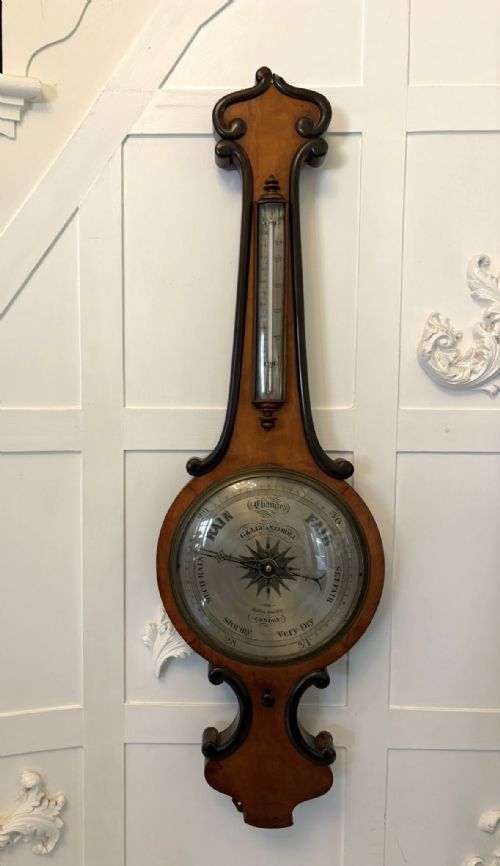


Carved Banjo Barometer
These pieces are a carved banjo barometer, combining scientific utility with domestic woodwork for wall hanging in period rooms.
Carved Banjo Barometer
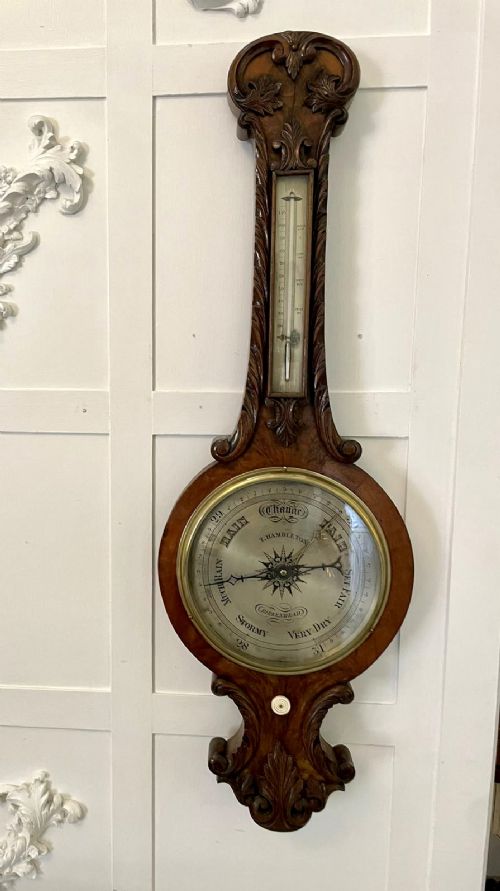
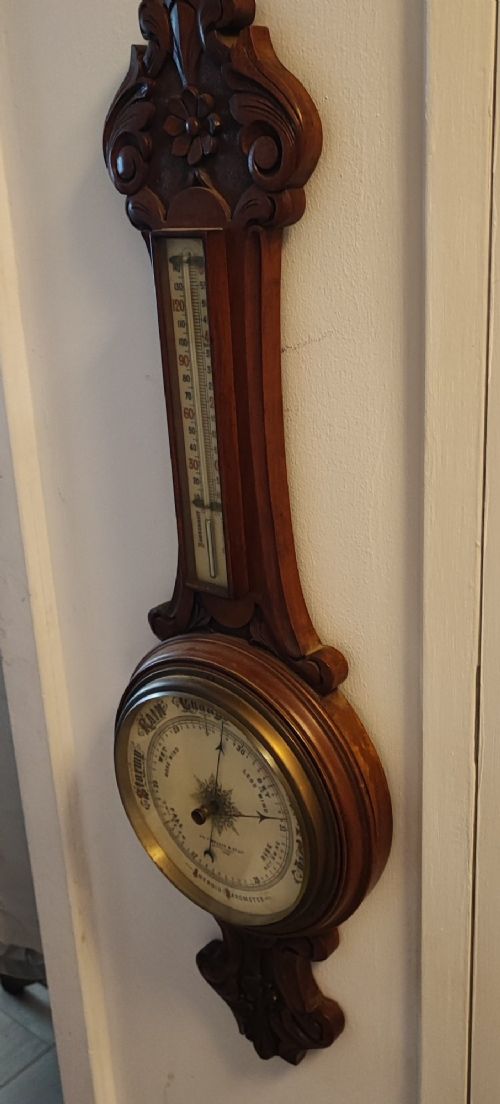
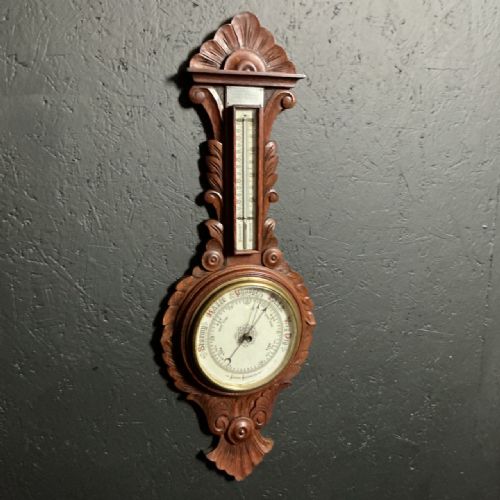
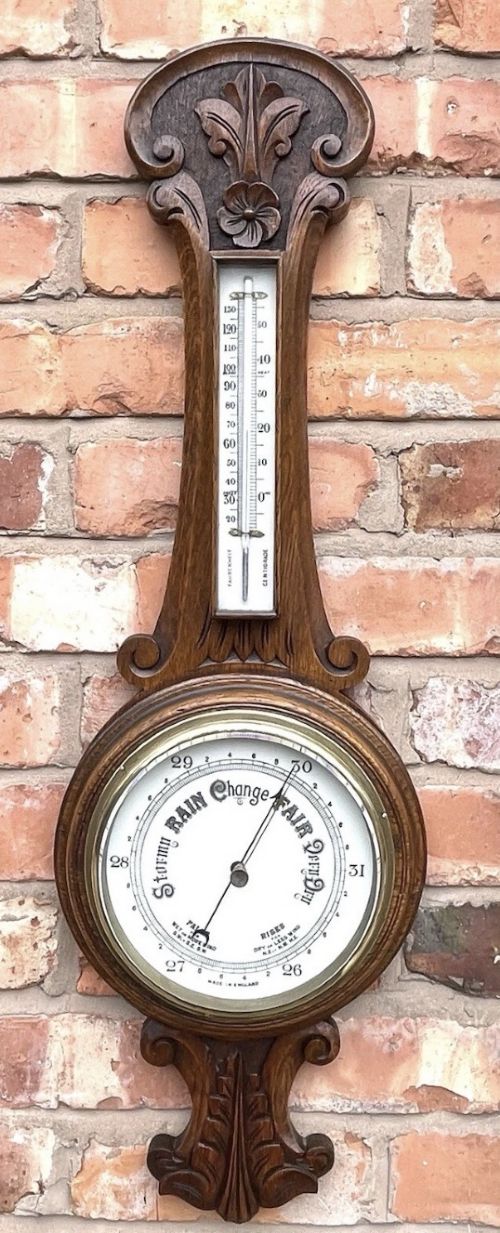
A carved banjo barometer takes its name from the distinctive stringed instrument shape, featuring a narrow stem rising to a circular dial head with a larger bulbous cistern cover below. When buyers search for a carved banjo barometer, they encounter wall-hanging instruments originating chiefly from the Victorian, Edwardian, and Georgian eras.
The version most frequently met on this page is the Victorian carved oak banjo barometer, often incorporating an aneroid mechanism and thermometer alongside the main dial. Examples also appear in mahogany, walnut, burr walnut, and rosewood, spanning periods from the eighteenth century through to the early twentieth century.
Many specimens combine the barometer function with a clock or thermometer, while others feature intricate foliage carving and marquetry inlay. These wall barometers served as prominent hallway and principal room furnishings in British homes, reflecting both meteorological interest and decorative taste.
Materials and construction
Makers constructed the distinctive bodies of these instruments using timbers such as oak, mahogany, walnut, and burr walnut, often shaped with scrollwork and foliage carving. Glass protects the dials and thermometer tubes, while brass components form bezels, indicators, and interior movements.
Dial faces incorporate silvered metal plates, ceramic components, or marquetry inlay to display weather descriptions and barometric pressure numbers. Instrument construction relies on precision engineering for the internal aneroid or mercurial movements housed behind the wooden case.
Some models squeeze a thermometer, a clock, and a weather gauge into a single wooden banjo shape.
Distinctions in quality
Quality varies according to the depth and crispness of the wood carving on the case, with deeply cut foliage and balanced proportions marking superior specimens. The choice of timber also dictates standing, as figured burr walnut and rich mahogany command attention above plain utility woods.
Signatures by recognised makers or retailers on the dial plate elevate an instrument, as do complex movements that integrate clock mechanisms, skeletonised displays, or multiple subsidiary dials.
G & L Guanziroli London·W Watson & Sons·Maple & Co·James H Kelly of Glasgow·Chadburns Liverpool·Russell of Liverpool·Negretti & Zambra
The Carved Banjo Barometer Glossary
- Aneroid barometer
- An instrument that measures atmospheric pressure using a flexible metal box called an aneroid capsule, without employing liquid mercury. This design allowed barometers to be built in more compact and robust formats suitable for domestic wall hanging.
- Wheel barometer
- A type of barometer where atmospheric pressure changes move a mercury column connected to a pulley and pointer on a circular dial. These instruments often feature large round faces paired with long wooden stems.
- Mercurial barometer
- A traditional weather glass that registers atmospheric pressure through the rise and fall of mercury in a glass tube. Such instruments represent the older scientific tradition found in domestic interiors.
- Marquetry inlay
- The art of applying pieces of veneer to a structure to form decorative patterns and pictures on the wooden case. This technique adds distinct visual texture to the body of the instrument.
- Skeletonised movement
- A clock or barometer mechanism with cutaway plates that expose the inner wheels and working parts to view. This intricate feature showcases the horological skill involved in the construction.
Carved Banjo Barometer: Frequently Asked Questions
What is an aneroid barometer?
An aneroid barometer measures air pressure using a sealed metal capsule that expands or contracts with weather changes. This movement turns the pointer on the dial.
Such designs became common in domestic instruments because they did not require liquid mercury columns.
How do I read a wheel barometer?
A wheel barometer uses a visible dial face with a pointer that rotates to show changing atmospheric pressure. Weather descriptions like stormy, rain, change, fair, and very dry often appear around the edge.
Matching the pointer position to these words indicates expected weather conditions.
Where were these barometers hung?
These barometers were designed for wall hanging in prominent positions within period homes, frequently in hallways or reception rooms. Their wooden cases served as decorative furniture as well as scientific instruments.
Placement away from direct heat sources helped protect the wooden case and internal mechanism.
How do I date a barometer?
Dating relies on the timber used, the style of the wood carving, and any maker signatures or inscriptions on the dial face. Georgian examples often feature simpler mahogany cases, while Victorian pieces frequently display heavier oak carving.
Patent dates and maker directories provide further clues to the decade of manufacture.