



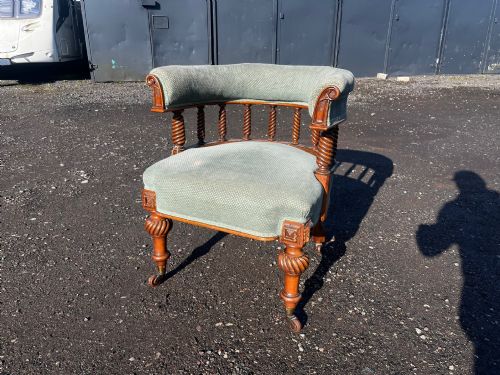
Walnut Velvet Armchair
A walnut velvet armchair combines rich timber frames with soft textile upholstery, offering substantial comfort and traditional style.
Walnut Velvet Armchair
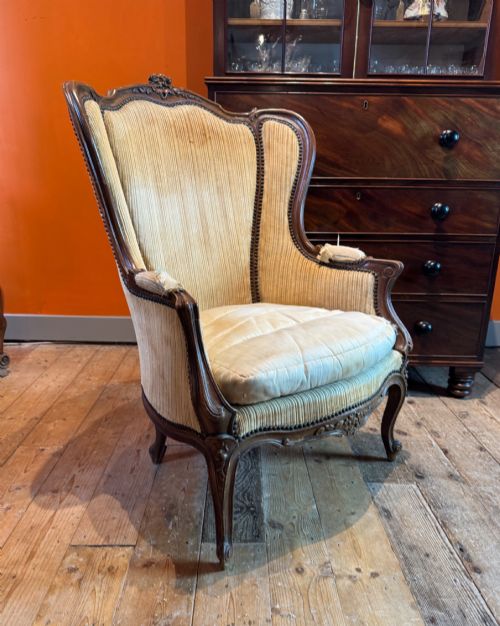
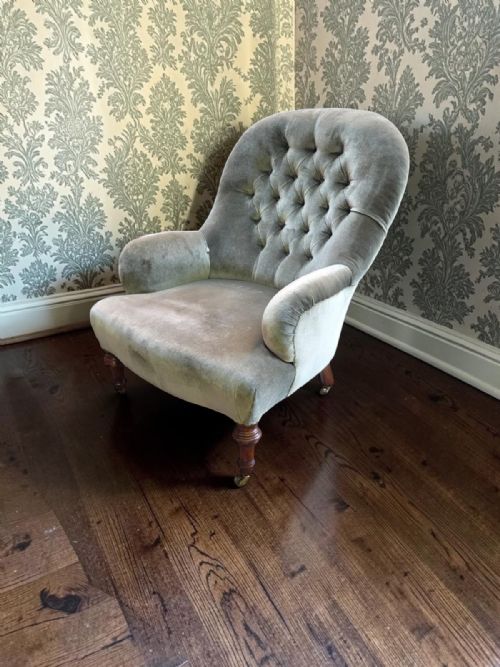
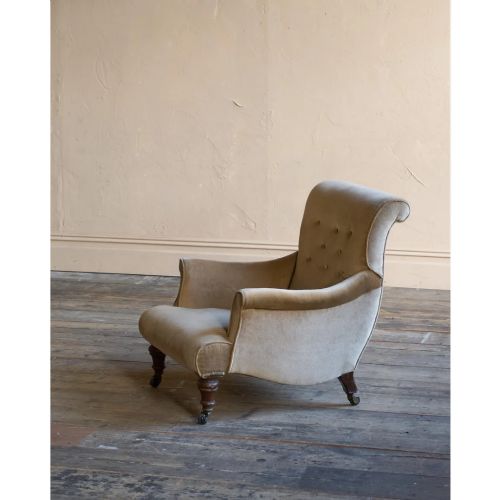
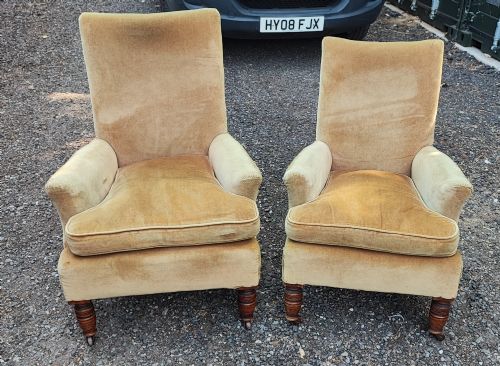
A walnut velvet armchair is a seated furniture form constructed with a timber frame and soft textile upholstery, appearing frequently in Victorian, Edwardian, and nineteenth-century designs. These pieces span various functional types, including library chairs, desk chairs, fireside seats, and occasional parlour chairs.
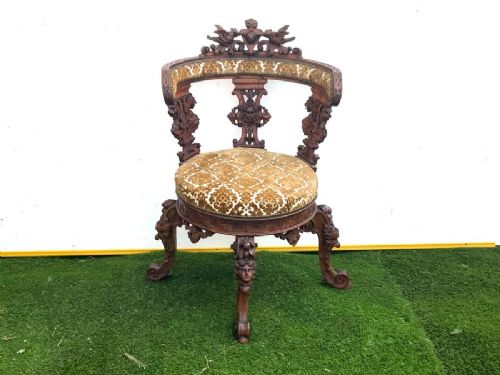
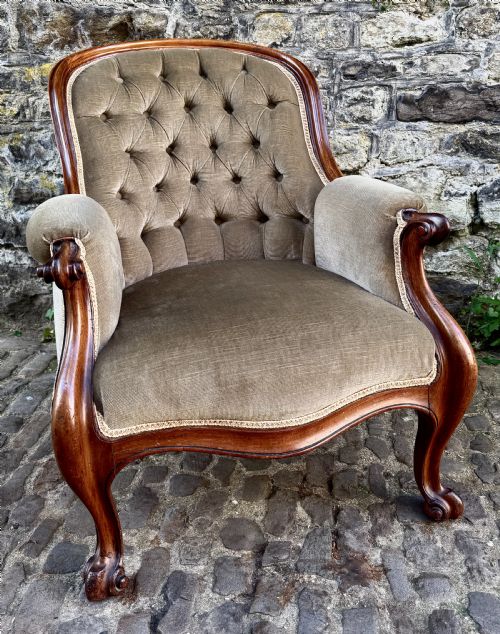
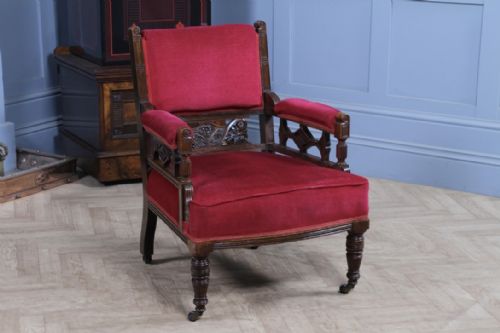
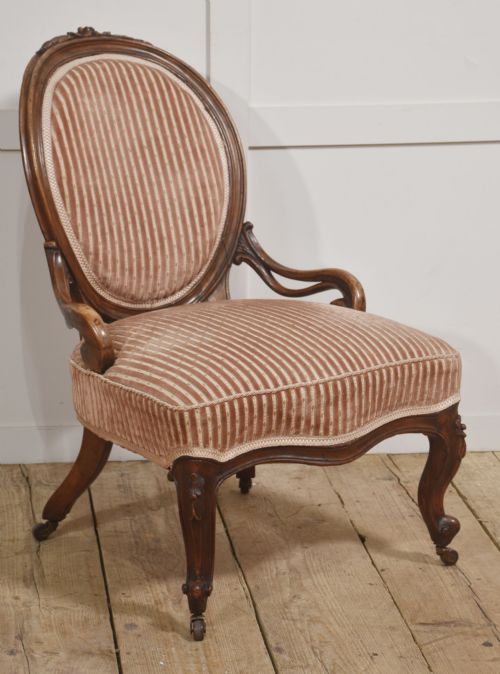
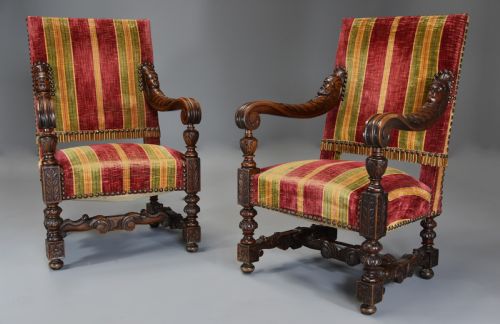
The selection ranges from revival pieces referencing Louis XV, Queen Anne, and Carolean styles to simpler domestic seating from the Victorian and Edwardian periods. Frames often display carved details, scroll arms, or turned supports alongside open or enclosed upholstered backs.
How they were made
Makers utilised solid walnut for structural frames, shaping the timber through carving, turning, and joinery to produce arms, legs, and exposed backs. Walnut provided a dark, fine-grained surface that could be polished or left with a natural sheen.
Upholstery involved textile coverings such as velvet, damask, or fabric secured over padding and webbing. Brass elements sometimes supplemented the construction, appearing as castors or decorative hardware on desk and library variants.
Walnut Velvet Armchair Retail Price Guide 2026
Typical asking prices for walnut velvet armchair among the pieces listed under this phrase on Sellingantiques today, from the lower quarter to the upper quarter. They describe what is for sale here now, not the wider market.
Listings feature walnut frames paired with velvet, damask, and fabric across Victorian, Edwardian, and earlier revival periods.
What varies in quality
Quality rests in the crispness of timber carving and the architectural proportion of the frame, where deeply moulded scrollwork and balanced proportions distinguish finer workshops. The structural integrity of the walnut chassis and the quality of the timber grain determine the durability and finish of the piece.
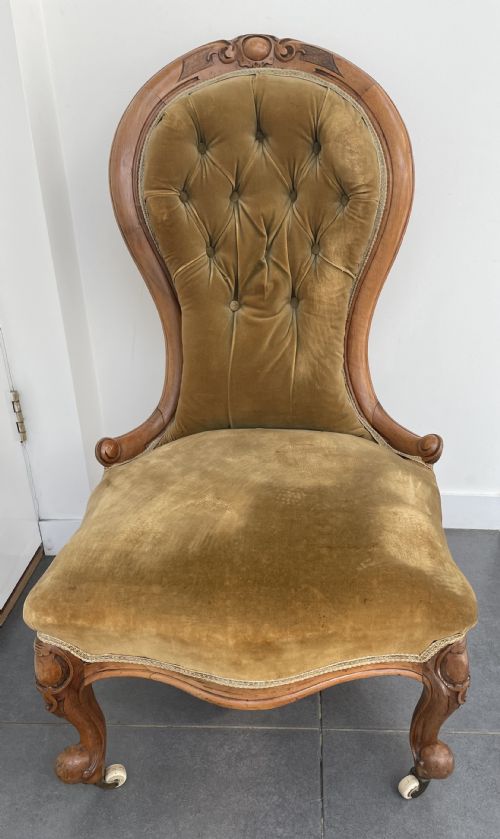
Upholstery choices and the execution of button backs or piped seams also differentiate examples, with heavier textile selections and traditional stuffing methods reflecting higher standards of construction.
Thomas Hope·Holland and Sons·J. and T. Scott
The Walnut Velvet Armchair Glossary
- Fauteuil
- An open-arm armchair originating in France with exposed wooden arms and upholstered back and seat. These chairs typically date from revival periods in the nineteenth century.
- Monopodia
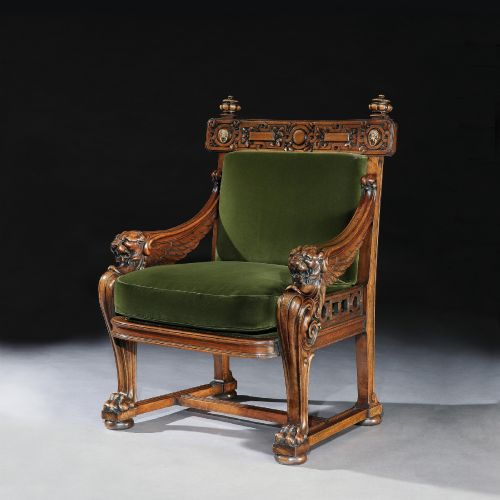
- A furniture support carved as a single lion leg and foot. This classical motif appears on revival pieces influenced by Regency designs.
- Spoonback
- A chair back curved in three dimensions to fit the human spine. This padded form is commonly encountered on Victorian nursing and parlour chairs.
- Wing armchair
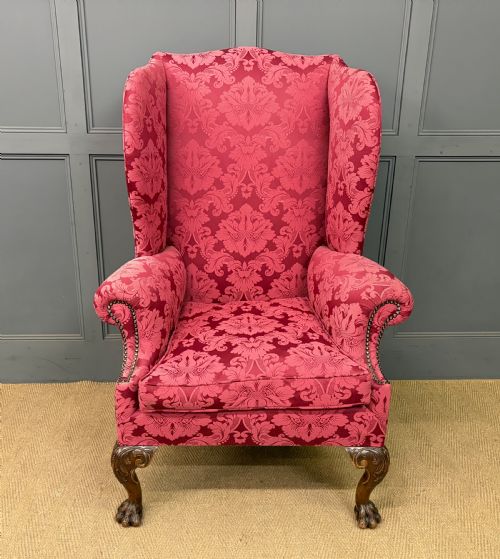
- A fireside seat with protective side panels attached to the back. These projections originally served to shield the occupant from drafts.
Walnut Velvet Armchair: Frequently Asked Questions
What is a walnut velvet armchair?
A walnut velvet armchair is a traditional seat built with a timber frame and soft textile upholstery. These chairs appear in multiple historical revival styles.
Such seating was designed for parlours, libraries, and bedrooms across the nineteenth and early twentieth centuries.
How do I date an armchair?
Dating relies on stylistic markers, timber characteristics, and construction methods. Victorian pieces often display heavy carving or button backs.
Later Edwardian examples frequently adopt lighter proportions while referencing earlier historical periods.
Where were these chairs used?
These armchairs served in domestic reception rooms, studies, and bedrooms. Library and desk variants suited workspaces.
Fireside and wing models provided comfort in main living areas.
How do I care for walnut and velvet?
Walnut frames benefit from gentle dusting and occasional wax polishing to maintain the timber surface. Velvet upholstery requires soft brushing to prevent pile flattening.
Direct sunlight should be avoided to protect both the wood finish and the textile colour.