





Victorian Walnut Spoonback Chair
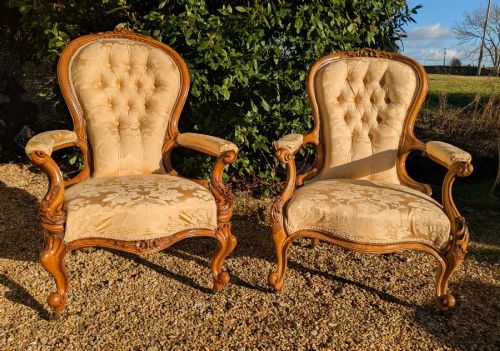
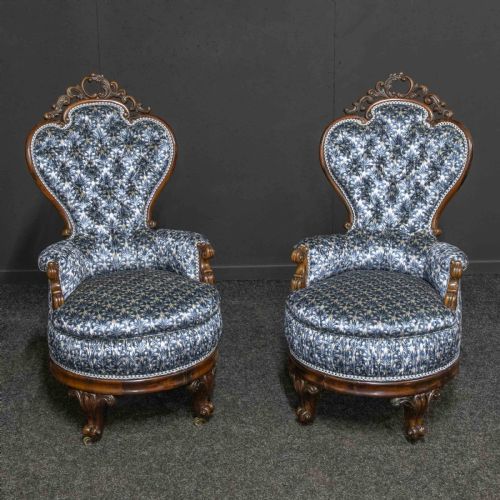
These Victorian walnut spoonback chairs combine fluid Rococo Revival carving with rich timber, offering both elegance and comfortable parlour seating.
Victorian Walnut Spoonback Chair
A victorian walnut spoonback chair represents a defining seating form of the nineteenth century, characterised by its concave, oval backrest resembling the bowl of a spoon. Buyers searching this phrase will find diverse iterations on this page, spanning parlour chairs, ladies chairs, and open armchairs.
The evidence shows these pieces originating across the Victorian era, specifically clustered around the mid to late nineteenth century, including dated examples from eighteen fifty, eighteen sixty, and eighteen seventy. Both armchairs and nursing chairs appear frequently, framed in rich walnut with distinct show wood sections.
Materials and construction
Cabinet makers utilised solid walnut for the show wood frames, taking advantage of the timber's grain and flexibility to form the curved spoonback profiles. Carved ornamentation often defines the crest rails and cabriole legs, executed by hand.
Upholstery completed each piece, incorporating textiles such as velvet alongside internal padding supported by traditional webbing and springs. Brass elements and ceramic or porcelain castors sometimes feature on the lower legs of these armchairs.
Victorian Walnut Spoonback Chair Retail Price Guide 2026
Typical asking prices for victorian walnut spoonback chair among the pieces listed under this phrase on Sellingantiques today, from the lower quarter to the upper quarter. They describe what is for sale here now, not the wider market.
Materials documented across the inventory include solid walnut, brass, velvet, porcelain, and various traditional upholstery fabrics.
Judging quality
The distinction between standard parlour seating and the finest examples rests upon the crispness of the carved walnut detail and the proportion of the frame. Superior chairs display deeply sculpted show wood and balanced cabriole legs that elevate the entire silhouette.
Attribution to notable makers, such as Holland and Sons recorded in past handling, shifts a piece into a higher tier of desirability. The integrity of the original timber frame and the sympathetic execution of modern upholstery further separate the exceptional from the ordinary.
Holland and Sons
The Victorian Walnut Spoonback Chair Glossary
- Spoonback
- A chair back shaped with a concave oval contour reminiscent of a spoon. This ergonomic design gained immense popularity during the Victorian period to support the spine.
- Show wood
- Polished timber framing left visible around the upholstered portions of a chair. Walnut was frequently selected for this purpose due to its rich colour.
- Cabriole leg
- A furniture leg that curves outward and then tapers inward with a pad or scroll foot. It is a hallmark of the Rococo Revival style seen across these nineteenth-century pieces.
- Button back
- An upholstery technique where buttons are pulled deep into the padding in a diamond pattern. This secures the filling and adds texture to the oval backrest.
- Parlour chair
- A smaller Victorian seating form designed for formal reception rooms. These chairs are typically lighter than armchairs and easily repositioned.
Victorian Walnut Spoonback Chair: Frequently Asked Questions
What is a spoonback chair?
A spoonback chair is a nineteenth-century seating form featuring a concave, oval wooden frame that curves to fit the human back. The design became a staple of Victorian interior furnishing.
Walnut was the preferred timber for these frames, often accented with hand carving along the crest rail and cabriole legs.
How do I date a Victorian chair?
Dating relies on stylistic shifts, timber choices, and construction methods recorded across the period from eighteen fifty to eighteen seventy. Rococo Revival influences and heavier carved walnut typically point towards the mid-nineteenth century.
Examining the under-framing and upholstery methods also helps determine the exact decade of manufacture.
Were these chairs used in parlours?
These pieces served as formal seating in nineteenth-century parlours and drawing rooms, where guests were received. Their decorative carved frames and polished walnut surfaces were designed to display taste and status.
Smaller nursing chairs and open armchairs fulfilled specific domestic roles within those same reception spaces.
How should I care for antique walnut?
Maintain antique walnut frames by keeping them away from direct sunlight and sudden temperature changes that dry out the timber. Regular dusting with a soft, dry cloth preserves the polished finish.
Avoid commercial silicone sprays and consult a specialist for any upholstery conservation.