




Walnut Vanity with Drawers
These walnut vanity with drawers pieces combine practical compartments with rich timber grain, offering a timeless place for daily grooming and correspondence.
Walnut Vanity with Drawers
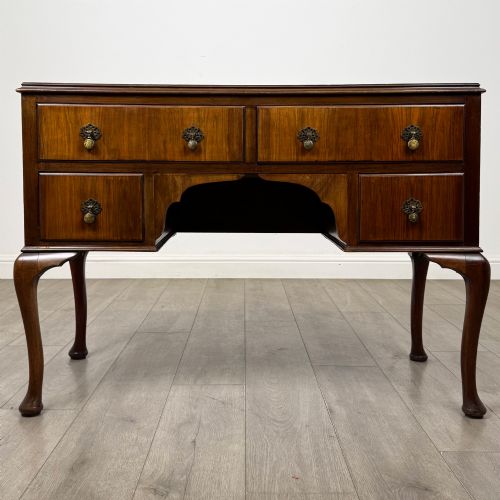
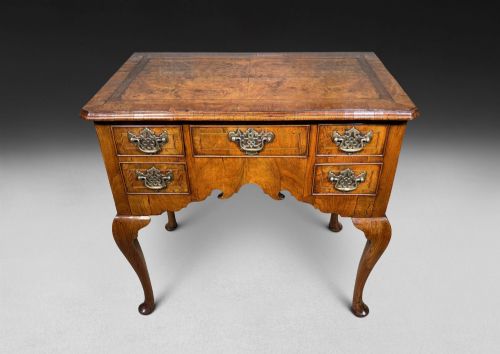
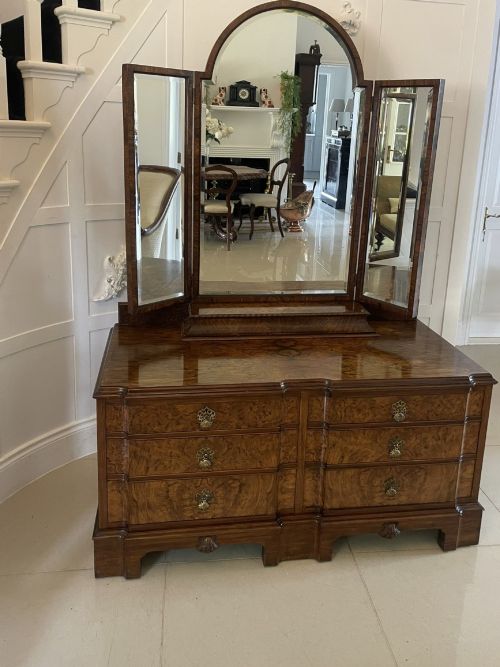
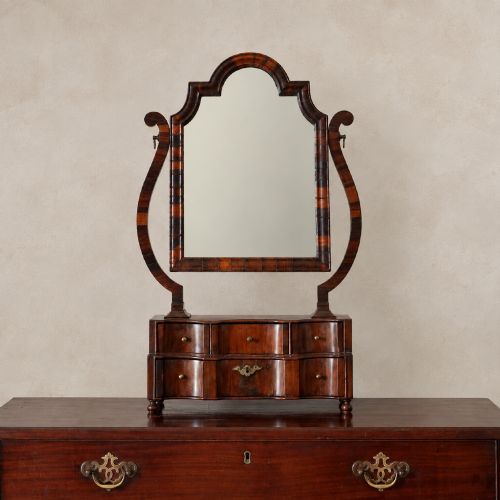
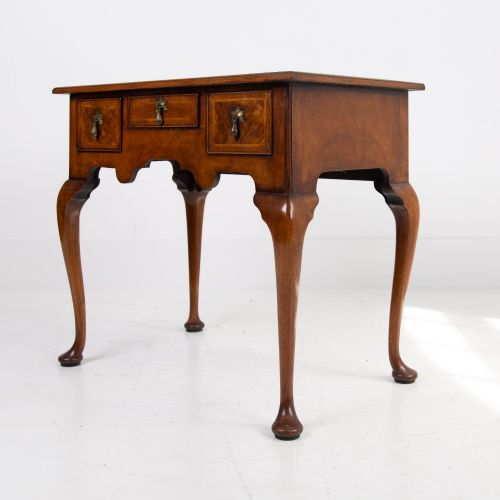
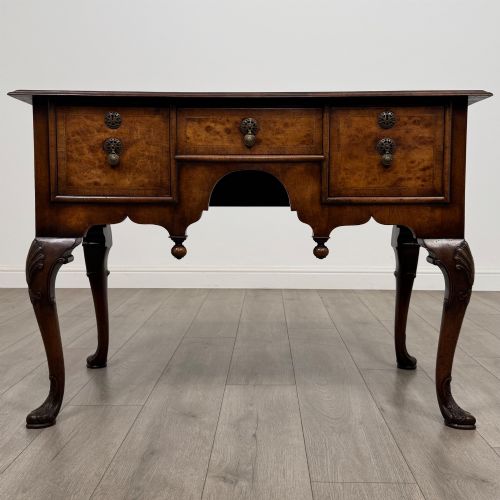
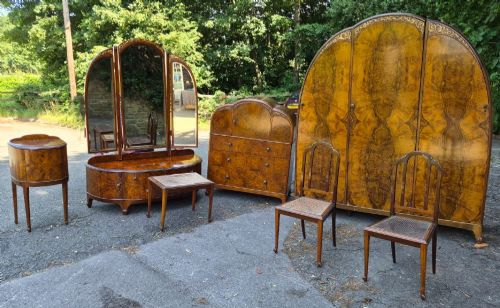
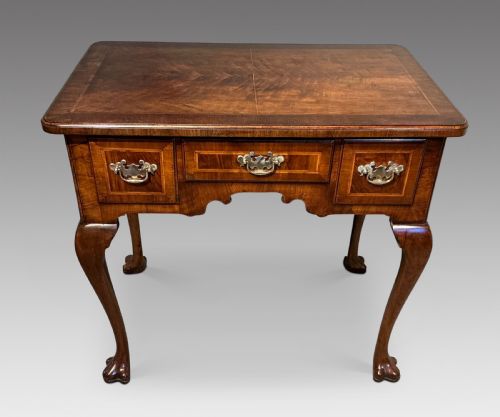
A walnut vanity with drawers brings together polished timber surfaces and concealed storage compartments designed for personal items. The selections on this page span several centuries, encompassing compact toilet mirrors with small base drawers as well as larger dressing tables and writing desks fitted with multiple compartments.
Most examples lean towards traditional forms, including George III and Queen Anne styles featuring arched plates and figured veneers. Buyers will encounter freestanding tables, bureau mirrors with fitted interiors, and tabletop swing glasses supported by sturdy uprights.
Origins stretch from early eighteenth-century craftsmanship through Victorian revivals and Edwardian writing tables. The primary focus remains on functional timber furniture that integrates mirrors and small storage spaces for everyday utility.
Materials and construction methods
Makers utilised solid walnut and decorative burr walnut veneers over secondary timbers to achieve striking grain patterns across flat surfaces and drawer fronts. Cabinetmakers frequently incorporated contrasting woods such as laburnum for banding and inlay work around the perimeters.
Hardware typically consists of brass handles, escutcheons, and pivot screws that allow the swing mirrors to tilt smoothly. Giltwood accents, glass panels, and mirror plates complete the structural assembly of these traditional dressing pieces.
Listings feature walnut timber alongside brass hardware, glass, and laburnum across periods spanning the eighteenth century to the Edwardian era.
Assessing quality in walnut furniture
The distinction between standard items and superior examples rests upon the selection and matching of the walnut veneer. Rich burr figuring across the drawer fronts and primary surfaces indicates careful timber selection by the cabinetmaker.
Construction precision defines the finer pieces, particularly where dovetail joints meet the drawer linings and where the mirror frame attaches to the base supports. Original glass plates, intact brass hardware, and well-fitted interior bureau compartments elevate the standing of a piece.
The Walnut Vanity with Drawers Glossary
- Burr walnut
- A highly figured timber veneer harvested from tree growths, prized for its swirling grain patterns. It adds distinct visual depth to drawer fronts and top panels.
- Toilet mirror
- A smaller tabletop glass mounted on uprights above a base fitted with small drawers. These were designed for placement on chest of tables or dedicated stands.
- Bureau fitment
- An internal arrangement of small drawers and pigeonholes enclosed by a sloping or vertical flap. It provides concealed organisation for writing materials.
- Queen Anne style
- A design aesthetic characterised by muted curved lines and refined proportions. It appears frequently in pieces dating from the eighteenth century and subsequent revivals.
- Swing mirror
- A glass plate hung on central pivot screws between two upright arms. This mechanism allows the user to adjust the angle of reflection.
Walnut Vanity with Drawers: Frequently Asked Questions
What is the difference between a toilet mirror and a dressing table?
A toilet mirror is a compact tabletop glass fitted with a small drawer base designed to sit upon an existing chest or table.
A dressing table is a larger freestanding desk or bureau that incorporates a fixed or swing mirror as part of its permanent structure.
How do I date an eighteenth-century walnut mirror?
Dating relies on examining the construction of the drawer dovetails, the thickness of the backing boards, and the bevel of the mirror glass. Earlier pieces utilise hand-cut joinery and native timbers without modern adhesives.
Secondary woods and hardware styles also help pinpoint the exact period of manufacture.
Where should I place a walnut vanity in my home?
These pieces suit bedrooms as functional dressing stations or living areas where the drawers provide useful storage for small accessories. Placing them away from direct sunlight protects the delicate walnut veneers from fading.
Tabletop versions require a sturdy surface of appropriate depth to support their base dimensions.
Are the mirror plates original on older pieces?
Older mirrors often show faint oxidation, foxing, or slight distortion within the glass due to age. Replacement glass plates appear frequently in pieces from the eighteenth and nineteenth centuries.
Examining the silvering on the reverse helps determine whether the glass dates from the same era as the wooden frame.