


Antique Duchess Vanity
An antique duchess vanity brings surface elegance and deep storage to a bedroom through period woods and tilting mirrors.
Antique Duchess Vanity
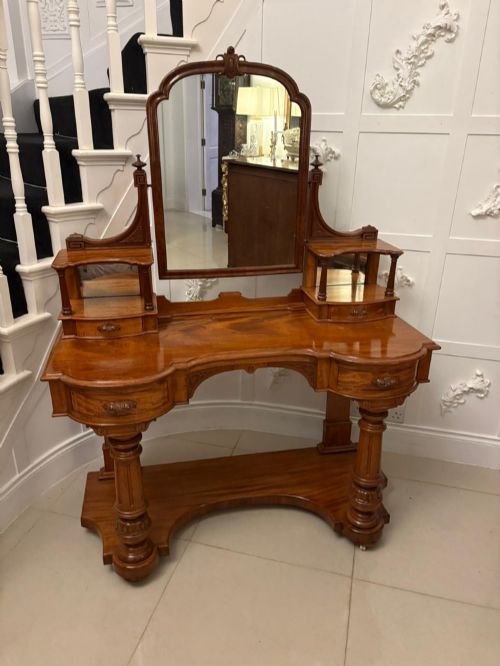
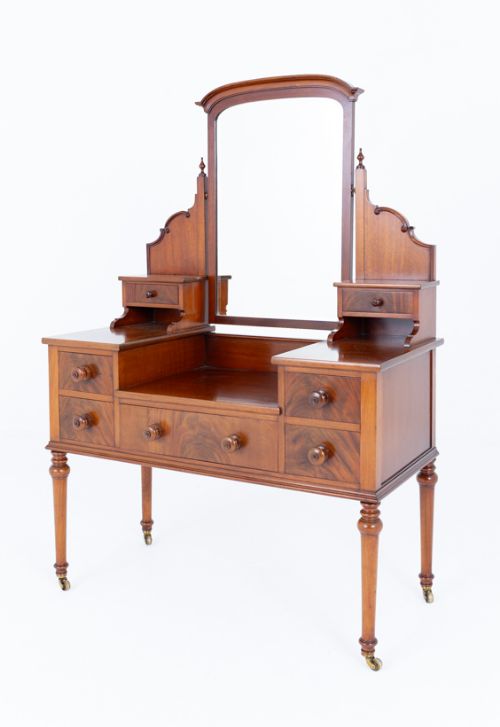
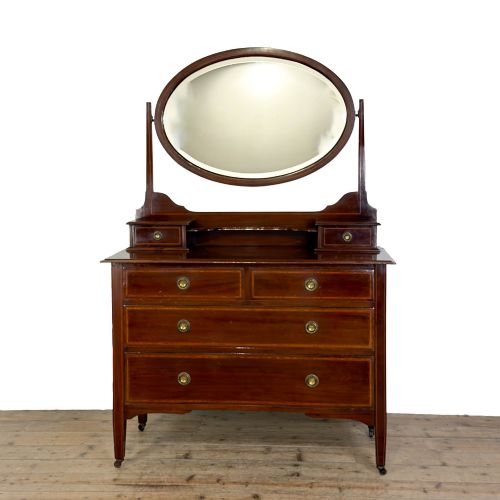
When buyers search for an antique duchess vanity, they encounter large timber dressing tables featuring prominent central swivelling mirrors and tiers of small trinket drawers.
The most common examples on this page date from the Victorian and Edwardian eras, constructed in substantial proportions for nineteenth and early twentieth century bedchambers.
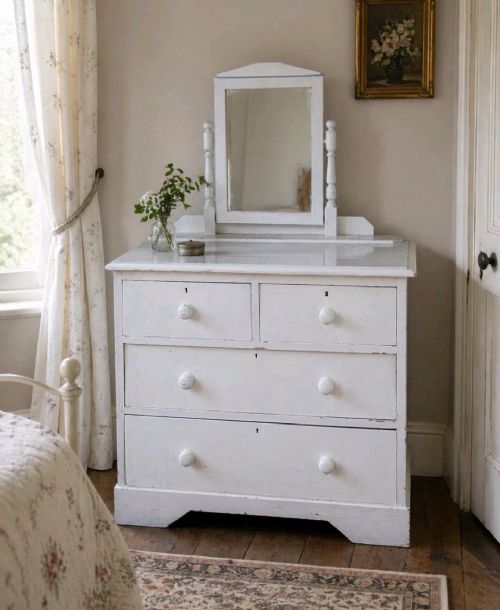
Makers produced these vanity pieces in forms ranging from grand burr walnut pedestal designs to simpler painted or scumble glazed pine chests.
Materials and construction methods
Cabinetmakers utilised rich timber veneers such as burr walnut, mahogany, and satinwood, often laid over sturdy secondary woods like pine.
Ornamentation relied on fine carving, marquetry inlay, and brass mounts, alongside specialised treatments like scumble glazing and stencilled decoration.
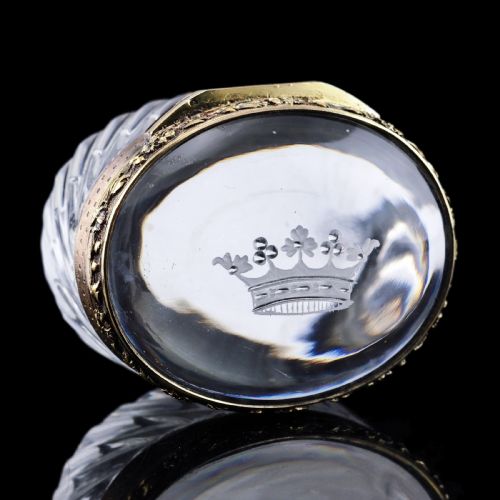
Large glass mirrors, sometimes set in carved frames or mounted with silver gilt crystal elements, formed the central visual focus of the vanity.
Some dressing chests sport original stencilled decoration, proving that Victorians loved a bit of clever paintwork.
Distinctions in quality and execution
Superior pieces display exceptional timber selection, such as highly figured burr walnut or dense satinwood, matched carefully across the drawer fronts and surfaces.
The finesse of the carving and the complexity of internal drawer construction separate standard utility bedroom furniture from exceptional master pieces.
John Taylor of Edinburgh
The Antique Duchess Vanity Glossary
- Duchess dressing table
- A grand vanity style featuring a large swivelling mirror supported by small jewellery drawers above a main table base. These pieces dominated formal nineteenth century bedrooms.
- Burr walnut
- A highly decorative timber veneer taken from the knotted growth of the walnut tree. It produces swirling, organic patterns prized by Victorian cabinetmakers.
- Scumble glaze
- A paint technique used to imitate the grain of expensive hardwoods on cheaper base woods like pine. Craftsmen dragged combs or brushes through wet glaze.
- Pedestal dressing table
- A form with banks of drawers extending to the floor on either side of a central kneehole space. This layout offers substantial storage capacity.
- Marquetry
- The art of applying decorative veneer pieces to a structure to form geometric or floral pictures. It requires precise cutting of various contrasting woods.
Antique Duchess Vanity: Frequently Asked Questions
What is a duchess vanity?
A duchess vanity is a large nineteenth century dressing table equipped with a central swivelling mirror and multiple small trinket drawers on the superstructure.
These pieces were designed for the bedrooms of affluent homes, providing a dedicated surface for grooming and cosmetics.
How do I date these tables?
Dating relies on observing the prevailing styles, timber choices, and construction methods recorded across the Victorian and Edwardian periods. Earlier pieces often feature rich mahogany and elaborate carved details.
Later Edwardian examples tend towards lighter satinwood or painted finishes with simpler linear forms.
Where were they placed?
These vanities stood against bedroom walls, positioned to capture natural light from nearby windows for daily grooming tasks.
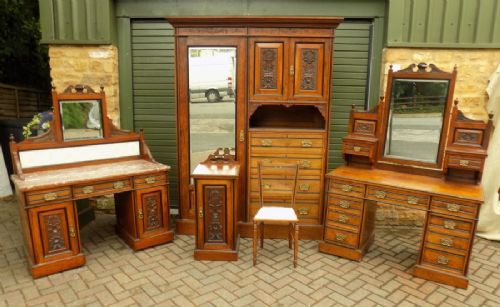
They often formed part of matching bedroom suites that included wardrobes and chests.
What woods were used?
Cabinetmakers utilised a range of timbers including solid mahogany, burr walnut veneers, satinwood, and pine.
Secondary woods like pine formed the interior carcase and drawer linings of finer veneered examples.