


Walnut Two Seater Settee
A walnut two seater settee offers intimate seating within a rich timber frame, combining period craftsmanship with compact domestic scale.

Walnut Two Seater Settee
A walnut two seater settee brings together compact seating and rich timber frames across various historical periods, including Victorian, Edwardian, and early twentieth century examples. Buyers exploring this phrase encounter pieces shaped by distinct regional revivals, from English Queen Anne and Georgian styles to French Louis XV interpretations.
The most common formats on this page range from late nineteenth century carved frames to early twentieth century upholstered versions and cane panelled seats. These compact settees, love seats, and small sofas provide intimate proportions suited to traditional and period interiors.
Materials and construction methods
Makers utilised solid walnut and walnut veneers for the primary structural frames, often shaping the timber into cabriole legs, turned supports, or elaborate carved cresting rails. Brass details and applied ebony sometimes accent the woodwork on specific nineteenth and twentieth century pieces.
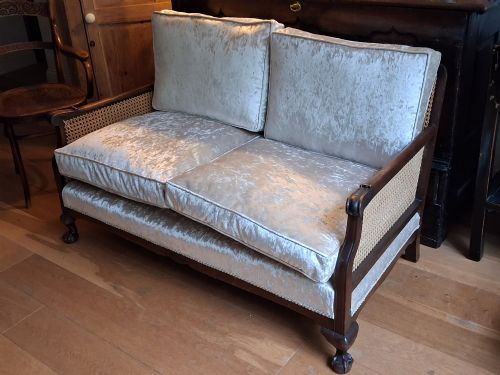
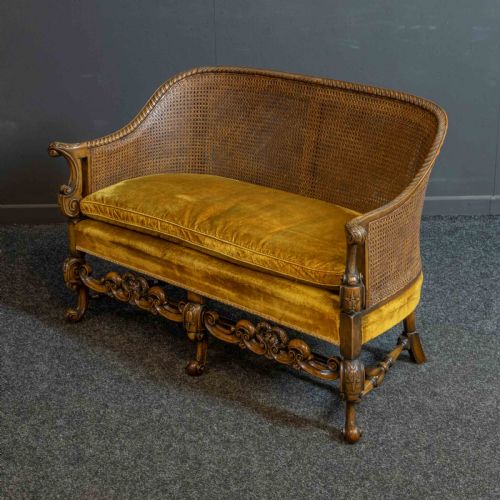
Upholstery relies on traditional textile coverings such as velvet, damask, and standard fabric over internal padding, while specific models incorporate woven cane panels into the backrests and seat frames.
Listings feature walnut frames paired with velvet, damask, and cane across Victorian, Edwardian, and 1930s periods.
Distinguishing quality in period frames
Quality separates simple production pieces from superior works through the crispness of hand carving on the walnut frame and the grace of the structural proportions. Finer examples display thoughtful grain selection in the timber and precise joinery where legs meet the seat rail.
The integration of secondary materials like woven cane or specialist upholstery fabrics also defines the tier of a piece, alongside the documentary evidence of makers working in London and beyond.
Howard & sons·Liberty & Co. London
The Walnut Two Seater Settee Glossary
- Cabriole leg
- A furniture leg featuring a double curve, typically swelling outward at the knee and tapering down to a pad or claw foot. This form appeared frequently on eighteenth century furniture and later revival pieces.
- Cane
- Plant material woven into open mesh panels for seat backs and frames. It provides a lightweight, decorative alternative to solid wood or heavy upholstery.
- Damask
- A reversible figured fabric traditionally woven with patterns in rich textiles. It appears frequently as upholstery on formal period seating.
- Love seat
- A small upholstered two seater settee designed for intimate seating. The form shares dimensions with compact Victorian and Edwardian sofas.
- Twin chair back
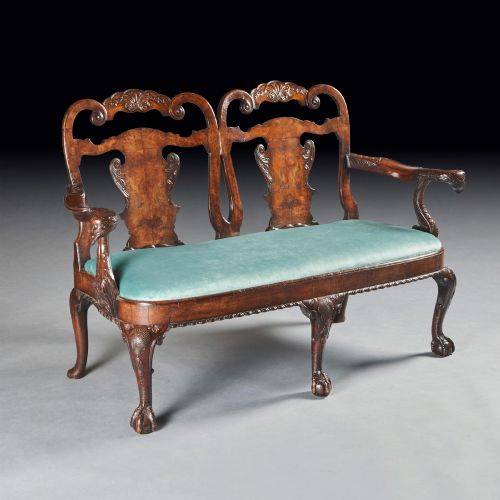
- A sofa backrest designed to resemble two separate chair backs joined side by side. This configuration often references earlier George II designs.
Walnut Two Seater Settee: Frequently Asked Questions
How do I place a walnut two seater settee in a modern room?
These compact settees work well in sitting rooms, large hallways, or bedrooms where full sized sofas overwhelm the floor plan. Their traditional timber frames pair easily with contemporary neutral walls.
Position the settee away from direct sunlight to protect the walnut timber and sensitive fabric upholstery from fading over time.
What is the difference between a settee and a love seat?
Historically, terms like settee, love seat, and small sofa overlap significantly in antique listings. Both formats accommodate two seated individuals within a reduced footprint.
Look at the specific frame shape and backrest style rather than the label to understand the seating capacity and formal character of the piece.
How do I identify a Edwardian walnut settee?
Edwardian pieces often revive earlier styles like Queen Anne, incorporating cabriole legs and shaped walnut frames. Construction methods from this period show machine assistance alongside traditional hand finishing.
Examine the condition of the timber finish and the style of the carved details to confirm the early twentieth century manufacturing window.
Can I reupholster a cane panelled settee?
Caned sections require careful handling by specialists familiar with traditional weaving patterns. The wooden frame around the cane panel must remain structurally sound during any restoration work.
Preserving original cane adds historical value, but replacement is possible when the material becomes brittle or breaks through heavy use.