


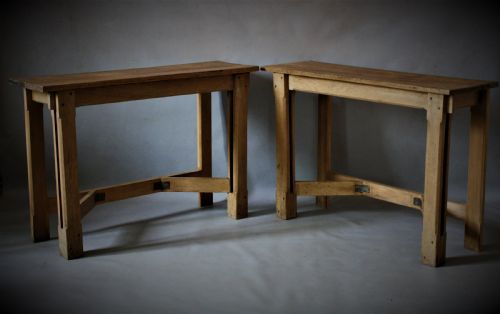

Arts and Crafts Sofa
These arts and crafts sofa examples combine sturdy construction with honest materials, offering both structural integrity and period character for any interior.
Arts and Crafts Sofa
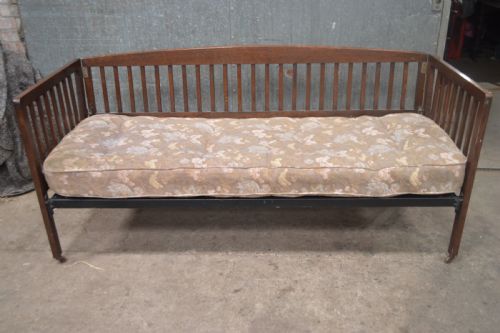
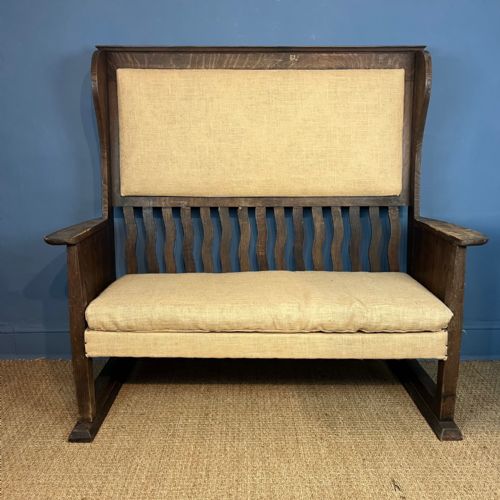
When you search for an arts and crafts sofa, you encounter seating designed around the principles of simplicity, utility, and visible craftsmanship. The pieces available range from compact two-seater settees in oak and walnut to larger three-seater frames bearing the influence of the Late Victorian and Edwardian periods.
Makers working within this idiom prioritised structural honesty over superfluous ornamentation, often leaving the grain of the timber exposed. You are most likely to meet examples fashioned from solid oak or mahogany, frequently accompanied by original or period-appropriate upholstery fabrics.
How they were made
The construction relies heavily on native timbers such as oak, walnut, and beech, selected for durability and grain pattern. Joinery is typically straightforward and robust, utilising exposed tenons and pegged joints rather than concealed metal fasteners.
Frames often incorporate turned spindles, bobbin backs, or carved detailing executed in mahogany or iron. Upholstery materials recorded in the archive include velvet, leather, and brocaded fabric fastened directly to the wooden structure.
What varies in quality
The distinction between standard commercial production and finer work lies in the selection of timber and the precision of the joinery. Superior examples demonstrate thoughtful proportion and careful finishing of the wood, allowing the natural figure of the oak or walnut to take precedence.
Design attribution also alters the standing of a piece, with documented workshops commanding greater attention from collectors. The integrity of the original frame structure and the retention of period upholstery details further separate ordinary items from exceptional survivals.
Liberty and Co·Liberty’s of London·William Birch
The Arts and Crafts Sofa Glossary
- Settee
- A long upholstered seat for more than one person, typically featuring a back and arms. This form appears frequently in both two-seater and three-seater configurations within the period inventory.
- Bobbin back
- A chair or sofa back constructed with small, rounded sections turned on a lathe to resemble reels or bobbins. This decorative turnery provides a rhythmic pattern along the wooden framework.
- Gateleg table
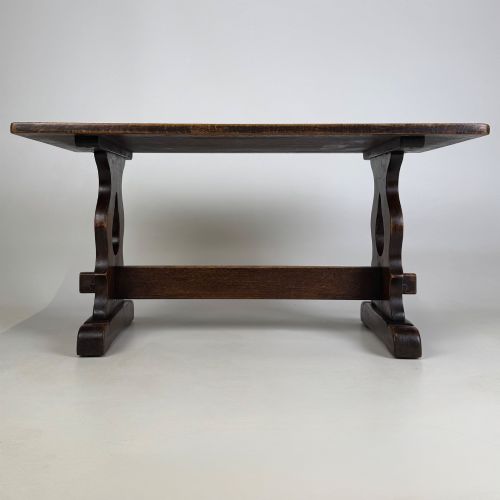
- A table with hinged flaps supported by legs that swing out like gates. Several dining and occasional tables of this construction sit alongside the seating in the records.
- Brocaid
- A rich, heavy fabric woven with a raised pattern, often utilising metallic threads. Surviving pieces occasionally retain original examples of this textile on the back and sides.
- Glasgow School
- A circle of designers and artists active in Scotland during the late nineteenth and early twentieth centuries. Their output shares stylistic traits with the broader movement seen in these listings.
Arts and Crafts Sofa: Frequently Asked Questions
What defines an arts and crafts sofa?
These pieces are characterised by sturdy timber frames, visible construction methods, and a rejection of mass-produced industrial ornament in favour of honest craftsmanship. They rely on the natural grain of oak, walnut, or mahogany to provide visual interest.
Designers of the period sought to revive traditional woodworking techniques, resulting in robust seating that prioritised utility and structural clarity over superfluous decoration.
How do I date an arts and crafts sofa?
Dating relies on examining the timber species, the style of the turnery, and the construction methods used in the frame. Pieces span from the late nineteenth century through the Edwardian era and into the nineteen-twenties.
Archival records show shifts from late Victorian proportions and brocaded fabrics toward the cleaner lines seen in later oak and walnut day beds and settees.
Were these sofas upholstered originally?
Original upholstery frequently utilised materials such as velvet, leather, or patterned brocade secured directly to the wooden frame. Many surviving examples retain traces of these earlier coverings or require new fabric.
Makers often left sections of the wooden structure exposed around the arms and back to showcase the quality of the oak or beech framework beneath the padding.
How should I care for an oak sofa?
Solid timber frames require minimal intervention, benefiting primarily from occasional dusting with a dry cloth and protection from direct sunlight and extreme humidity changes. Maintaining a stable environment preserves both the polish and the underlying wood.
For upholstered sections, professional cleaning suited to the specific textile ensures the fabric remains undamaged without compromising the antique frame.