
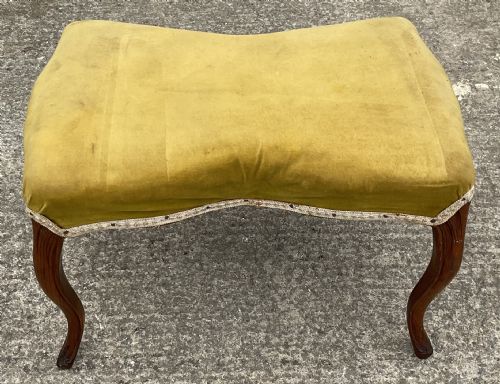


Walnut Framed Bench
These walnut framed bench pieces range from Victorian stools to Edwardian settees, offering robust timber frames and rich upholstery for any interior.
Walnut Framed Bench
A walnut framed bench encompasses a variety of seating forms, including settees, window seats, daybeds, and footstools. These pieces are designed with exposed timber frames supporting upholstered surfaces in fabric, leather, or velvet.
Buyers will encounter smaller dressing stools alongside larger two-seater sofas and French canapés. Each item utilises walnut timber for structural support and decorative carving.
Materials and construction
Makers utilised solid walnut for the structural frames, often applying detailed hand-carved elements to the arms, legs, and rails. This dense timber allowed for intricate detailing, such as the carved hunting dog heads found on certain Victorian window stools.
Upholstery techniques varied across periods, combining supportive webbing, stuffing, and textile coverings. Materials recorded in the evidence include velvet, leather, and decorative fabric, secured to the walnut frame with brass tacks or piping.
Listings feature walnut frames paired with diverse upholstery materials including velvet, leather, and woven textiles across multiple revival styles.
Assessing quality
Quality in a walnut framed bench lies in the crispness of the timber carving and the structural integrity of the frame joints. Pieces exhibiting deep, well-defined hand-carving command greater attention than simpler turned or plain timber examples.
The standard of upholstery and the preservation of the original walnut surface finish also differentiate examples. Well-maintained timber showing the natural grain and age-appropriate patination sits at the higher end of the range.
Howard & Sons
The Walnut Framed Bench Glossary
- Canapé
- An upholstered sofa or settee, typically in a French style with an exposed wooden frame. These pieces often feature decorative carving along the top rail and arms.
- X Frame
- A structural design where the legs cross in the shape of an X beneath the seat. This form appears on both compact stools and larger window seats.
- Window Seat
- A long, narrow bench specifically proportioned to sit beneath a window recess. They frequently feature upholstered tops supported by carved walnut frames.
Walnut Framed Bench: Frequently Asked Questions
What periods do these walnut framed bench items come from?
The pieces span the nineteenth and early twentieth centuries, covering Victorian, Edwardian, and earlier revival styles. You will find specific dates ranging from the mid-nineteenth century up to the 1930s.
Each era brings distinct aesthetic choices, from ornate Victorian carvings to cleaner Arts and Crafts lines.
How were these walnut benches used originally?
These pieces served multiple functions depending on their form, from formal drawing room seating to practical dressing room stools. Window seats were placed in alcoves for viewing gardens or reading in natural light.
Larger settees and sofas provided social seating in parlours and reception rooms.
What materials make up the frames and upholstery?
The primary structural material is walnut, chosen for its strength and rich grain. Frames are frequently paired with brass hardware and various textiles including velvet, leather, and standard upholstery fabrics.
Some examples incorporate exposed wooden arms and carved decorative details.
How do I distinguish between a settee and a window seat?
Settees are generally broader, taller, and designed as primary seating for multiple people in a main room. Window seats are narrower and lower, built to fit comfortably into architectural window spaces without blocking the view.
Window seats also frequently utilise X-frame or stool configurations.