




Walnut Trumpet Work Table
These walnut trumpet work tables are ingenious Victorian sewing pieces designed to keep needlework tidy while gracing the nineteenth-century parlour.
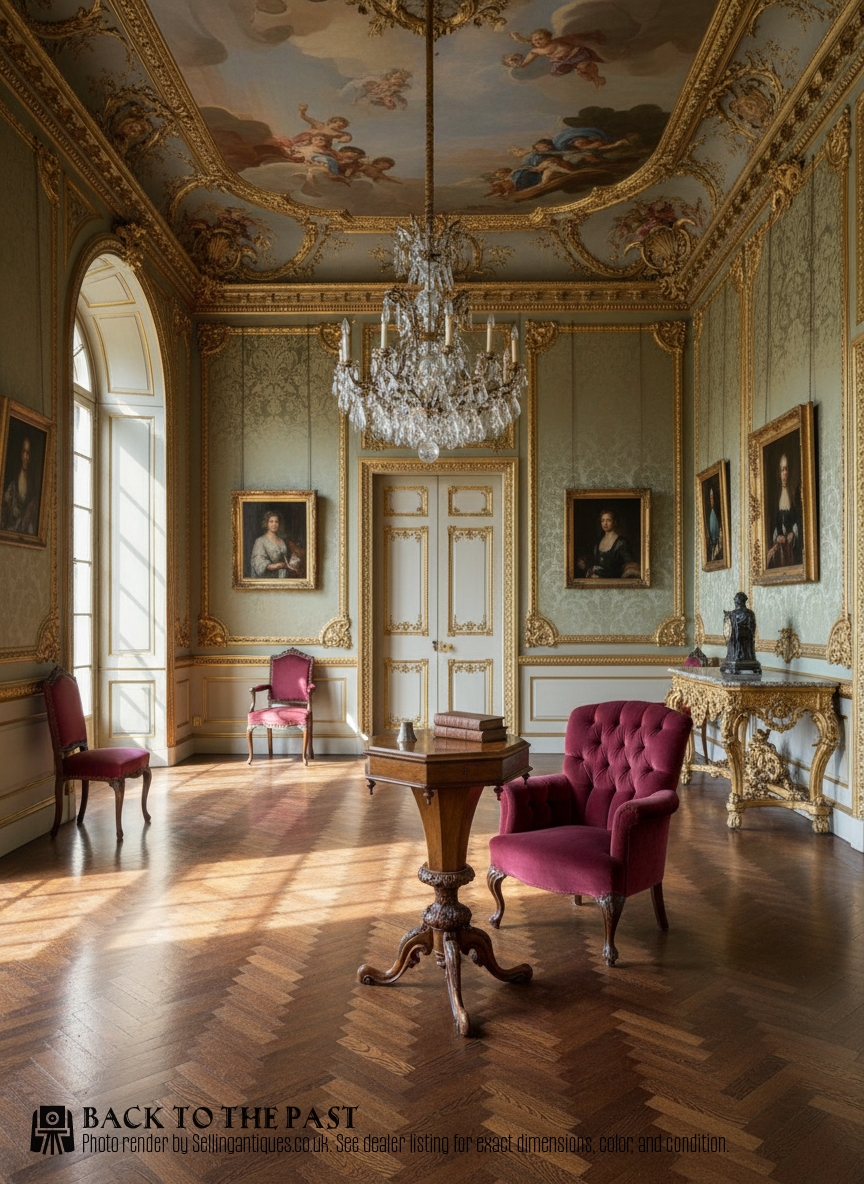
Walnut Trumpet Work Table
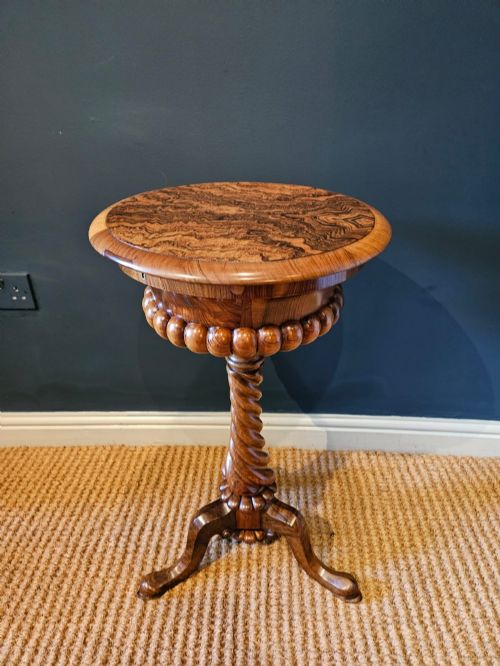
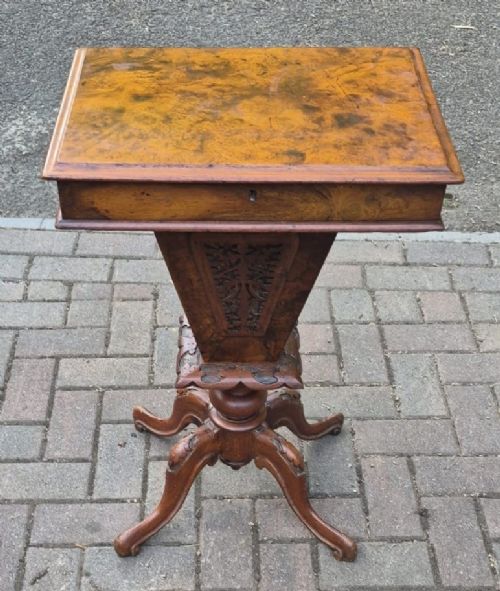
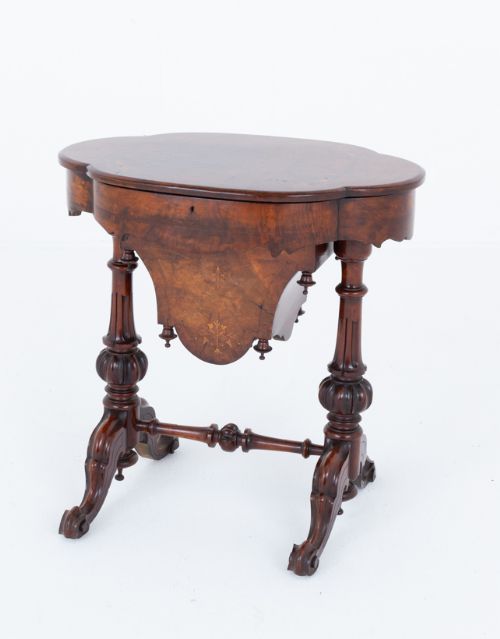
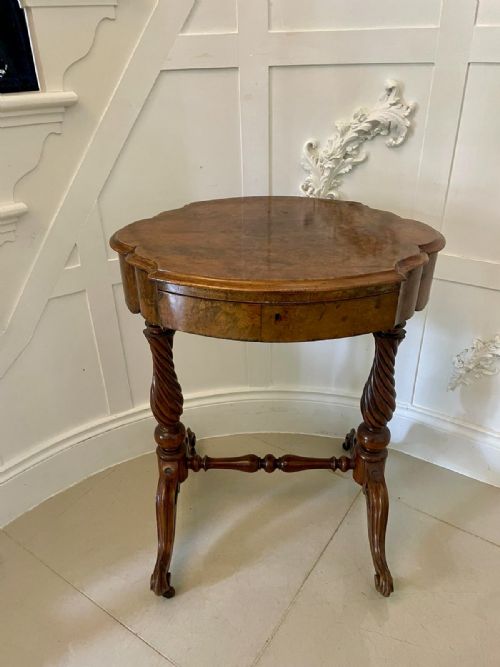
When you search for a walnut trumpet work table, you encounter distinctive mid to late nineteenth-century sewing pieces defined by their flared, cone-shaped bodies resting on tripod bases. Most examples date from the Victorian period, appearing primarily as octagonal or oval workboxes equipped with fitted interiors for storing threads and needles.
Beyond basic sewing duties, many versions incorporate games boards on their lids for chess or checkers, serving double duty as occasional tables. The form relies on a characteristic trumpet profile that widens gracefully from a slender stem down to a carved or moulded base.
How they were made
Cabinet makers constructed these pieces using solid wood frames veneered in highly figured burr walnut, creating rich patterned surfaces across the lids and bodies. Marquetry inlay, boxwood inlay, and occasional Tunbridge banding decorate the upper surfaces with geometric or floral motifs.
The flared bodies join slender turned stems and tripod legs, often incorporating brass fittings and lined fabric interiors within the internal compartments.
The listings span from eighteen fifty through to eighteen eighty, entirely within the Victorian period and using walnut and burr walnut.
What varies in quality
Quality rests heavily on the choice of burr walnut veneer and the precision of the wood inlay or marquetry across the lid. Stronger examples display lively grain patterns and crisp carving on the tripod base rather than plain, unfigured timber.
The complexity of the fitted interior also separates standard production from finer work, alongside the structural integrity of the delicate trumpet body and its joints.
The Walnut Trumpet Work Table Glossary
- Burr walnut
- A prized timber veneer taken from walnut tree growths, producing swirling, highly decorative grain patterns.
- Marquetry inlay
- Decorative pieces of wood fitted into the veneer to form intricate pictorial or geometric designs.
- Boxwood inlay
- Contrasting pale wood strips used to edge panels and define geometric borders on the cabinet work.
- Tripod base
- A three-legged support structure providing stability to the slender stem of the flared body.
Walnut Trumpet Work Table: Frequently Asked Questions
What is a trumpet work table?
It is a Victorian sewing table featuring a flared, cone-shaped body that resembles a musical instrument.
Inside, the fitted compartments hold sewing tools, threads, and needles for nineteenth-century handicrafts.
How were these tables used?
Victorian ladies used them primarily for needlework, storing wools and sewing accessories inside the lidded compartment.
Many versions doubled as games tables, featuring chess or checker boards inlaid directly into the removable top.
How do I date a walnut work table?
Most examples originate from the Victorian era between eighteen fifty and eighteen eighty, identified through construction methods and timber choices.
Burr walnut veneers and specific inlay styles point directly to this mid-nineteenth-century period of craftsmanship.
What is Tunbridge inlay?
It is a specific decorative technique using tiny mosaic wood blocks to create pictorial or geometric patterns.
Cabinet makers applied these detailed bands to enhance the lids of sewing and games tables.