








Walnut Trestle Desk
A walnut trestle desk brings warmth and architectural presence to a room, offering a solid writing surface rooted in centuries of cabinet-making tradition.
Walnut Trestle Desk
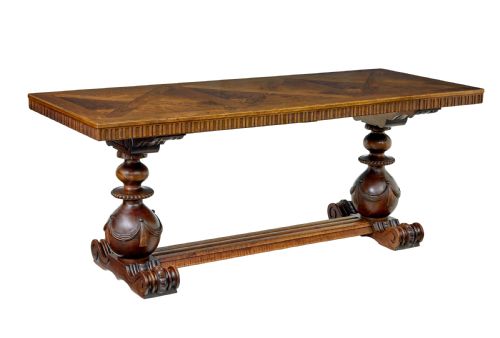
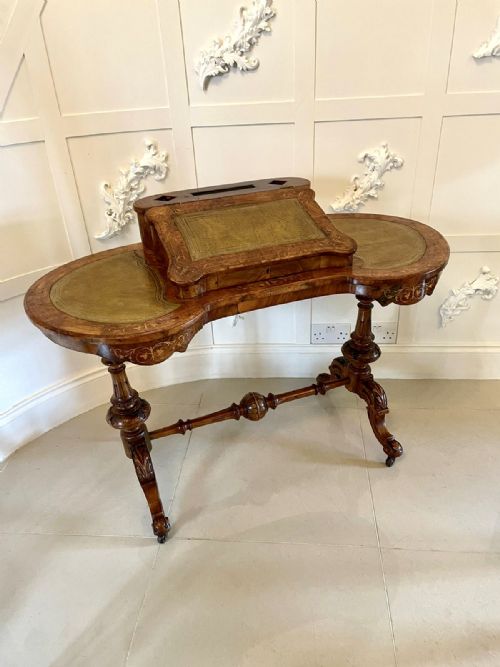
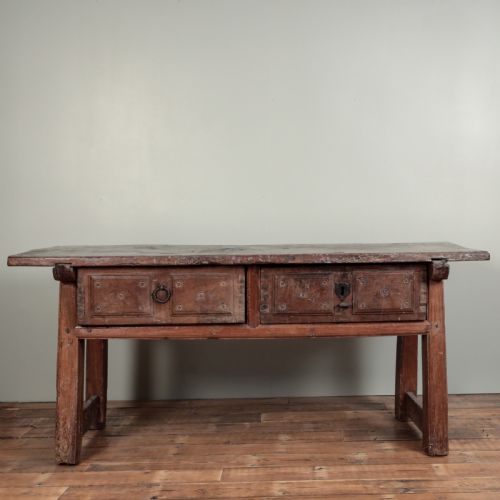
When you search for a walnut trestle desk, you encounter pieces spanning from the seventeenth century through to the early twentieth century. These include Spanish walnut tables, Victorian writing desks, and Scandinavian carved examples designed for functional workspace.
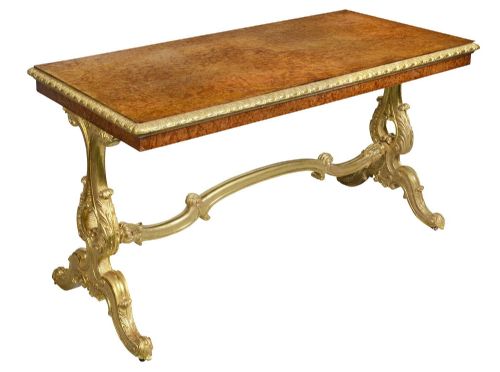
The most common form you will meet on this page combines a rich walnut or burr walnut top with supportive structural ends, reflecting styles from Spanish Baroque to Late Victorian. Makers such as Gillows and Holland + Son appear among related writing and centre tables.
Originating as utilitarian tables and specialised writing furniture like vargueno cabinets on stands, these pieces evolved into refined domestic desks. Their varied forms range from austere seventeenth-century framing to ornate nineteenth-century revivalist designs.
What varies in quality
The depth and movement of the burr walnut veneer dictate much of the visual appeal, separating standard production from exceptional cabinet work. Figured grain requires expert matching across large surfaces to achieve a cohesive aesthetic.
The architectural execution of the trestle supports and the crispness of any hand carving mark the distinction between provincial workshop output and high-status metropolitan manufacture. Structural joinery hidden beneath the top determines long-term stability under daily load.
The listings span from the seventeenth century through to the Edwardian era, incorporating materials such as wrought iron, brass, and giltwood alongside walnut.
Holland + Son·Gillows
The Walnut Trestle Desk Glossary
- Burr walnut
- A veneer sliced from the knotty growths of walnut trees, prized for its swirling, highly figured grain patterns. Cabinet-makers used it on prominent surfaces to create dramatic visual movement.
- Vargueno
- A traditional Spanish cabinet with a drop-front writing surface, typically mounted on an open stand or trestle base. These pieces often feature elaborate interior compartments.
- Trestle
- A structural support consisting of a horizontal beam fixed to two vertical or slanted feet. It provides sturdy support without the need for traditional corner legs.
- Patina
- The surface sheen and softening of colour developed by wood and metal over decades of handling and exposure to light. It serves as an indicator of age and genuine handling history.
Walnut Trestle Desk: Frequently Asked Questions
How do I date a walnut desk?
Dating relies on observing construction techniques, hardware, and the predominant stylistic revival of the period. Seventeenth-century examples display robust joinery and simpler framing, whereas Victorian pieces often incorporate intricate burr veneers and applied mouldings.
Secondary woods and finish types also provide clues to age. Examining the underside and drawer linings reveals how the timber was prepared before machine standardisation.
Are these desks suitable for daily work?
Most antique writing desks accommodate modern writing tasks and laptop use comfortably. Their sturdy trestle construction provides adequate knee clearance and reliable stability for everyday workspace needs.
Protecting the walnut surface with a blotter or desk pad preserves the polish and any historical leather insert. Regular waxing maintains the moisture balance in the timber.
What is a vargueno on stand?
A vargueno is a decorative Spanish cabinet featuring a drop-front door that opens to reveal numerous small drawers and gilded compartments. When placed upon its matching trestle stand, it functions as a dramatic writing desk.
This form dates back to the seventeenth century and represents high-status Iberian craftsmanship. The combination of austere exterior framing and ornate interior architecture defines its unique character.
How do I care for burr walnut?
Burr walnut requires placement away from direct heat sources and strong sunlight to prevent veneer cracking and fading. Periodic application of a quality beeswax maintains the moisture and deepens the grain.
Dusting with a soft, dry cloth prevents abrasive particles from dulling the French polished surface. Avoid silicone-based sprays, which can penetrate damaged areas of the finish.