


Walnut Tobacco Box
These walnut tobacco box pieces range from Georgian treen jars to Victorian humidors, prized for their rich timber and practical craftsmanship.
Walnut Tobacco Box
A walnut tobacco box is a small lidded vessel or cabinet designed to keep smoking leaf, cigars or snuff, appearing in forms from pocket snuff boxes to large tabletop humidors and locking cabinets. When you search for this phrase, you find items spanning the eighteenth century, the Victorian era and the nineteen-thirties.
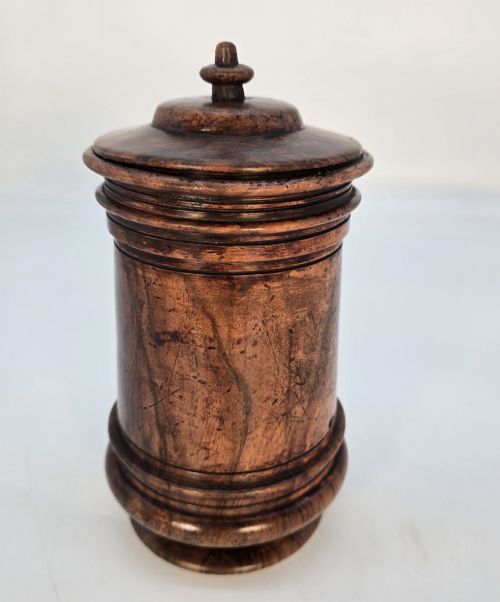
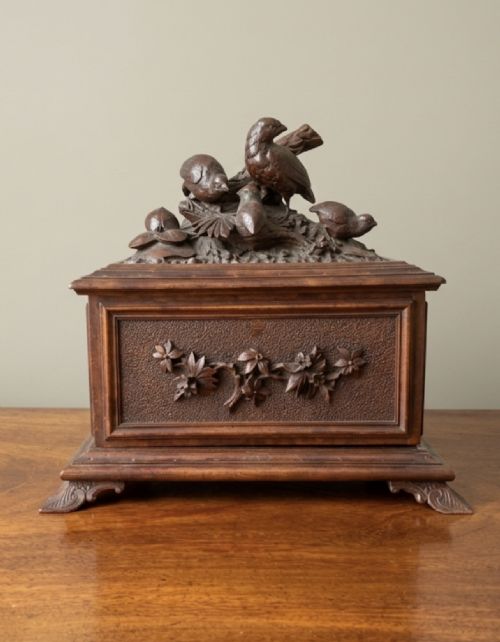
The most common examples on this page are nineteenth century burr walnut cigar humidors and Black Forest carved wood humidors, alongside earlier eighteenth century treen jars and oval table snuff boxes. These objects reflect changing smoking habits, shifting from pocket snuff use to larger tabletop and cabinet storage for cigars and pipe tobacco.
How they were made
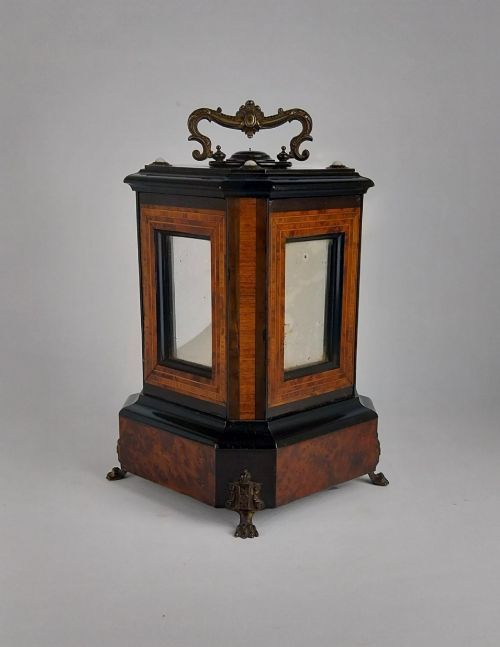
These items are constructed primarily from walnut and burr walnut, utilising the figured grain of the wood for visual impact. Cabinetmakers paired the timber with brass mounts, locks and hinges, whilst certain pieces incorporate ebonised wood, glass, carved details and leather interiors.
Techniques range from precise cabinet carpentry on nineteenth century cigar cabinets to sculptural relief carving seen in Black Forest animal boxes. Eighteenth century treen examples rely on traditional turning and hollowed construction from solid wood blocks.
Listings span the 18th Century, Victorian era, 1860, 1870, 1880, 1890, and 1930, using burr walnut, brass, ebonised wood, and leather.
What varies in quality
Quality rests upon the selection of the burr walnut veneer or the depth and skill of the wood carving, particularly on Black Forest animal figures and nineteenth century humidors. Superior examples display tight, symmetrical grain patterns and crisp, unblemished relief work.
Internal fitting also separates pieces, with top-tier cabinets featuring fitted compartments, working brass locks and intact leather or glass elements. Simpler turned treen jars and small snuff boxes rely on the purity of the timber and the clean execution of their simple lids.
The Walnut Tobacco Box Glossary
- Burr walnut
- A highly figured timber cut from walnut tree growths, valued for its swirling grain patterns on nineteenth century cabinets and boxes.
- Humidor
- A moisture-controlled box or cabinet designed to keep cigars fresh, frequently lined with wood and fitted with metal hinges.
- Treen
- Small handmade wooden household objects, often turned on a lathe, represented here by eighteenth century tobacco jars.
- Snuff box
- A small pocket or table vessel with a tight-fitting lid, used to hold ground tobacco before inhalation.
- Black Forest carving
- A nineteenth century style of highly detailed, naturalistic wood sculpture depicting animals and foliage, typical of certain humidors.
Walnut Tobacco Box: Frequently Asked Questions
What is a walnut tobacco box?
A walnut tobacco box is a lidded container or cabinet made from walnut wood, created to store tobacco, cigars or snuff safely.
These pieces range from pocket-sized snuff boxes to large locking humidors and carved animal boxes from the eighteenth and nineteenth centuries.
How do I date a walnut tobacco box?
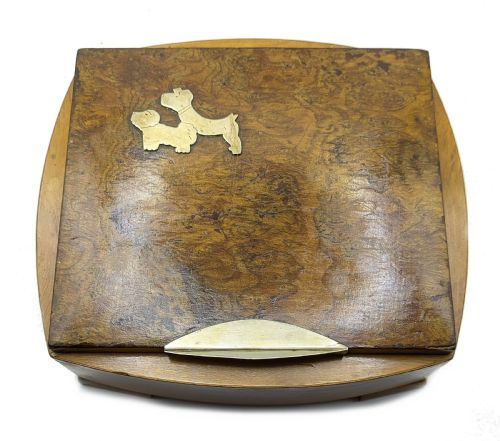
Dating relies on observing construction methods, timber choice, and the overall style, such as Georgian treen, Victorian burr walnut, or Art Deco design.
Hardware like brass locks, hinges and fitted interiors also help place a piece within periods from the seventeen-nineties to nineteen-thirty.
Were these boxes used for cigars?
Many nineteenth century examples function as cigar humidors or cabinets, designed specifically to store larger cigars rather than loose pipe tobacco.
Earlier pieces from the eighteenth century generally served pocket snuff or loose leaf tobacco in treen jars and oval table boxes.
How do I care for burr walnut?
Burr walnut requires stable indoor humidity and protection from direct sunlight to prevent the decorative veneer from drying out or splitting.
Applying a suitable wax polish occasionally helps maintain the lustre of the timber and protects the historic surface finish.