


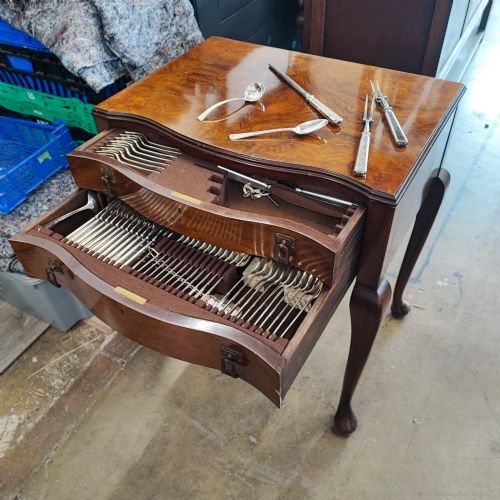

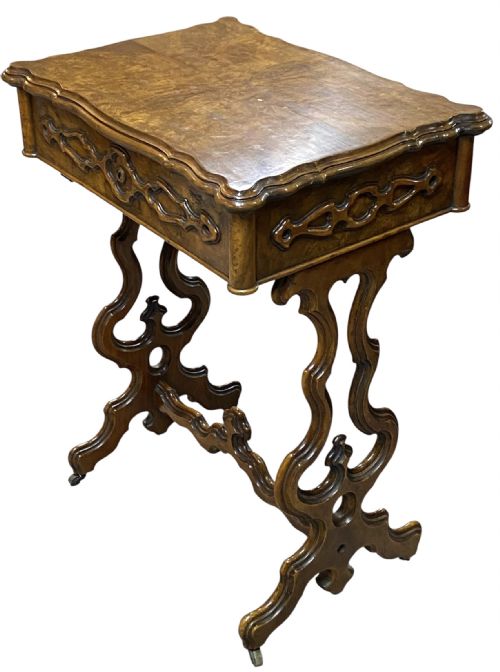


Carved Burr Walnut Box
A carved burr walnut box brings rich, swirling grain and sculptural timber to a desk or table.
Carved Burr Walnut Box
A carved burr walnut box is an item of nineteenth-century or later decorative woodwork designed to hold tea, games, documents or sewing materials. These pieces range from small snuff boxes and tea caddies to larger games caskets, stationery boxes and freestanding sewing tables.
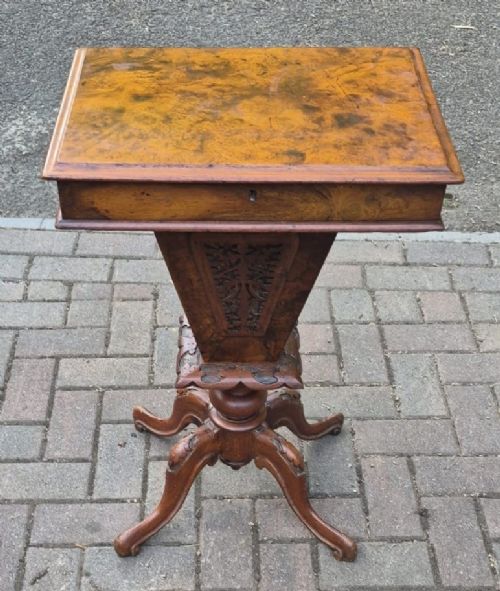
The version a buyer meets most frequently on this page is the Victorian work table or sewing table, constructed from burr walnut with fitted interiors and mounted on turned or carved supports. Tea caddies and smaller desktop boxes also appear regularly across the nineteenth-century periods.
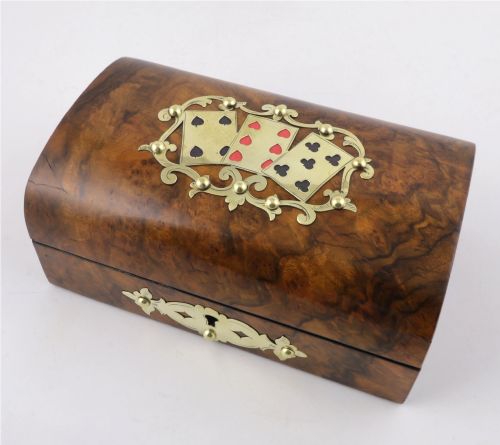
Originating predominantly from Victorian and Regency workshops, these boxes utilise the distinctively knotty, swirling figure of burr walnut timber. Makers combined this figured wood with boxwood inlay, brass mounts and fitted fabric interiors to create functional items for the home.
Materials and Construction
Makers constructed these boxes using solid timber frames overlaid with thin veneers of burr walnut or figured walnut to display the complex, swirling grain patterns. Secondary timbers provided internal framing, while boxwood inlay and marquetry added linear contrast to the surfaces.
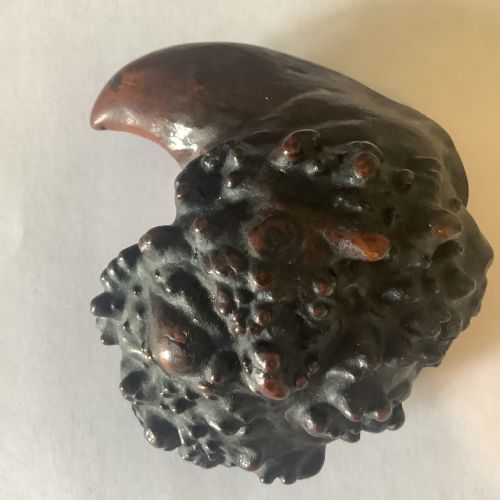
Detailing relied on brass hardware, fabric linings and mother-of-pearl accents alongside carved wooden supports and turned legs. Natural sections of wood were occasionally utilised for smaller items such as snuff boxes, shaping the raw timber directly.
Assessing Quality and Execution
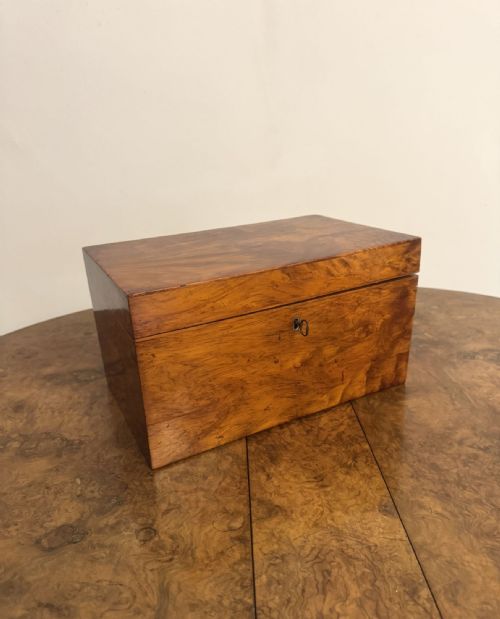
Quality in a carved burr walnut box rests on the density and visual impact of the burr walnut veneer across the primary surfaces. Finer pieces display carefully matched grain patterns that wrap symmetrically around the lid and sides.
The standard of internal fittings distinguishes the better examples from standard production pieces. Superior items feature complete, original lined interiors, working locks with keys, and precise boxwood inlay rather than painted or simplified decoration.
Waring & Gillow
The Carved Burr Walnut Box Glossary
- Burr walnut
- A veneer taken from the warted growths on walnut trees, prized for its swirling and knotty grain pattern. It provides a highly decorative surface on Victorian and Regency boxes.
- Tea caddy
- A box or container originally designed for storing loose tea leaves, often featuring internal lidded compartments. Many examples from the nineteenth century are lined with foil or wood.
- Work table
- A multi-purpose piece of furniture incorporating a box or fabric bag beneath the top for sewing and needlework. These tables often stand on carved trumpet or cradle bases.
- Marquetry
- The art of applying small pieces of veneer to a structure to form decorative patterns or pictures. It appears frequently alongside inlay on nineteenth-century boxes and tables.
- Tunbridge ware
- Small wooden decorative objects decorated with mosaic patterns made from tiny wood blocks of different natural colours. This technique appears on specific Victorian writing and work boxes.
Carved Burr Walnut Box: Frequently Asked Questions
What is a burr walnut tea caddy?
A tea caddy is a lidded box designed to store expensive tea leaves securely in the nineteenth century. These pieces often feature interior compartments and decorative burr walnut veneers.
They sit comfortably on side tables or mantelpieces as decorative objects today, continuing their original role as ornamental containers in domestic interiors.
How do I identify a Victorian work table?
A Victorian work table typically combines a hinged burr walnut box top with an under-mounted fabric storage bag or compartment for sewing materials. They usually stand on turned, carved or trumpet-shaped pedestals.
Examining the interior layout, timber grain and base construction helps distinguish these pieces from later reproductions.
Where were these boxes used?
These boxes and tables served practical functions in principal rooms such as the drawing room, parlour or study. They held sewing implements, playing cards, stationery or tea.
Today, they integrate easily into modern homes as functional storage on desks, sideboards or occasional tables.
What is the difference between a games box and a work table?
A games box is built specifically to store playing cards, counters or dice, often featuring inlaid boards or specialised internal compartments. A work table prioritizes sewing equipment and documents.
While both utilise burr walnut and date from the same nineteenth-century periods, their internal fittings reflect their distinct domestic uses.