

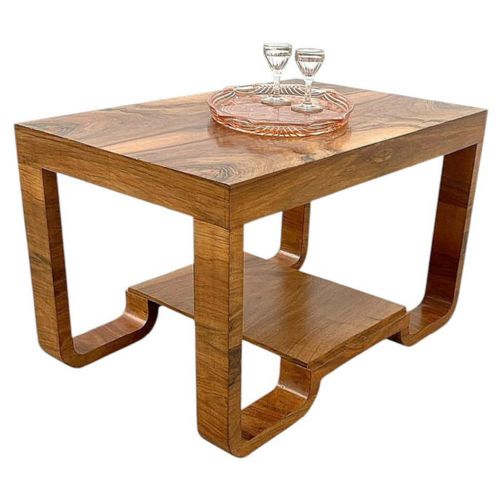
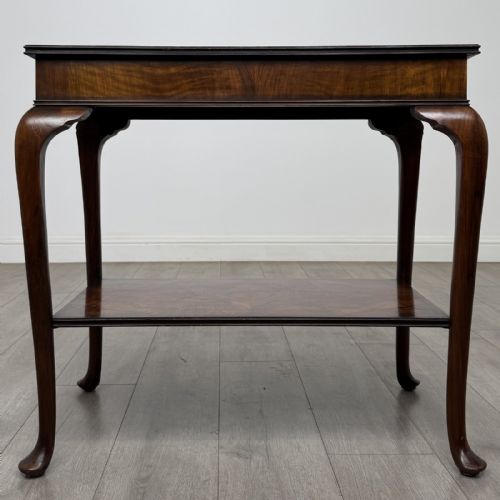
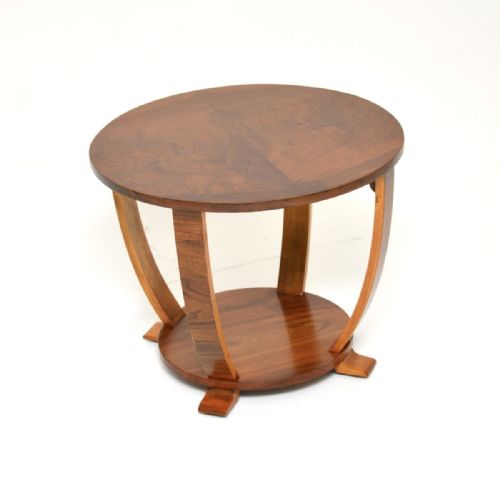
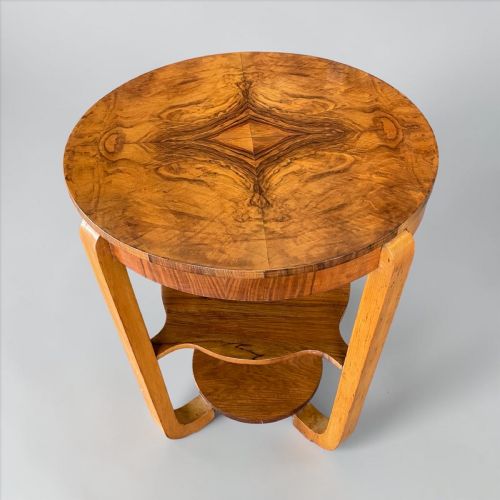
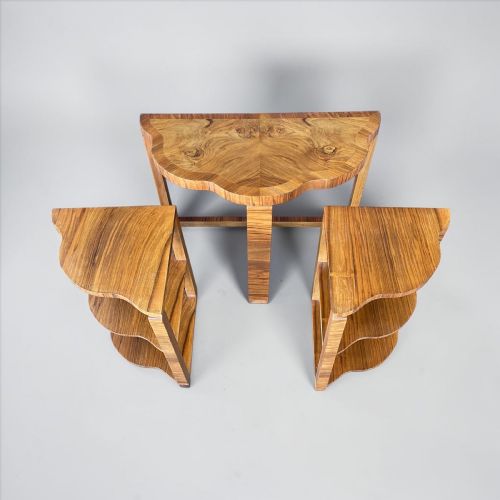
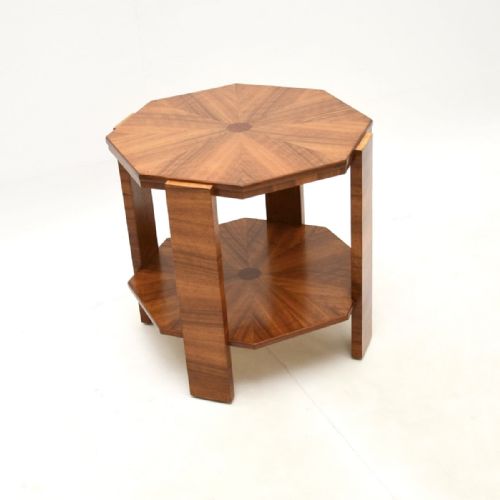
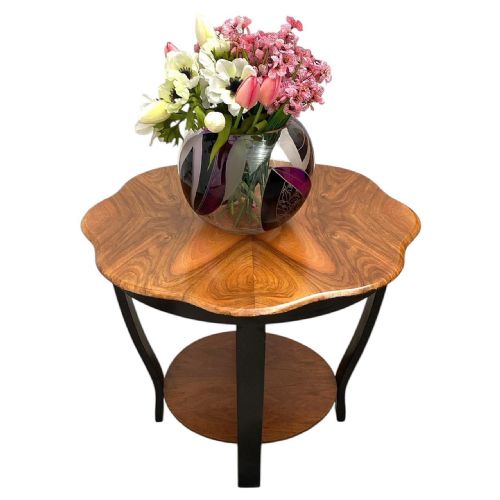
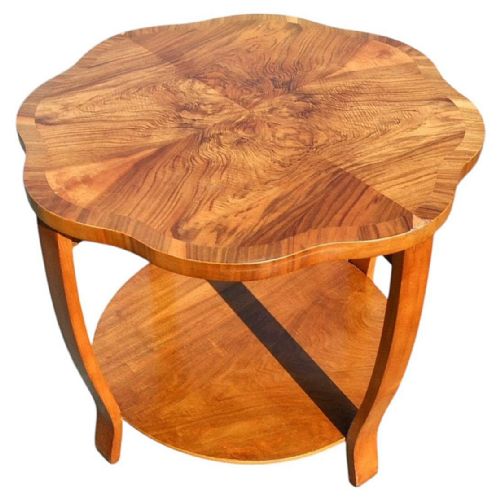


Walnut Tier Coffee Table
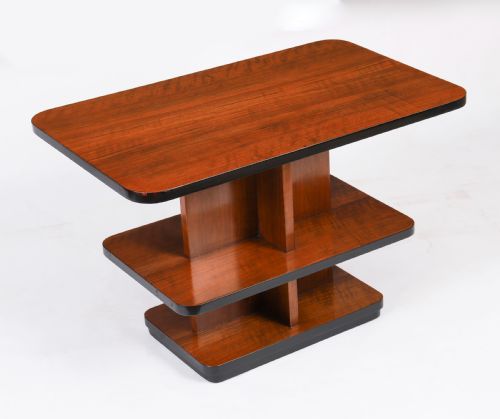
A walnut tier coffee table brings warmth and functional surface space to a room, led largely by English Art Deco design.
Walnut Tier Coffee Table
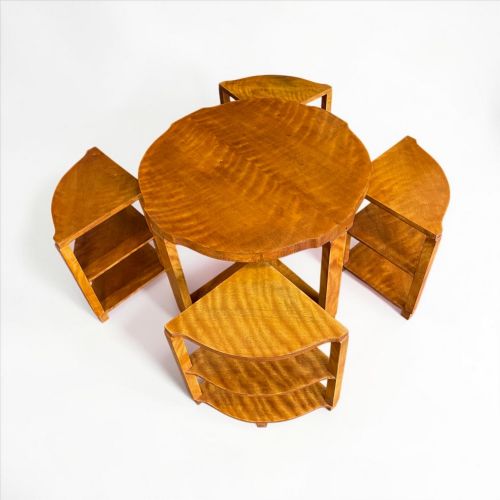
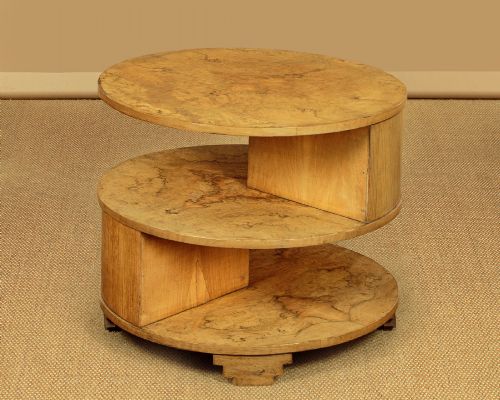
A walnut tier coffee table provides multiple surfaces arranged vertically, offering practical display space without occupying a large floor footprint. Most pieces found here belong to the Art Deco period, originating around nineteen thirty.
The selection ranges from two tier and three tier occasional tables to nesting sets and square or octagonal centre tables. Alongside pieces made entirely in England, French examples appear with inlaid work and galleries.
Earlier nineteenth century items from eighteen ninety and nineteen hundred also feature, showing carved details and traditional proportions. These earlier forms sit alongside streamlined twentieth century designs.
How they were made
Makers utilised walnut, burr walnut, and highly figured veneers applied over solid timber foundations to create striking grain patterns across the main surfaces. Secondary timbers such as maple appear in combination with walnut on select twentieth century examples.
Metal elements including brass, chrome, and ormolu provide structural accents, edge trim, or casters for mobility. Parquetry work and inlaid details add decorative contrast to specific table tops.
Construction methods range from traditional hand carving seen in late nineteenth century pieces to geometric veneered planes typical of Art Deco production. Multiple tiers are supported by sturdy uprights or columns integrated into the overall frame.
Walnut Tier Coffee Table Retail Price Guide 2026
Typical asking prices for walnut tier coffee table among the pieces listed under this phrase on Sellingantiques today, from the lower quarter to the upper quarter. They describe what is for sale here now, not the wider market.
Materials recorded across the inventory include solid walnut, burr walnut veneers, brass, chrome, ormolu, and maple.
What varies in quality
The choice of veneer dictates visual appeal, with burr walnut and highly figured grains commanding greater attention for their rich patterning. Plain walnut surfaces offer a more uniform appearance compared to strongly marked selections.
Integration of secondary materials such as maple, brass, or chrome alters the character and refinement of a piece. Finer examples balance multiple tiers cleanly with hardware like casters or galleried edges.
Construction execution determines daily durability, particularly in multi-tiered and nesting formats where joints must support weight across several levels. The crispness of parquetry and inlay work separates standard utility pieces from high end production.
The Walnut Tier Coffee Table Glossary
- Burr walnut
- A veneer taken from the growth knots of walnut trees, prized for its swirling, organic patterns. It creates a highly decorative surface on table tops.
- Art Deco
- A design style spanning the nineteen twenties and nineteen thirties, characterised by geometric symmetry and streamlined forms. Most tables on this page reflect this aesthetic.
- Parquetry
- A geometric mosaic of wood pieces used for decorative surfaces on tables. This technique creates patterned tops using contrasting timber tones.
- Veneer
- A thin slice of superior wood applied over a base timber to provide a decorative exterior. Highly figured variations enhance the visual depth of walnut furniture.
- Ormolu
- Gilt bronze ornamentation applied to furniture for decorative effect. It adds metallic contrast to wood surfaces.
Walnut Tier Coffee Table: Frequently Asked Questions
What is a walnut tier coffee table?
A walnut tier coffee table is a low surface featuring two or more horizontal levels for storage and display. These tables are predominantly executed in Art Deco styles.
They utilise walnut and figured veneers, often incorporating multiple decks to maximise surface area within a compact footprint.
How do I date a walnut tier coffee table?
Dating relies on stylistic markers and materials, with nineteen thirty Art Deco pieces showing geometric lines and figured veneers. Earlier nineteenth century examples feature carved wooden details.
English and French workshops produced these across several decades, transitioning from Victorian revival styles to modernism.
Where were these tables made?
The available pieces originate primarily from England, alongside French examples featuring inlaid work and galleried edges. English production is strongly represented during the nineteen thirties.
Workshops in both countries utilised local and imported timbers to build occasional and centre tables.
Are multi-tier tables practical for daily use?
Multiple tiers provide separated surfaces for books, drinks, and decorative items without cluttering the main table top. Square, octagonal, and rectangular formats suit different seating layouts.
Some include casters for easy repositioning across the room during daily routines.