


Walnut Tapestry Fauteuils
Walnut tapestry fauteuils are upholstered open armchairs framed in walnut and covered in needlework, offering structured seating with French character.
Walnut Tapestry Fauteuils
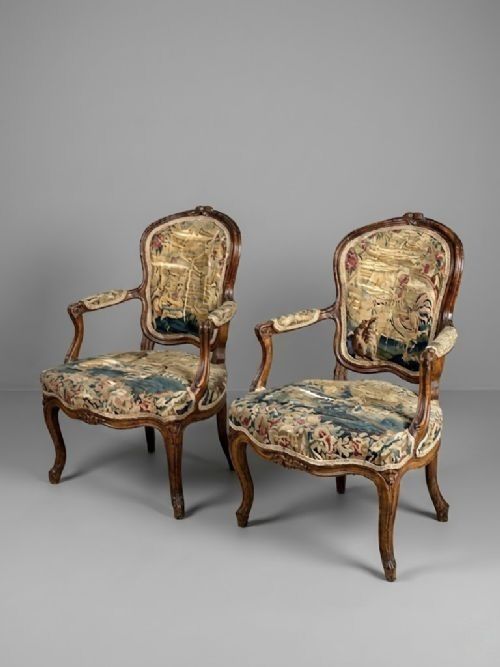
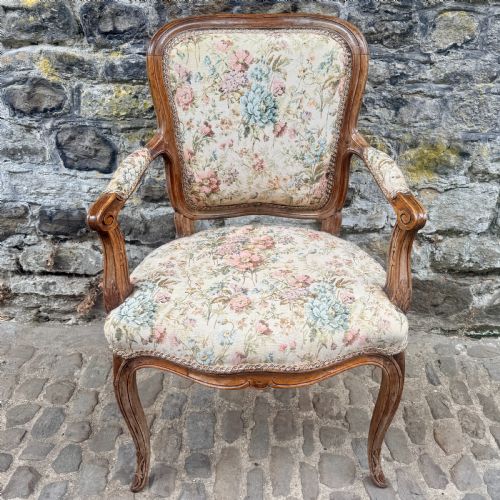
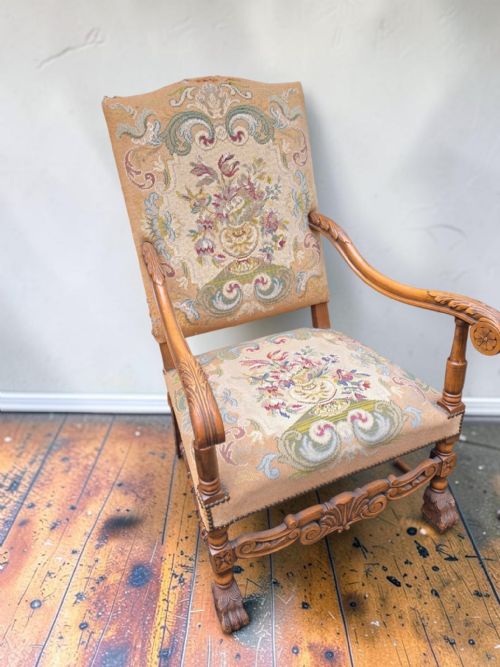
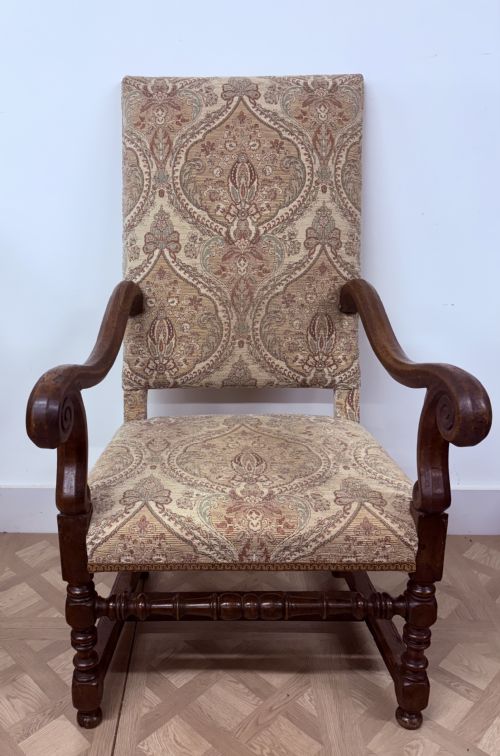
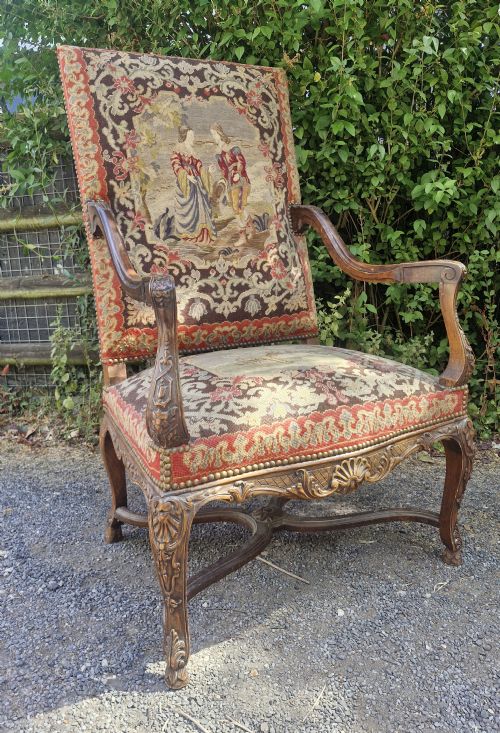
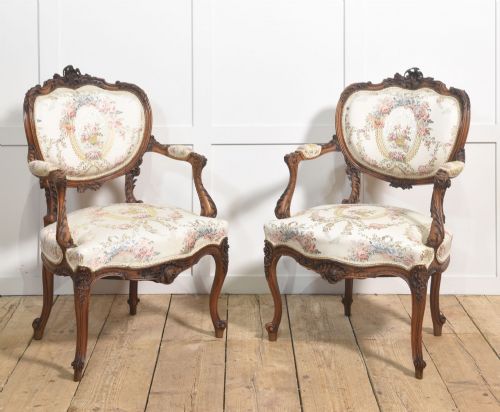
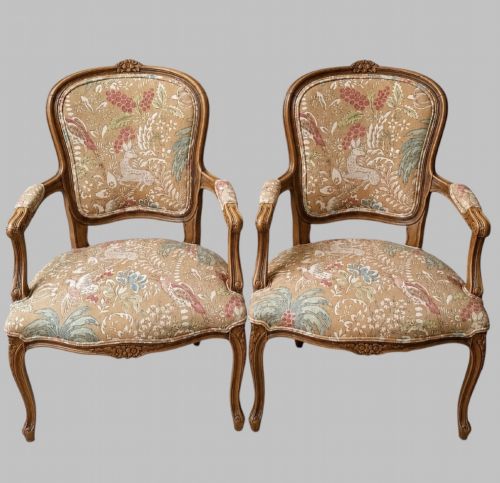
Walnut tapestry fauteuils combine carved wood frames with woven textile covers, taking the form of open armchairs designed for formal rooms. These seats appear in provincial, baroque, and revival styles spanning from the seventeenth century through the twentieth century.
Buyers meet nineteenth-century interpretations most frequently on this page, often styled after earlier Louis periods or executed in Victorian revival tastes. Pairs and individual chairs emerge from French chateau and provincial contexts, showing open arms and carved wooden supports.
What varies in quality
The definition and depth of the carved walnut frame separate simpler provincial pieces from sophisticated examples produced in urban workshops. Crisp execution in the woodwork indicates greater skill among the original makers.
The density and fineness of the tapestry needlework also distinguish pieces, with tight petit point stitching representing higher labour input than coarser woollen covers. Original textile condition and harmony between frame style and upholstery design influence the overall standard.
Some needlepoint seats conceal centuries of hidden wool dust beneath their cushions, patiently waiting for an archaeologist with a vacuum.
The Walnut Tapestry Fauteuils Glossary
- Fauteuil
- An open-framed armchair with upholstered back and armrests, originating in France. These seats feature exposed wood framing rather than fully upholstered sides.
- Tapestry
- A thick textile woven with decorative designs, frequently utilised for upholstery on period seating. It employs wool and other threads to create pictorial or patterned surfaces.
- Petit point
- A fine needlepoint stitch worked on single-thread canvas, allowing for intricate detail in upholstered panels. This technique appears on high-grade chair covers.
- Louis XV style
- A design aesthetic characterised by asymmetry, scrollwork, and naturalistic curves that influenced seating frames. It originates from eighteenth-century French taste but recurred in nineteenth-century revivals.
- Neo-Rococo
- A nineteenth-century revival style drawing upon earlier rococo motifs with elaborate carved ornamentation. Chairs in this manner display curved lines and floral relief work.
Walnut Tapestry Fauteuils: Frequently Asked Questions
How do I care for tapestry upholstery?
Keep these armchairs away from direct sunlight to prevent the wool and tapestry threads from fading over time. Gentle surface cleaning helps maintain the textiles without disturbing the historical weave.
Avoid excessive moisture and heavy chemical treatments when tending to the fabric. Professional textile conservation suits fragile needlepoint covers better than domestic cleaning methods.
Are these chairs comfortable to sit in?
These open armchairs provide upright seating designed for formal reception rooms rather than modern lounging. The open wooden arms and structured padding reflect historical standards of posture.
Padding materials and interior webbing vary depending on the specific century of manufacture. Many benefit from careful restoration of internal support to ensure stability during daily use.
How can I tell the period of a walnut armchair?
Examine the character of the carved walnut frame, noting tool marks, joint construction, and stylistic clues from specific design eras. Seventeenth and eighteenth-century examples display hand-cut joinery and period-specific carving depths.
Nineteenth-century revival pieces often imitate earlier forms like Louis XV or Louis XIII but reveal different timber seasoning and machine assistance in the framework. Comparing the timber patina helps distinguish genuine age from later interpretations.
How do I mix these chairs in a modern room?
Pair a single walnut framed armchair with contemporary upholstery or simple furniture to create a focal point in a living space. The natural walnut tones and textured tapestry fabric add warmth against plain walls.
Utilising a pair of armchairs creates symmetry when placed opposite a sofa or beside a fireplace. Their classic proportions allow them to integrate into traditional and eclectic interiors alike.