
Walnut Tapestry Chair
A walnut tapestry chair combines rich timber frames with hand-stitched needlework, offering both structural warmth and decorative depth for the home.
Walnut Tapestry Chair
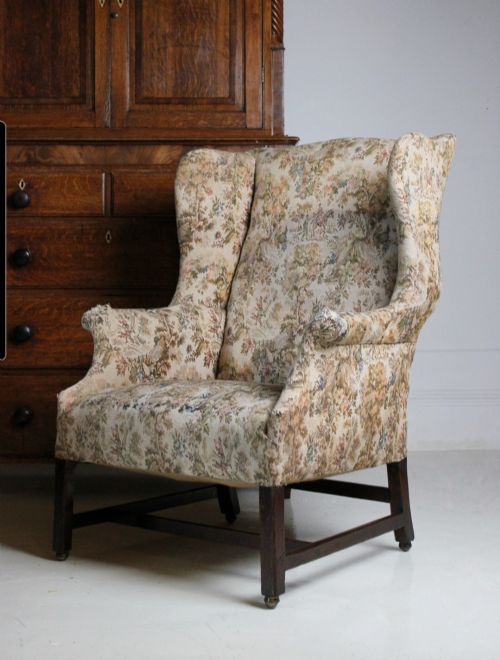
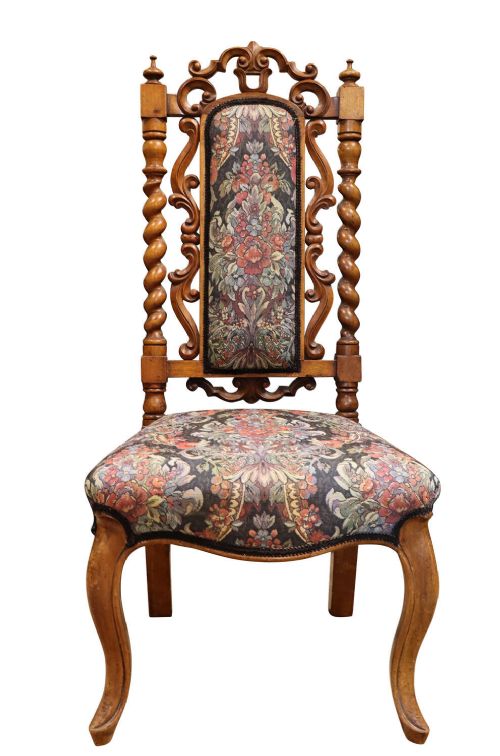
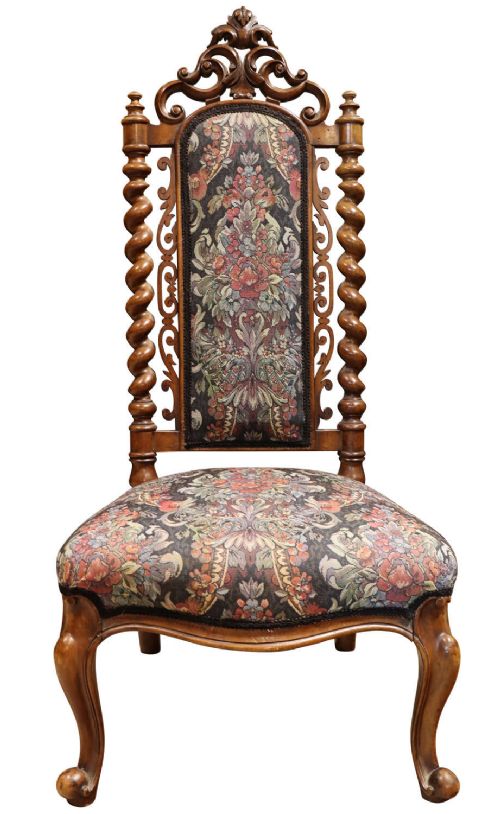
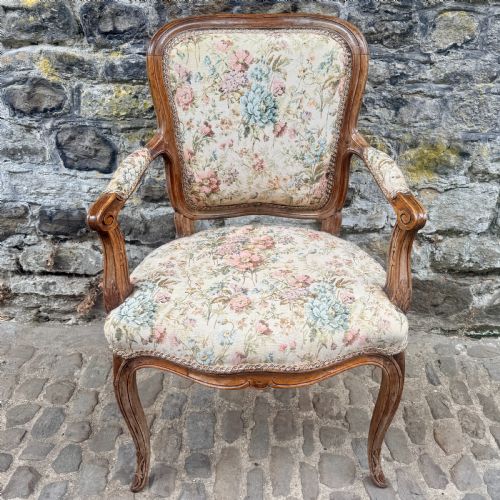
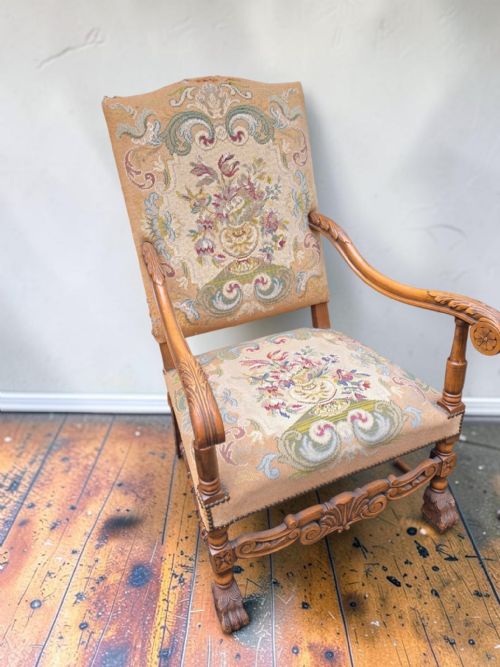
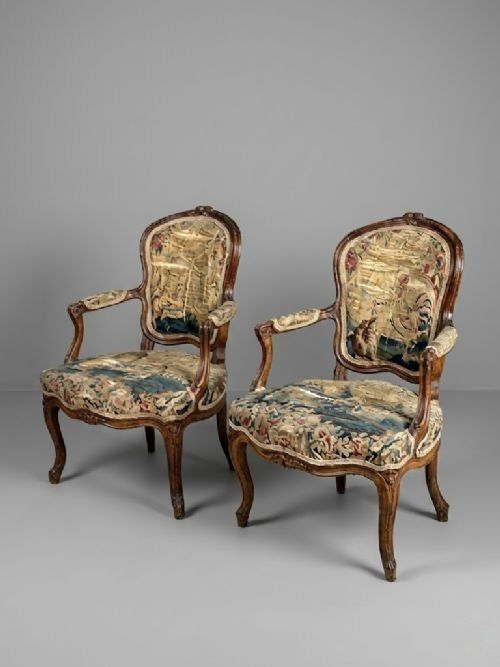
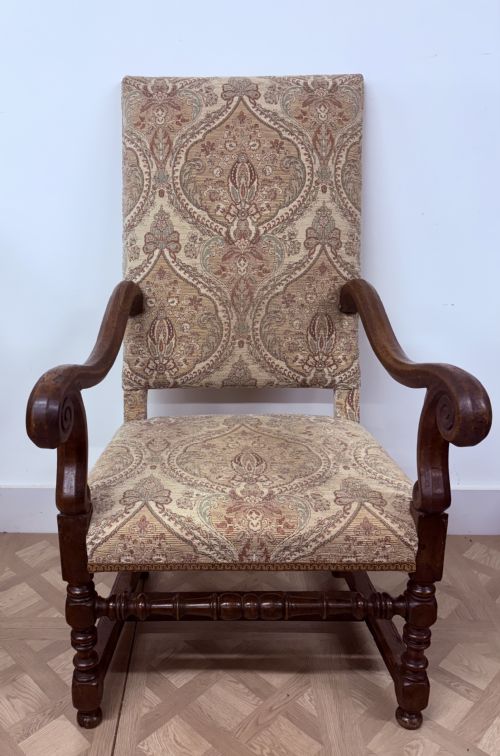
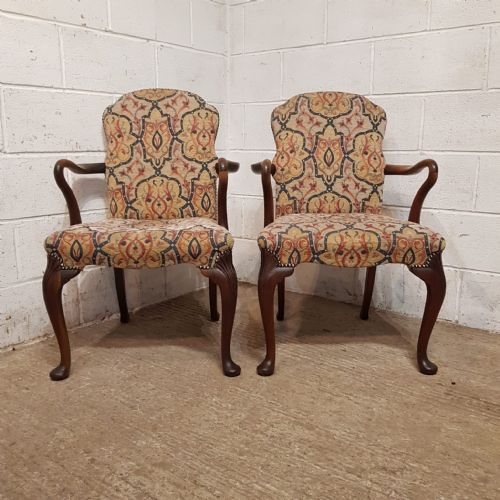
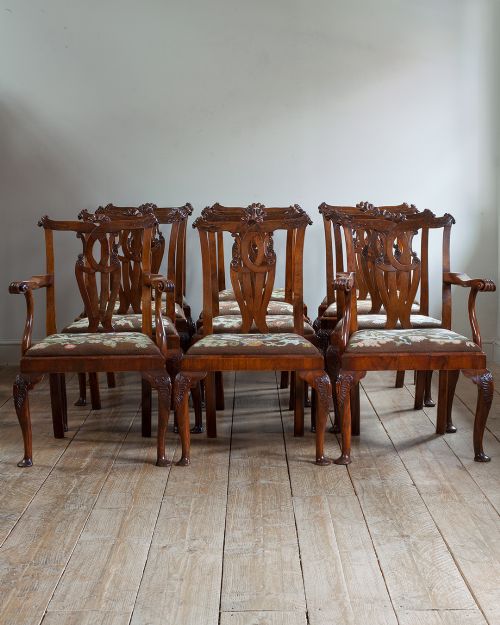
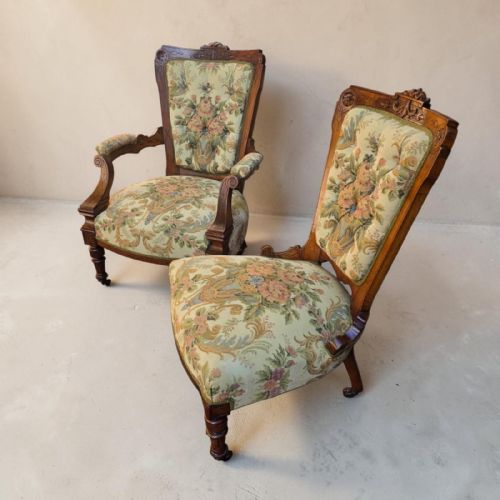
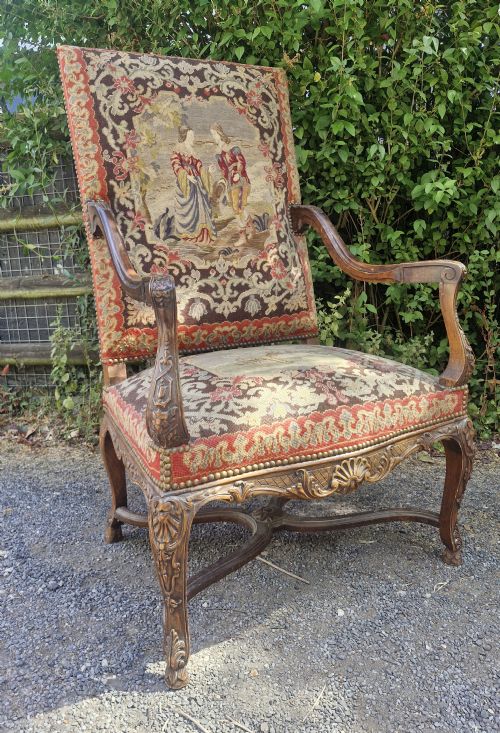
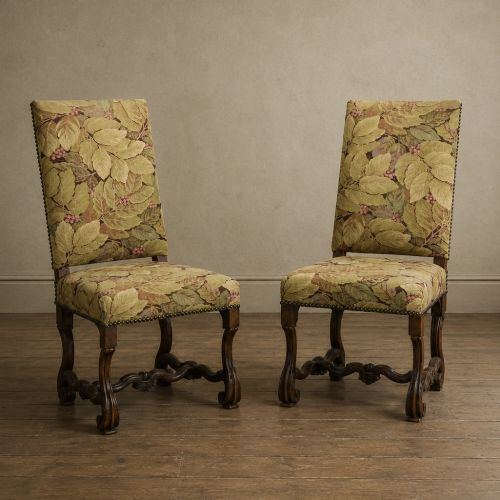
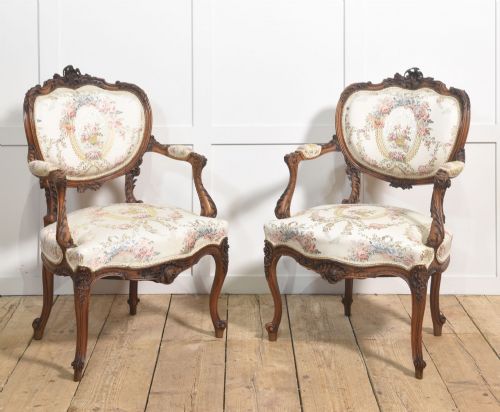
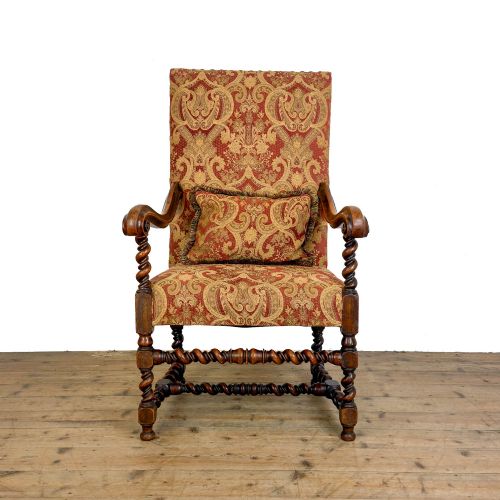
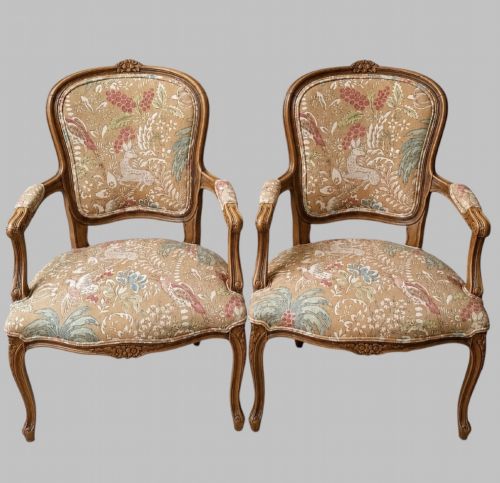
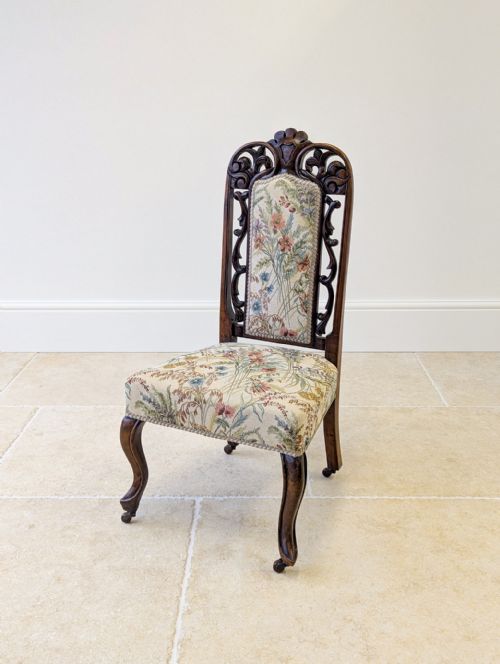
A walnut tapestry chair brings together a dense, dark timber frame and woven textile upholstery, spanning periods from the seventeenth century through the Victorian era. The selection ranges from robust French salon armchairs and provincial fauteuils to English nursing chairs, side chairs, and library seating.
Buyers frequently encounter Victorian revival pieces alongside eighteenth-century models, with formats varying from single occasional chairs to matched dining sets. The joinery and textile work reflect the distinct aesthetic preferences of their respective periods, whether formal Louis designs or vernacular farmhouse furniture.
Materials and construction
Makers utilised dense walnut for structural frames, taking advantage of the timber's strength to support intricate hand-carved details, cabriole legs, and scroll backs. This hardwood provides the rigidity necessary for open armchairs and heavy library seating without adding excessive bulk.
Upholstery relies on wool and textile tapestries, often worked in needlepoint or petit point stitch to cover seat pads, backs, and arm panels. Brass tacks frequently secure the fabric edges to the walnut frame, completing the traditional method of construction.
Listings feature walnut frames paired with wool needlework spanning the seventeenth century to the twentieth century.
Evaluating craftsmanship and condition
Quality rests in the crispness of the timber carving and the tightness of the joinery within the walnut frame. Superior examples display fluid, hand-carved ornamentation that integrates smoothly with the structural lines of the chair.
The integrity and age of the tapestry work dictate the distinction between everyday seating and collector pieces. Hand-stitched needlework with dense wool threads and minimal restoration commands greater appreciation than later replacement covers.
Howard and Sons·R Whytock of Edinburgh
The Walnut Tapestry Chair Glossary
- Fauteuil
- An open-framed upholstered armchair with exposed wooden armrests originating in France. These seats typically feature carved walnut frameworks and padded elbow rests.
- Needlepoint
- A type of canvas work embroidery executed with wool yarn to create dense pictorial or geometric textile panels. This technique forms the primary upholstery surface on many period chairs.
- Cabriole leg
- A furniture leg that curves outward in a convex arc and tapers inward to a scroll or pad foot. This design is frequently carved from walnut on eighteenth and nineteenth-century seating.
- Nursing chair
- A low-seated Victorian chair designed for comfort while holding infants or tending to domestic tasks. They often feature an upholstered walnut frame without armrests to accommodate full skirts.
Walnut Tapestry Chair: Frequently Asked Questions
How do I date a walnut tapestry chair?
Dating relies on examining the joinery methods, timber patina, and carving styles relative to historical periods like the Georgian or Victorian eras. Secondary wood choices and tool marks often reveal the workshop era.
The textile upholstery can also indicate the period, though many pieces were re-covered during subsequent centuries to match interior decoration trends.
Are these chairs suitable for daily use?
Most sturdy walnut frames easily support regular seating when the underlying joinery remains sound and stable. Care should be taken with antique frames to avoid placing excessive strain on historical joints.
The wool tapestry upholstery benefits from gentle vacuuming and protection from direct sunlight to preserve the strength of the natural fibres.
How should I clean antique tapestry?
Surface dust is best removed using a soft brush or a low-suction vacuum attachment guarded by mesh. Professional textile conservators should handle deeper cleaning to prevent shrinkage or dye bleeding in the wool.
Avoiding harsh chemical sprays and keeping the textile away from heat sources prevents the natural wool fibres from becoming brittle over time.
What is the difference between needlepoint and tapestry?
Needlepoint is stitched by hand through a stiff open-weave canvas mesh, whereas traditional tapestry is woven on a loom using warp and weft threads. Both terms often describe the decorative covers found on antique seating.
Hand-stitched needlework tends to have a heavier textured relief, while woven tapestries offer smoother pictorial detail across the upholstered panel.