

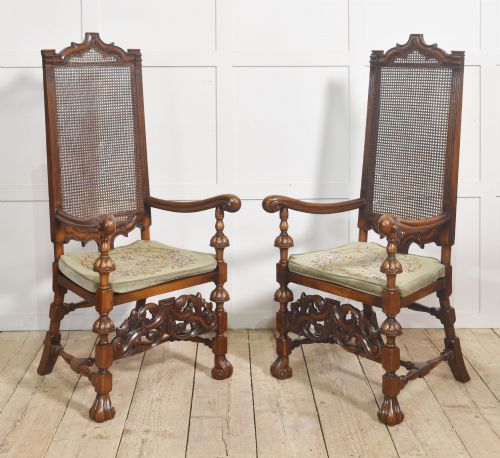
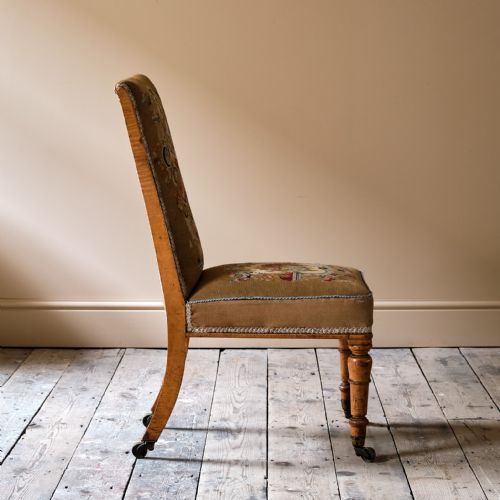
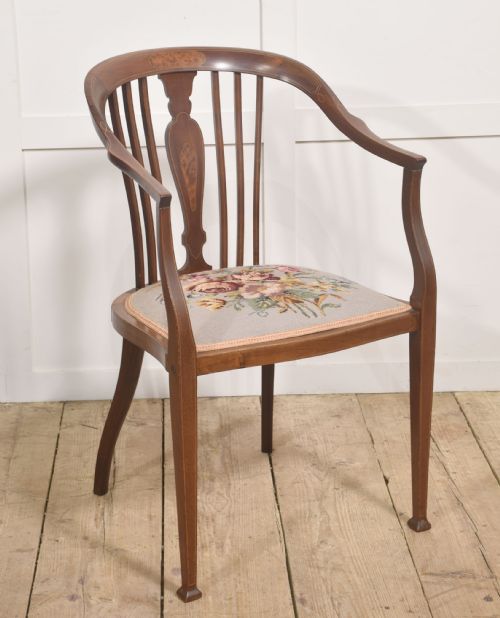


Needlepoint Upholstered Chair
A needlepoint upholstered chair brings together sturdy timber frames and detailed wool work, offering both a comfortable seat and a distinct period look.
Needlepoint Upholstered Chair
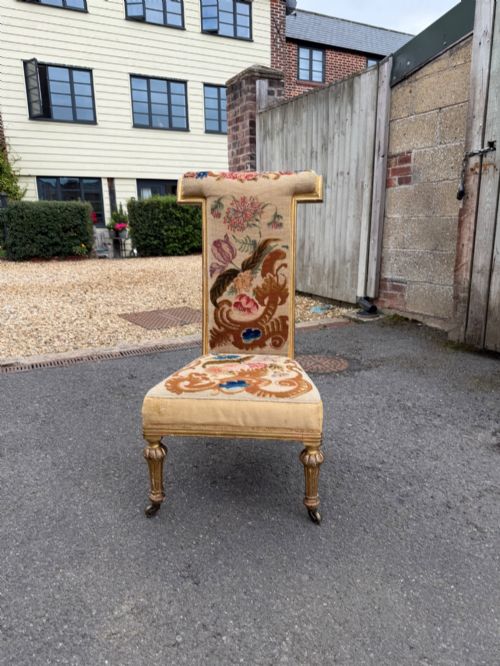
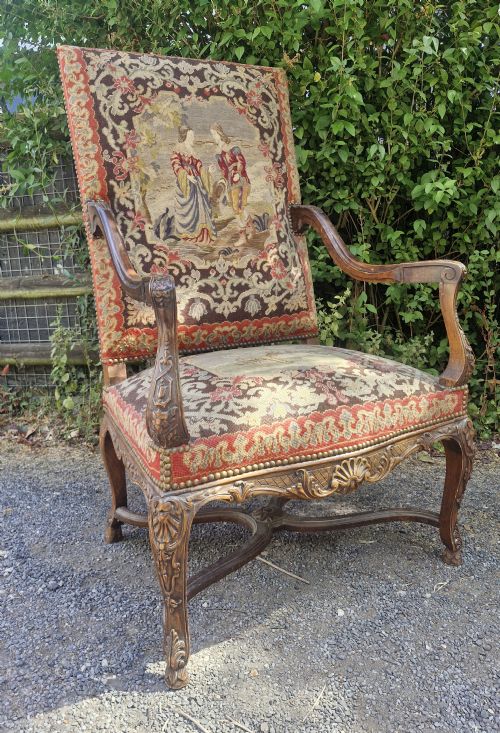
A needlepoint upholstered chair is a seat featuring stitched textile panels, most commonly found in Victorian, Edwardian, and eighteenth-century designs. Buyers look for these pieces to add texture and historical character to a room, ranging from small nursing chairs and side seats to large open armchairs.
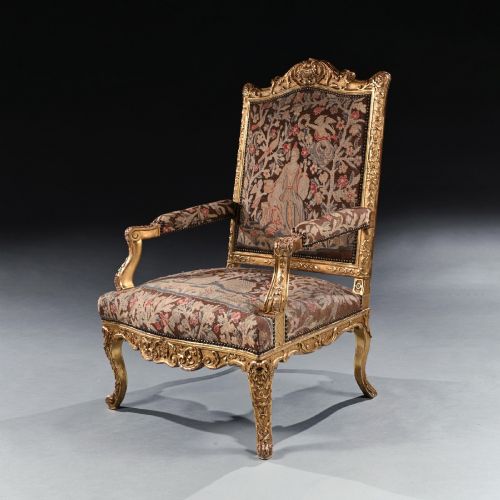
The selections available here lean heavily towards Victorian and nineteenth-century examples alongside earlier French and English revival pieces. Walnut, mahogany, and giltwood form the structural backbone of these diverse forms, which include occasional chairs, dining sets, and fireside seating.
Materials and construction methods
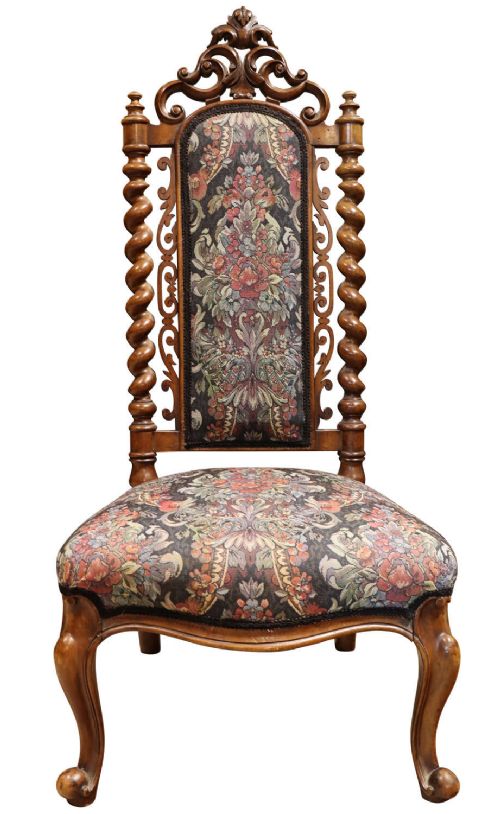
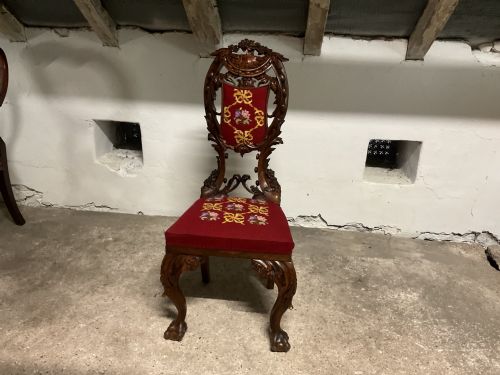
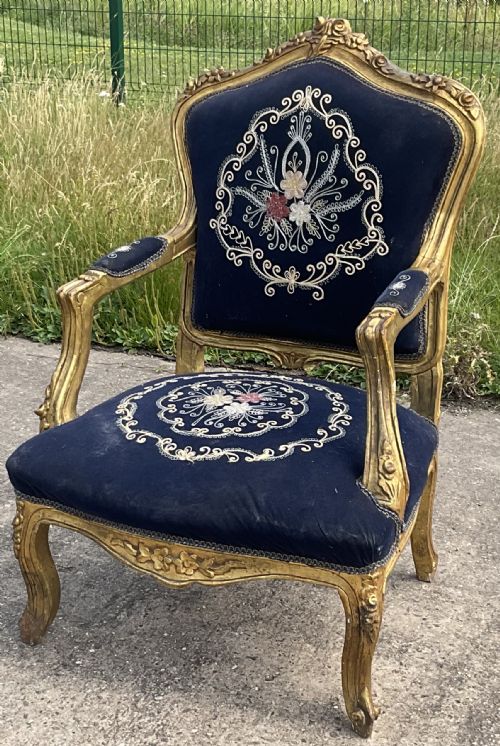
Makers built these frames using durable hardwoods such as walnut, mahogany, beech, and rosewood, often carving details directly into the timber or applying giltwood finishes. Structural integrity relied on traditional joinery techniques suited to each specific period, from Georgian revival styles to ornate Victorian frames.
Needlepoint and tapestry panels utilised wool and fabric worked by hand or machine to create floral, geometric, or armorial designs. These textile coverings were then fixed tightly over padded seats, backs, or open arm panels supported by brass or wooden framing.
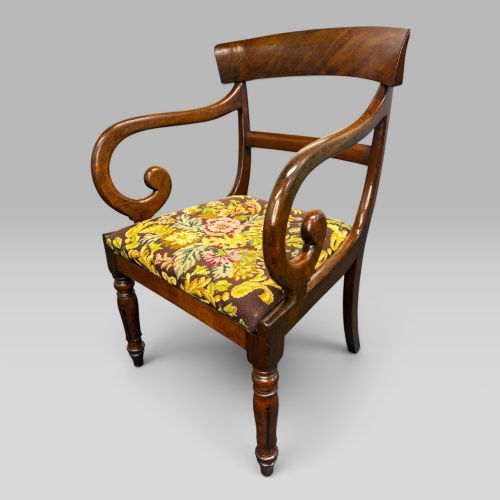
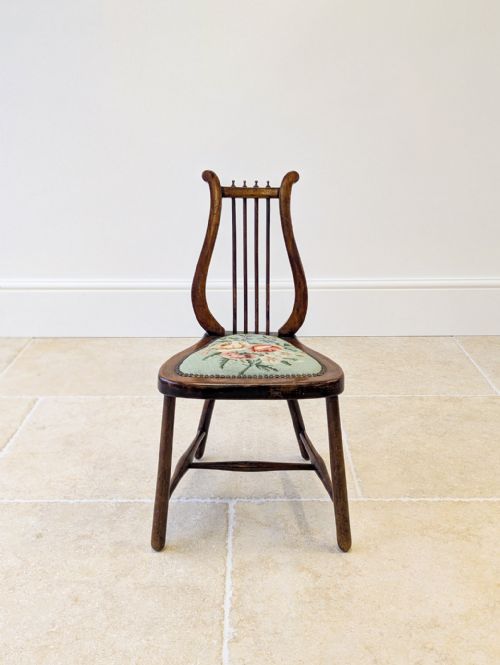
A child's armchair sits among the full-sized seating, offering miniature needlepoint comfort for the smallest household members.
Factors of quality and craftsmanship
The fineness of the needlepoint stitching separates standard upholstery from superior examples, with tighter, more detailed petit point work indicating higher skill. The depth and precision of the carved woodwork on the frame also distinguish workshop standards.
Originality of both frame and textile plays a major role in evaluation, as does the choice of primary timber such as figured walnut or dense mahogany. Well-proportioned seating with stable joinery commands greater attention from collectors.
Charles Tozer·Waring & Gillow·Robert Strahan Dublin·Holland & Sons
The Needlepoint Upholstered Chair Glossary
- Petit point
- A fine needlepoint stitch worked on single-mesh canvas using wool or silk threads. This technique allows for high detail and shading in pictorial chair panels.
- Fauteuil
- An open-armed French armchair with upholstered back and arm pads over an exposed wooden frame. These chairs typically date from revival periods or the eighteenth century.
- Giltwood
- Timber treated with a thin layer of gold leaf or gilt gesso. It appears frequently on decorative nineteenth-century and French revival frames.
- Nursing chair
- A low-seated Victorian chair designed for comfort, often upholstered in tapestry or needlework. The low height originally assisted with childcare or sitting near low hearths.
- Padouk
- A dense tropical timber valued for its rich reddish-brown colour and durability. It turns up in select nineteenth-century carved pieces.
Needlepoint Upholstered Chair: Frequently Asked Questions
How do I clean needlepoint upholstery?
Dust the textile gently with a soft brush and avoid harsh chemical cleaners or excess water. Professional conservation cleaning is recommended for antique wool work.
Test any mild cleaning solution on a hidden corner of the fabric first to check for colour fastness.
Are these chairs suitable for daily use?
Most antique frames remain sturdy, but fragile needlework panels benefit from careful handling rather than heavy daily wear. Occasional sitting or placement in low-traffic rooms helps preserve the textiles.
Heavier chairs in mahogany or walnut handle routine seating better than lighter giltwood or delicate side chairs.
How do I date a carved wooden frame?
Look at the prevailing style, tool marks, and wood species to determine the likely era of manufacture. Victorian pieces often display heavy walnut carving, while earlier eighteenth-century designs feature distinct French or Georgian proportions.
Secondary woods and joinery methods inside the seat frame offer further clues to age.
Can I replace the needlepoint fabric?
Replacement is possible, though collectors generally prefer preserving original period textiles whenever condition permits. Re-upholstering requires matching the scale and weight of the original material to the frame.
Consult a specialist in historic upholstery to protect the value of the timber structure.