
Carved Walnut Tapestry Chair
A carved walnut tapestry chair brings deep wood grain and historic textile work together into a single seat.
Carved Walnut Tapestry Chair
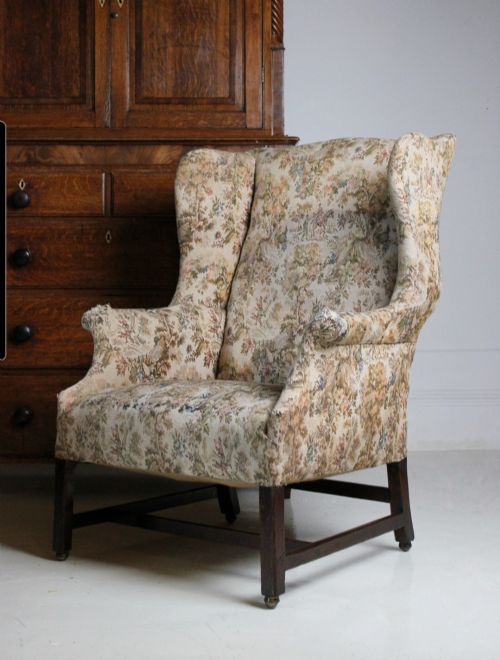
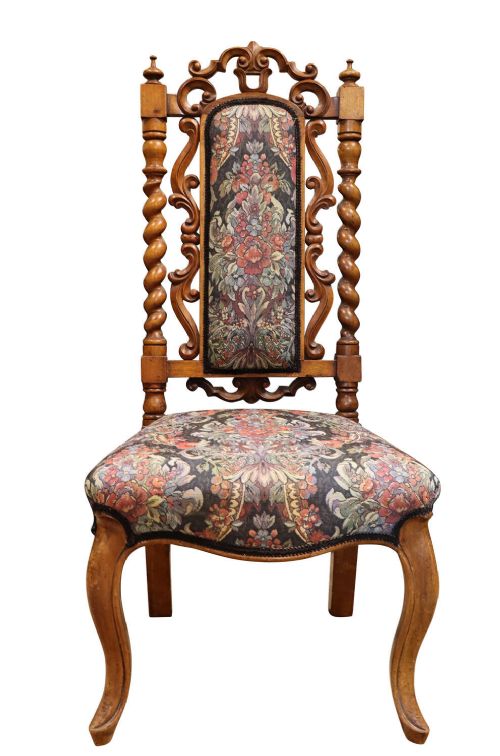
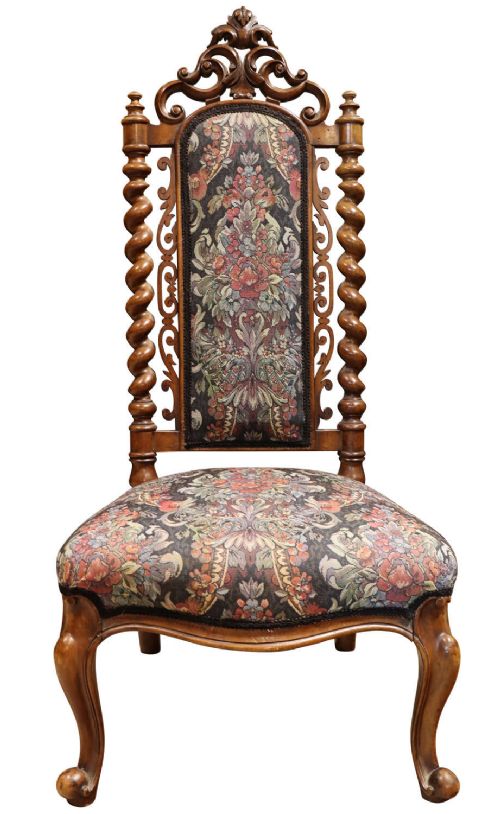
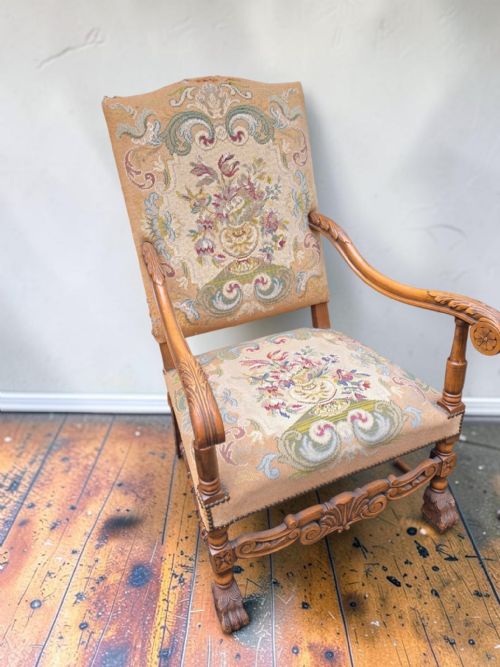
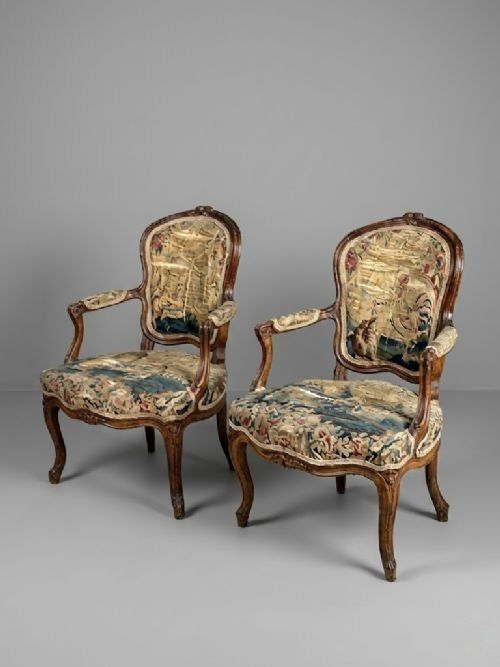
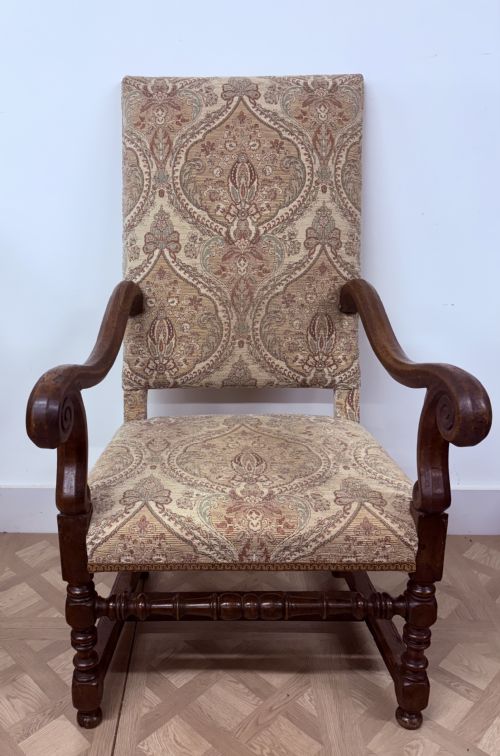
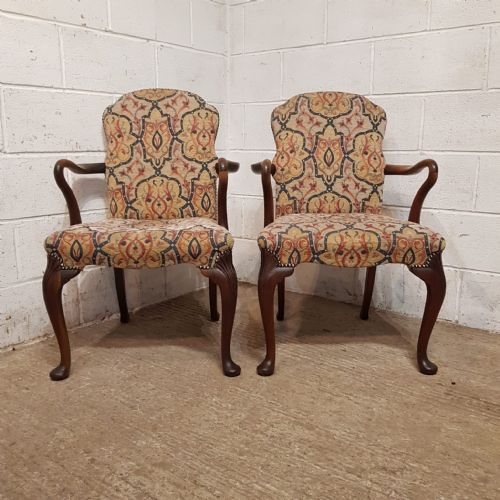
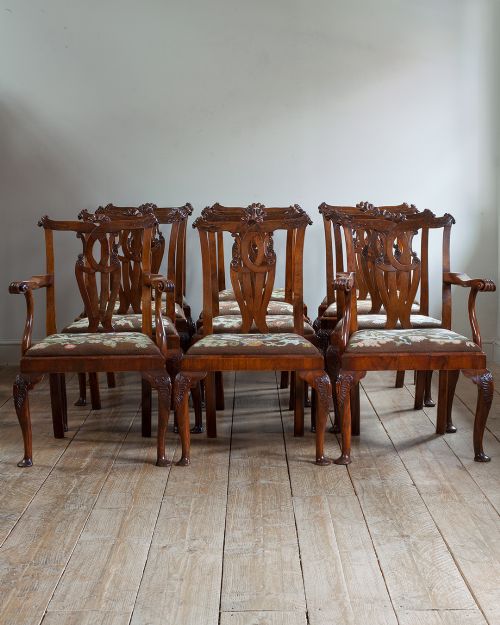
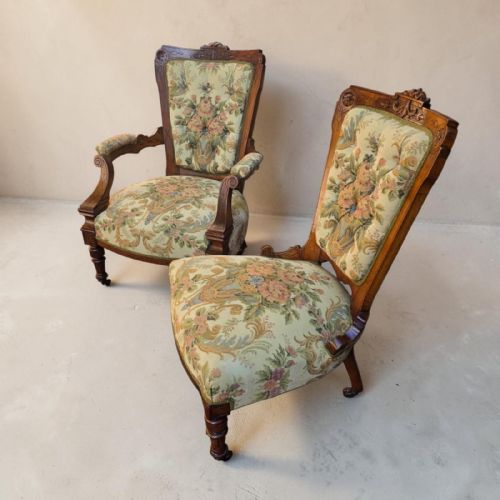
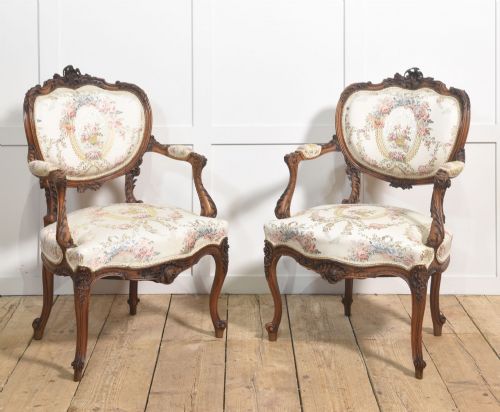
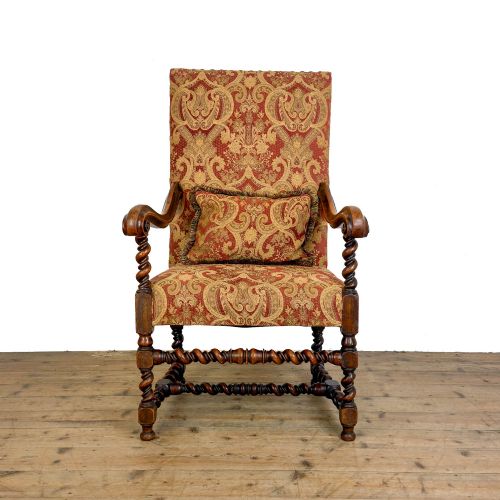
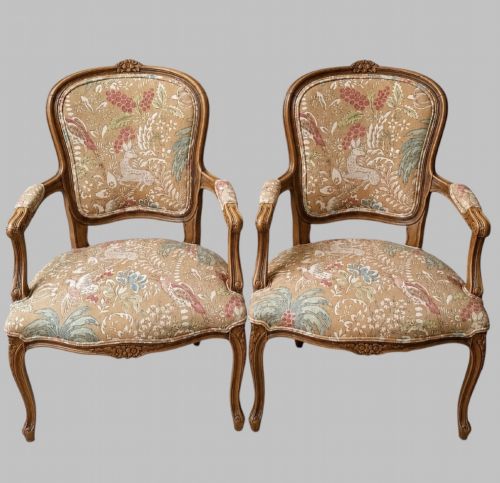
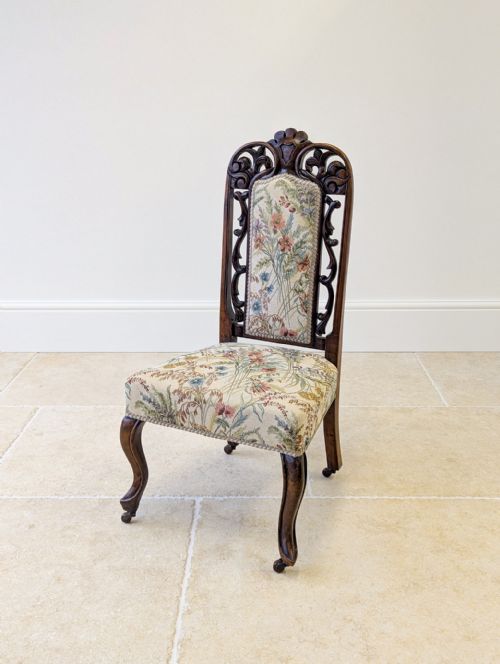
A carved walnut tapestry chair combines a carved wooden frame with upholstered textile panels, appearing in forms ranging from small nursing seats to large library armchairs. These pieces span the eighteenth, nineteenth, and early twentieth centuries, drawing on French provincial traditions as well as British Victorian and Georgian styles.
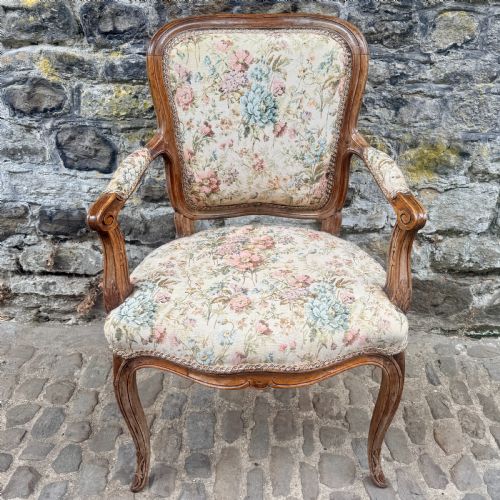
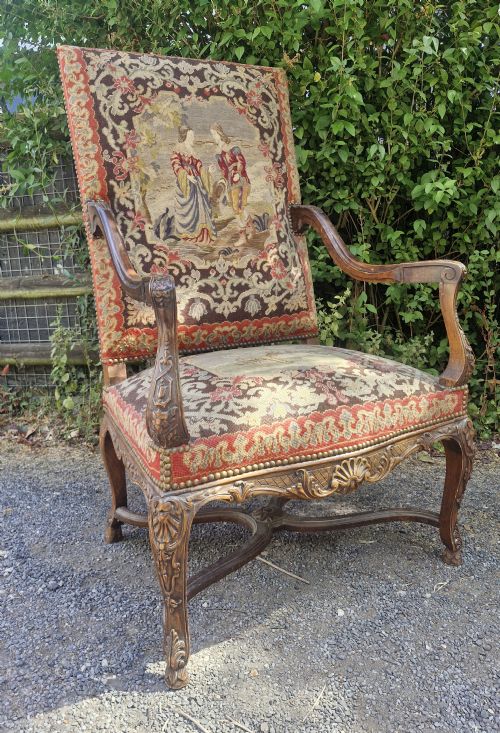
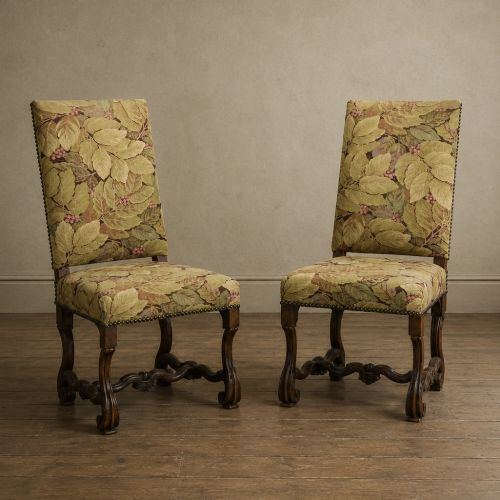
The most common examples on this page are nineteenth-century Victorian salon chairs and French-influenced fauteuils, alongside eighteenth-century dining and side chairs. Makers utilised walnut for its strength and rich tone, pairing the timber with needlepoint or woven tapestry covers depicting floral and figural motifs.
How they were made
Frames are shaped from solid walnut, often featuring carved cabriole legs, scroll backs, and decorative flourishes along the crest rails. Artisans joined these structural components using traditional joinery methods before applying upholstery.
The seating incorporates textile elements such as wool, fabric, and needlepoint tapestry, sometimes accented with brass tacks. These covers are secured over padding to create structured panels on the backrests and seats.
Several armchairs are recorded simply as His & Hers sets, proving that antique comfort was designed for paired relaxation.
What varies in quality
The depth and crispness of the wood carving distinguish finer frames from simpler production, particularly around the knees, arms, and crests. Sharper detailing reflects greater skill by the cabinetmaker.
The intricacy and preservation of the tapestry cover also set examples apart, with densely stitched needlepoint and well-maintained wool textiles holding higher visual and material presence than plain fabrics.
R Whytock of Edinburgh
The Carved Walnut Tapestry Chair Glossary
- Fauteuil
- An open-framed armchair with upholstered armrests, originating in France. These seats typically feature exposed wooden frames in walnut.
- Cabriole leg
- A furniture leg that curves outward and then tapers inward, ending in a pad or foot. This form appears frequently on eighteenth and nineteenth-century seating.
- Needlepoint
- A type of canvas work embroidery used for upholstery panels. It employs wool yarn stitched through a stiff mesh backing.
- Prie-dieu
- A low devotional chair featuring a high back designed for kneeling or leaning during prayer. Victorian examples often incorporate carved walnut and tapestry covers.
- Scroll back
- A backrest shape curving backward at the top rail. This profile appears across various nineteenth-century occasional and library chairs.
Carved Walnut Tapestry Chair: Frequently Asked Questions
How do I clean the tapestry upholstery?
Surface dust can be removed gently with a soft brush or low-suction vacuum attachment.
Avoid liquid cleaners or water on older wool and needlepoint textiles to prevent shrinkage or dye bleeding.
Are these chairs suitable for daily seating?
Many nineteenth-century examples remain sturdy enough for regular use, provided the internal webbing and padding are sound.
Delicate eighteenth-century or decorative salon chairs function best in lower-traffic areas to preserve the antique frames and fabrics.
How can I tell an 18th-century chair from a 19th-century copy?
Eighteenth-century pieces typically show hand-cut joinery marks, denser walnut patination, and period-specific proportions.
Nineteenth-century revival pieces, such as those in the Louis XV style, often feature machine-tooled elements and distinct Victorian framing techniques.
What is the difference between a salon chair and a library armchair?
Salon chairs are lighter, often built for drawing rooms with open frames and decorative carving suited to formal spaces.
Library armchairs provide heavier construction, enclosed arms, and wider proportions designed for extended reading.